Deepfake History: The Lab Trick That Grew Into a $25 Million Heist
A 2014 lab experiment. A Reddit ban. A $25 million video call that never happened. The full deepfake history — and why nobody can reliably catch one anymore.
A finance worker in Hong Kong sat down for a video call with his boss. The chief financial officer was right there on screen. So were several colleagues he knew by face. They chatted. They told him to move some money. He did — fifteen wire transfers, $25 million, all in one day.
Every person on that call was fake.
Not one of them was real. The faces. The voices. The little nods and pauses. All of it spat out by a computer. He only smelled something wrong days later, when he called head office — and learned the meeting never happened (CNN, 2024).
So how did we get here? How did a machine learn to wear a human face? The story is shorter than you think. And a lot stranger.
It started with a mouth
The word "deepfake" sounds brand new. The trick behind it is not.
Rewind to 1997. Three researchers built a program called Video Rewrite. Feed it old footage of someone talking, and it would cut up their mouth and re-stitch it — until the person on screen appeared to say words they never said. Out loud. The goal was harmless: dub movies into other languages. It was clumsy. But it was the first machine to fully automate this kind of facial puppetry (History of Information).
Then, for years, almost nothing. The tech crawled.
And then it sprinted.
Two machines, locked in a fight
June 2014. A researcher named Ian Goodfellow and his colleagues unveiled something called a Generative Adversarial Network — a GAN (Wikipedia). Slow down here, because this is the engine of everything that follows.
Picture two computer programs, locked in a duel. One is a forger. It paints fake faces. The other is a detective. Its only job is to spot the fakes. Every time the detective catches one, the forger studies the slip-up, learns, and paints a better one. Then they go again. And again. Thousands of rounds (MIT Sloan).
The forger gets scary good — because the detective never stops hunting it. Out the other end comes a face you'd swear was a real person — the same trick behind sites like This Person Does Not Exist, which conjures a fresh, fully fake human portrait every time you refresh the page.
The name came from the dark
The actual word "deepfake" showed up in November 2017. And it crawled out of the worst possible corner of the internet.
A Reddit user — handle: "deepfakes" — started pasting celebrities' faces into pornography. "Deep learning" plus "fake." The name stuck. A whole community swelled around it, almost 90,000 members strong, before Reddit pulled the plug in February 2018 (Reality Defender; The Verge).
The ban changed nothing. The tools were already loose in the wild.
From the basement to the bank vault
Here's where it stops being a creepy hobby and starts costing real money.
2019. Criminals cloned the voice of a company chief — the faint German accent, the rhythm of his speech, every tell. Then they phoned an employee at a UK energy firm. The worker was sure he was talking to his boss. Within the hour, €220,000 (about $243,000) was gone (Trend Micro).
Five years later: the $25 million Hong Kong video heist you read about up top.
Notice the pattern? Each step, the fakes got cheaper. Faster. Harder to catch. That line is still going up.
Can we even tell anymore?
Here's the question nobody has cracked: can we reliably tell real from fake — and will we ever?
You'd think the answer is easy. Just build a fake-detector. We did. It didn't hold.
Remember the duel — the forger versus the detective? That's the whole problem. GANs were born to beat detectors. Teach a machine to catch deepfakes, and you've just handed the deepfake-makers a checklist of what to fix next. Cat and mouse, except the mouse keeps getting smarter (Optica).
And the flood is rising. By late 2024, large national banks were getting hit more than five times a day — up from fewer than two a day at the start of that same year (SecurityWeek). And the researchers chasing the problem in 2024 admitted the painful part: detection still falls apart the moment it meets a brand-new kind of fake it's never seen (arXiv, 2024).
So the honest answer? We don't have a dependable, future-proof way to spot a deepfake. Right now, the forgers are winning.
So where does this go?
Three big guesses about what comes next. And they really are guesses — these are interpretations and predictions, not settled fact.
Maybe the detectives catch up. Some experts bet on smarter AI detectors plus "watermarking" — invisible tags baked into real video the instant it's filmed. That could swing things back. But it only works if every camera maker on Earth agrees to the same system. Far from a sure thing.
Maybe we stop asking "is it fake?" Others think we'll flip the question entirely: not "is this video a fake?" but "can this video prove where it came from?" Like a tamper-proof seal on a medicine bottle. The tech exists. It's nowhere near everywhere yet.
Or maybe the real danger isn't the machines — it's us. This is the one that stings. As one group of researchers put it, the threat "comes not from the technology used to create it, but from people's natural inclination to believe what they see" (UNESCO). It's the same soft spot a 1966 chatbot exposed decades before GANs existed — see the ELIZA effect, where people trusted a program that didn't understand a word they said. A Google engineer fell into a modern version of the same trap in 2022, convinced a chatbot called LaMDA was alive. And there's a nasty flip side called the "liar's dividend": once everyone knows fakes exist, anyone caught on real camera can just shrug and say "that's a deepfake." It's an argument, not a measured fact. But it's a hard one to shake.
Now, the wild stuff. You'll find posts swearing that famous events, the moon landings, or world leaders are all secretly deepfakes — or that some shadowy group has been swapping out real people for years. There's no credible evidence for any of it. File it under internet folklore: unverified, and almost certainly false.
The deepfake began as a duel between two machines — one lying, one trying to catch the lie. But that same trick, two AIs locked in a contest, is now teaching computers something far stranger than how to fake a face. Some researchers think it's teaching them to want things. What happens when an AI stops copying us — and starts deciding for itself?
Sources & Further Reading
- CNN — Finance worker pays out $25 million after video call with deepfake CFO (2024)
- History of Information — Video Rewrite, Origins of Deepfakes (1997)
- Wikipedia — Generative Adversarial Network
- MIT Sloan — Deepfakes, explained
- Reality Defender — A Brief History of Deepfakes
- The Verge — Reddit bans deepfakes face-swap porn community (2018)
- Trend Micro — Unusual CEO Fraud via Deepfake Audio Steals US$243,000 (2019)
- SecurityWeek — The AI Arms Race: Deepfake Generation vs. Detection
- Optica — Generating and Detecting Deepfakes: A 21st-Century Arms Race (2025)
- arXiv — Robust Deepfake Detection Requires More than Visual Forensics (2024)
- UNESCO — Deepfakes and the crisis of knowing
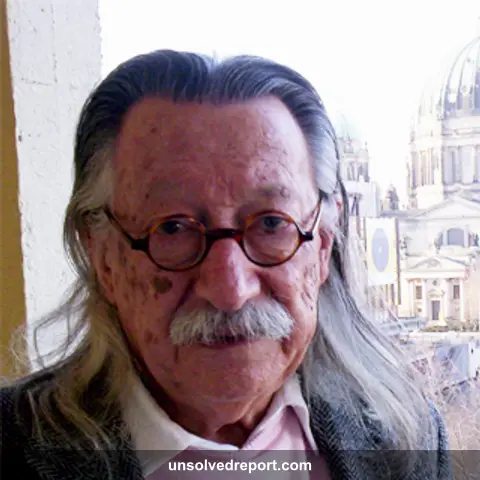
ELIZA Effect: The 1966 Chatbot Trick Nobody Can Switch Off
In 1966, an MIT chatbot fooled a woman who watched it get built. She still begged for privacy. Why can't our brains resist the ELIZA effect — even today?
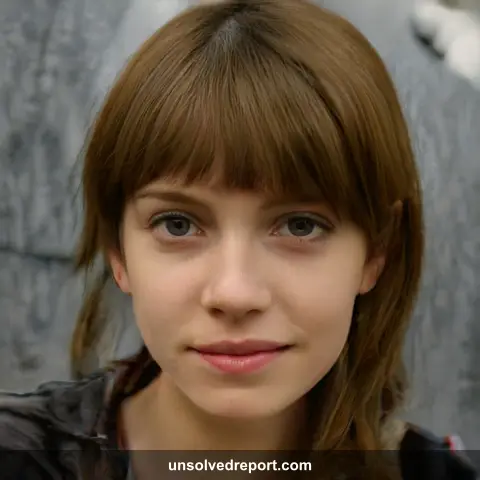
This Person Does Not Exist: Faces You'd Trust More Than Real Ones
This Person Does Not Exist spawns a new fake human every refresh — a study found people trust its faces more than real ones. Can you spot the fake?
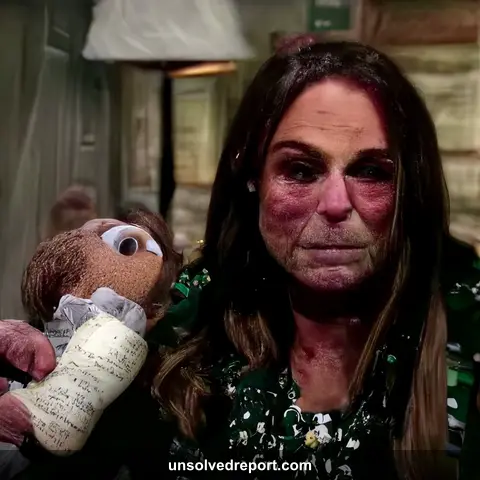
Loab AI: The Cursed Image No One Can Delete From Existence
An artist typed a negative prompt and a hollow-eyed woman came back. Every time. No matter what she blended Loab with, that face refused to disappear. Here's why.