DeepDream: The AI Nightmare Nobody Can Fully Explain
DeepDream made a Google AI hallucinate dogs and eyeballs into every photo in 2015. It knows why. It still can't answer the stranger question left behind.
It was just after midnight in a Zurich apartment, May 18, 2015. A young Google engineer named Alexander Mordvintsev woke with a start, sure he had heard a noise. He hadn't. But now he was wide awake, head buzzing with an idea he had been chewing on for weeks. So he sat down at his computer and started typing.
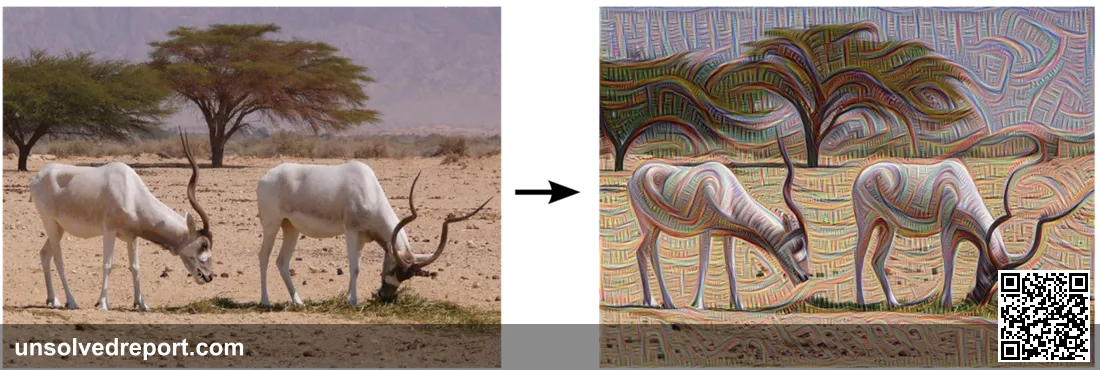
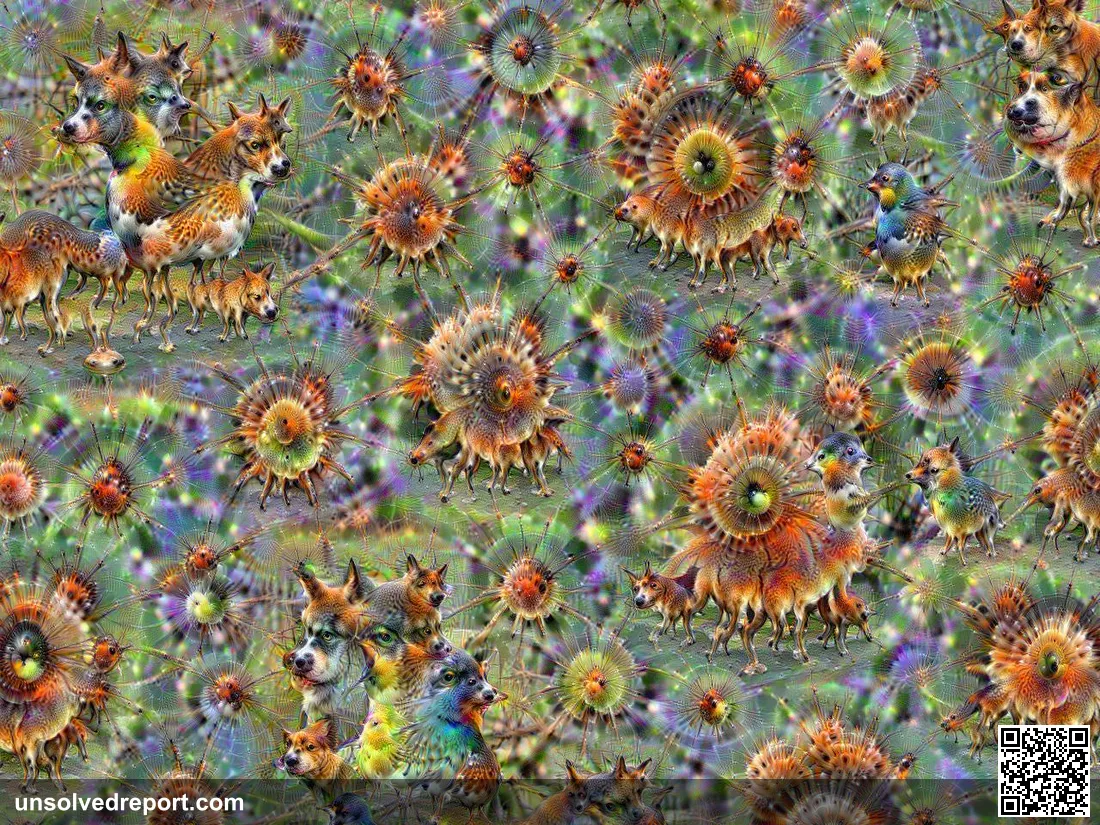
By 2 a.m. he had something. He fed an ordinary photo into a neural network, told the machine to exaggerate whatever it thought it saw, and waited. What stared back was a nightmare: skies crawling with dog snouts, trees sprouting eyeballs, clouds curdling into slug-puppies with too many faces. He posted it on Google's internal social network and went to bed.
Within weeks, the whole internet would be covered in those same hallucinating dogs. The thing is, nobody fully agrees on what the machine was actually "seeing." Let's get into it.
The Documented Facts
The technique got an official name on June 18, 2015, when Google published a blog post titled "Inceptionism: Going Deeper into Neural Networks," credited to Mordvintsev along with colleagues Christopher Olah and Mike Tyka (Google Research).
Here's the core trick, and it's beautifully simple. A neural network is normally used to classify pictures: you show it a photo, it says "that's a banana." DeepDream runs the same machine in reverse. You show it a photo and say, in effect, "whatever you think you see in there, give me more of it." The network finds faint hints of patterns, strengthens them, looks again, strengthens them more. Round and round, dozens of times. The faint hints become loud, undeniable, impossible objects (Google Research).
Mordvintsev wasn't trying to make art. He was a new engineer poking at how these networks actually work inside. "Neural networks are systems designed for classifying images," he later said. "I'm trying to make it do things it is not designed for, like detect some traces of patterns" (Artnome).
So why dogs? Why so many dogs? This part is genuinely documented, not a guess. The network Mordvintsev used had been trained on ImageNet, a giant labeled photo collection. And a famous slice of that dataset asks the AI to tell apart 120 different dog breeds — fine-grained stuff, beagle versus basset hound. To pass that test, the network had to become obsessed with dog parts: ears, snouts, and above all eyes. When you then ask such a network to "see more," it reaches for what it knows best (Fast Company; Artnome).
Eyes show up everywhere for a related reason: across animals, an eye is one of the most reliable, repeatable shapes a vision system can latch onto. The network had learned that "eye-ish" blobs are a great clue, so it scattered them generously.
Google open-sourced the code on GitHub in July 2015 (github.com/google/deepdream). Almost overnight, DeepDream became arguably the first AI image generator to go mainstream — the trippy ancestor of everything from the deepfakes that followed to today's image-making chatbots. Researchers now call the effect "algorithmic pareidolia": the same brain glitch that makes you see a face in a wall socket, but happening inside a machine (Wikipedia: Caffe)). It wouldn't be the last time a model fixated on one unshakeable image — years later, another AI would get stuck drawing the same haunted face over and over.
The Genuine Open Question
Here's where it gets slippery, and honest people disagree.
We can say what DeepDream does. We can even say why it loves dogs and eyes — that's the training data talking. But there's a deeper question that researchers still wrestle with: does an image like this actually tell us what the network "thinks," or just what it does when you push it off a cliff?
DeepDream was built partly as a debugging tool — a way to peek inside the black box and check whether the AI had learned real concepts or just cheap shortcuts. But a DeepDream image is the network running in an extreme, unnatural mode it was never designed for. So the honest open problem is this: how much of that hallucination reflects the AI's genuine inner "understanding," and how much is just a weird artifact of cranking the dial to eleven?
This isn't a settled footnote. The whole field of AI interpretability — figuring out what these systems actually represent inside, and why they sometimes produce outputs nobody predicted — is still wide open, and DeepDream sits right at its messy beginning.
Theories and Interpretations
Let's separate the careful from the wild. Everything below is interpretation, not established fact.
Theory 1: It's a mirror of its diet (well supported). The most grounded reading is that DeepDream simply shows you the network's biases. Feed a model 120 dog breeds and it dreams in dogs; train a different model on a dataset of places and it dreams in towers, arches, and windows instead. The pictures aren't magic — they're a reflection of what the machine was fed (Google Research). This is the explanation most experts accept.
Theory 2: It's a window into machine "imagination" (speculative). Some writers and artists argue DeepDream reveals something like a creative inner life — that the network is "dreaming" in a meaningful sense. This is poetic and popular, but it is speculation. There is no evidence the network experiences anything. It is doing math, very fast.
Theory 3: It proves AI is becoming sentient or conscious (unproven). Online, DeepDream's eerie, eyeball-strewn outputs fueled claims that the AI was "awake," or even tapping into some hidden layer of reality — the same instinct that would later drive a Google engineer to insist a chatbot was alive. To be clear: this is unproven and not supported by any science. The unsettling look is a side effect of training data and runaway feedback, not a sign of a waking mind.
Theory 4: The "nightmare" connection (legend, but charming). Because Mordvintsev built it after waking from a bad dream, a tidy story grew up that the machine was somehow channeling human nightmares. Fun to say. But the dream just got him out of bed — the dogs came from ImageNet, not from his subconscious (Artnome).
DeepDream taught us that an AI's strangest behavior is really a confession about what we fed it. Which raises a far more uncomfortable question for the chatbots and deepfake engines we use today: if a machine that only knew dogs dreamed in dogs, what exactly are the ones trained on all of us learning to see?
Sources & Further Reading
- Inceptionism: Going Deeper into Neural Networks — Google Research blog (2015)
- Why Google's Deep Dream A.I. Hallucinates In Dog Faces — Fast Company
- DeepDream Creator Unveils Very First Images After Three Years — Artnome
- The story of deep neural networks and hallucinogenic images — Google Arts & Culture / Barbican
- Original DeepDream source code — github.com/google/deepdream
- Caffe (software) — Wikipedia)
Deepfake History: The Lab Trick That Grew Into a $25 Million Heist
A 2014 lab experiment. A Reddit ban. A $25 million video call that never happened. The full deepfake history — and why nobody can reliably catch one anymore.
ELIZA Effect: The 1966 Chatbot Trick Nobody Can Switch Off
In 1966, an MIT chatbot fooled a woman who watched it get built. She still begged for privacy. Why can't our brains resist the ELIZA effect — even today?
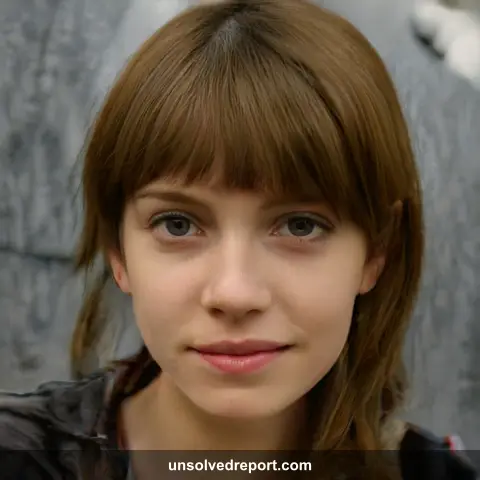
This Person Does Not Exist: Faces You'd Trust More Than Real Ones
This Person Does Not Exist spawns a new fake human every refresh — a study found people trust its faces more than real ones. Can you spot the fake?