Ggantija Temples: Built Before the Wheel, Then Its Builders Vanished
Ggantija's 50-ton stones predate the wheel, Stonehenge, and the pyramids — and the people who raised them vanished without a trace. What actually happened?
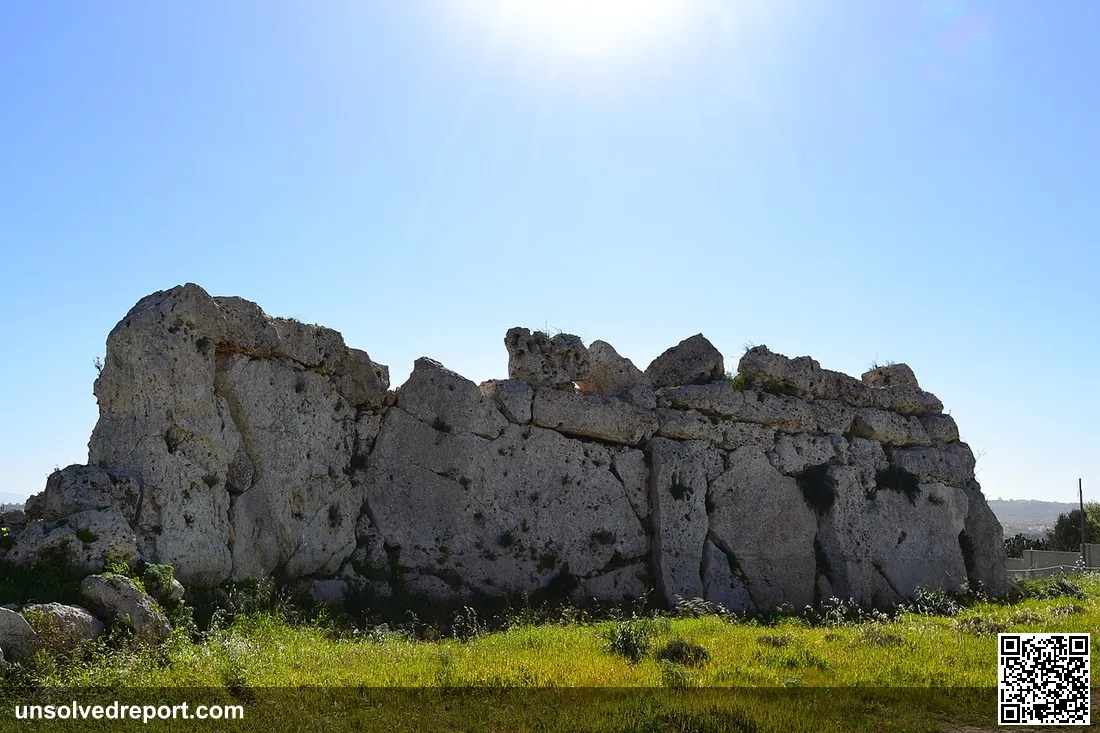
No wheel. No metal. No writing we can read. And yet there they stand — two vast stone buildings on a windswept plateau in Xagħra, on the little Maltese island of Gozo, holding their shape for more than five and a half thousand years. The people who raised them stacked limestone slabs taller than a grown man and heavier than a loaded truck into soaring, curved chambers. Then, after about a thousand years, the entire culture that built them seems to have simply switched off. Locals later called the place Ggantija — Maltese for "giantess" — because no ordinary human, they figured, could have lifted stones like that. So who did lift them? And where did they go? Here's what's documented, what's genuinely unknown, and what's only a good story.
What We Actually Know
Start with the solid ground. Ggantija is no rumor — it's been dug up, measured, and pored over for nearly two centuries. The temples landed on the UNESCO World Heritage List in 1980; in 1992 that listing grew and was renamed the "Megalithic Temples of Malta" to fold in other sites scattered across Malta and Gozo (UNESCO World Heritage Centre).
Now the headline number. The complex is two temples — plus an unfinished third — all built in the Neolithic. The southern temple, the bigger one, dates to around 3600 BC, and the site stayed in use until roughly 3200 BC (Heritage Malta, via History Hit; World History Encyclopedia). Let that land. Ggantija is older than Stonehenge. Older than the Great Pyramid of Giza — by a wide margin, joining the short list of megalithic sites nobody can fully explain. It is among the oldest free-standing monuments anywhere on Earth, beaten among standing structures only by Göbekli Tepe in Turkey (Wikipedia: Ġgantija).
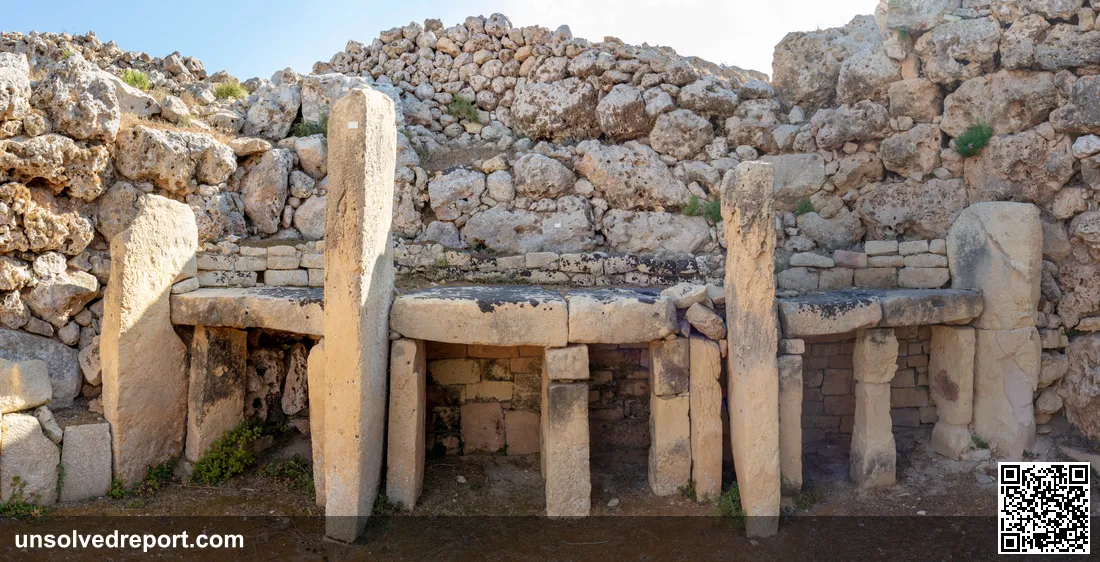
Then you stand next to the stones, and the dates stop mattering. Some of these megaliths run past five meters long — about 16 feet — and tip the scales at more than fifty tons. The walls still climb as high as six meters (UNESCO; History Hit). And the builders chose their rock on purpose: tough coralline limestone for the rugged outer walls, softer and more workable globigerina limestone for the interior doorways, altars, and carved slabs (History Hit; World History Encyclopedia). Each temple is laid out like a clover leaf — rounded apses opening off a central paved corridor.
Here's the detail that anchors the whole story: all of it was done before the wheel. At the related Tarxien temples on the main island, archaeologists pulled small spherical stones out of the ground and read them as rollers — "ball bearings" the builders likely slid under the megaliths, then towed with ropes, in an age with neither wheels nor metal tools (World History Encyclopedia; Wikipedia). That's not a guess. It's hard, physical evidence of a clever low-tech fix for a monstrous engineering problem.
People spotted the site early, too. It was first cleared in 1827, with careful, documented digs following through the 1930s, the 1950s, and beyond under Malta's Museums Department (Wikipedia). Today Ggantija sits inside a modern archaeological park run by Heritage Malta.
The Mystery That Won't Go Away
Sweep away the colorful folklore and a real, unsolved question is still sitting there. Two of them, actually.
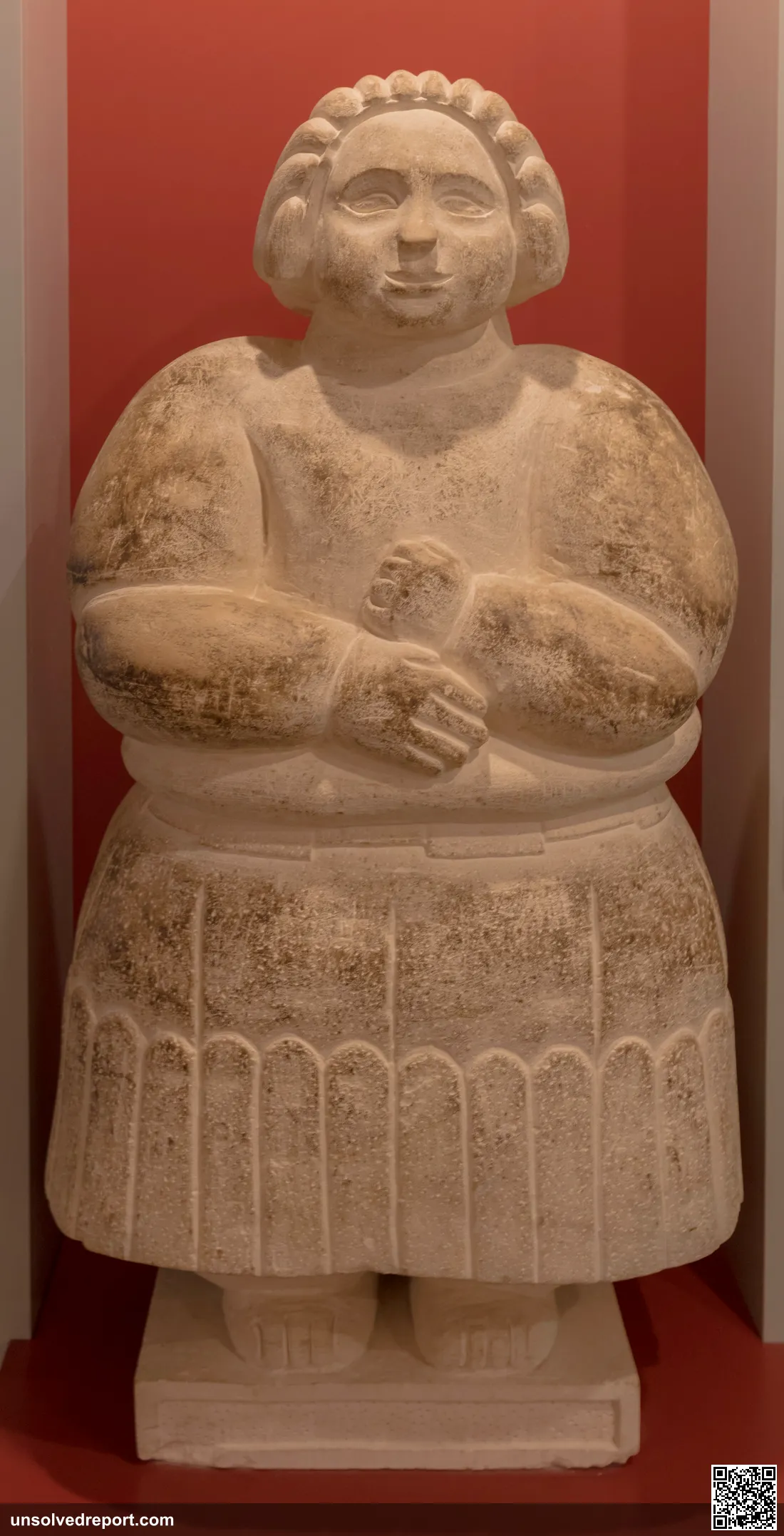
The first: who were these people? How did a community on tiny, resource-poor islands marshal the labor, the planning, and the raw skill to quarry, drag, and raise fifty-ton stones — with no draft animals proven for the job, no wheels, no metal? The temples imply a whole world behind them: social coordination, ritual life, engineering know-how passed down and sharpened over generations. But the builders left no writing we can decode, so almost everything about their daily lives has to be pieced together sideways — from bones, pottery, scraps of art, and the buildings themselves.
The second question is bigger, and stranger. The temple-building culture thrived for roughly a millennium. Then, around 2500 BC, it drops out of the archaeological record. The monument-raising stops. The distinctive temple society ends (World History Encyclopedia). One researcher, summing up decades of work, put it bluntly: "2500 years after the first settlement that socio-economic system seems to have imploded resulting in the collapse of its island civilisation" (MaltaToday). The honest scholarly answer to why is that nobody knows for sure. That's the open mystery in one sentence: a sophisticated society built some of the oldest temples on the planet — and then the lights went out.
The Theories — and the Legends
Everything below is interpretation or folklore. None of it has the firm footing of the documented record above, and where something is a guess, here it's called a guess.
The environmental-collapse idea (the leading scholarly hypothesis — but not proven). The most-discussed academic explanation is slow self-poisoning: the islanders gradually wore out their own fragile world. Centuries of hard farming and deforestation on small islands, maybe pushed over the edge by drought or shifting climate, could have knocked out the food system holding temple society together. Researchers have drawn the obvious parallel to Easter Island's collapsing statue-builders — while flatly warning that whether the collapse came from "over-exploitation and eventual exhaustion of the natural resources… compounded by successive years of drought or climate change, remains speculative" (Bradshaw Foundation). It's the strongest card on the table. It's still only a card.
Other suspects (speculation). Scholars have floated other possibilities too — disease, social or religious upheaval, newcomers arriving with a different way of life. None has decisive evidence behind it. They stay on the table precisely because the record is so thin.
The giantess (folklore, not history). The name Ggantija comes straight from local lore. Maltese tradition tells of a giantess — Sansuna, in some versions — who ate nothing but broad (fava) beans and honey, and built the temples with her child slung over one shoulder, heaving the colossal stones into place as houses of worship (Wikipedia: Ġgantija; Visit Gozo). It's a wonderful origin story, and it tells you something true — not about the temples, but about us. Faced with stones they couldn't picture moving, later generations reached for giants. Charming. Still legend, not archaeology.
The "lost advanced civilization" pitch (not supported). Like Stonehenge and the pyramids, Ggantija pulls in big claims about vanished super-civilizations or visitors from elsewhere. The evidence points the other way, hard. The stone roller-balls, the local quarrying, the temple architecture that develops step by step across centuries — all of it describes a skilled, thoroughly human Neolithic community chipping away at hard problems with patience and ingenuity. And that's the real wonder of Ggantija. Not that someone else built it. That people did — before the wheel.
What's left on that Gozo plateau is genuinely staggering: a monument older than almost anything else still standing, raised by hands we cannot name, by a people who then slipped clean out of history. The facts alone are enough to stop you. The mystery — who they were, and why they ended — is the part that won't let you leave.
Sources & Further Reading
- UNESCO World Heritage Centre — Megalithic Temples of Malta: https://whc.unesco.org/en/list/132/
- World History Encyclopedia — The Megalithic Temples of Malta: https://www.worldhistory.org/article/1678/the-megalithic-temples-of-malta/
- History Hit — Ggantija Temples, History and Facts: https://www.historyhit.com/locations/ggantija-temples/
- Wikipedia — Ġgantija: https://en.wikipedia.org/wiki/%C4%A0gantija
- Visit Gozo — UNESCO Ggantija Temples: https://visitgozo.com/places/unesco-ggantija-temples/
- Bradshaw Foundation — The Prehistoric Archaeology of the Temples of Malta: https://www.bradshawfoundation.com/malta/
- MaltaToday — The death of the temple people: https://www.maltatoday.com.mt/arts/architecture/47313/the_death_of_the_temple_people
Lelu Ruins, Kosrae: The Coral City Nobody Can Explain
Lelu Ruins hid a city of coral tombs where kings were buried, dug up, and reburied at sea. Which came first, Lelu or Nan Madol? Scientists still disagree.
Puma Punku: Stones Cut Too Perfect to Be Ancient?
Puma Punku's stones interlock like factory parts, cut 1,500 years ago. Archaeologists know how — but one real mystery about them still has no answer.
10 Lost Cities the Earth Swallowed Whole
A Saharan gold hub. A drowned Egyptian port. A town buried alive by a volcano — with no bodies. Real lost cities, and the questions nobody can answer.