Lohron Gold Trade: The Goldsmiths Nobody Remembers
Six-meter walls still stand empty in the Burkina Faso bush. The Lohron ran a gold fortune here, then vanished so fully their own neighbors can't name them. Why?
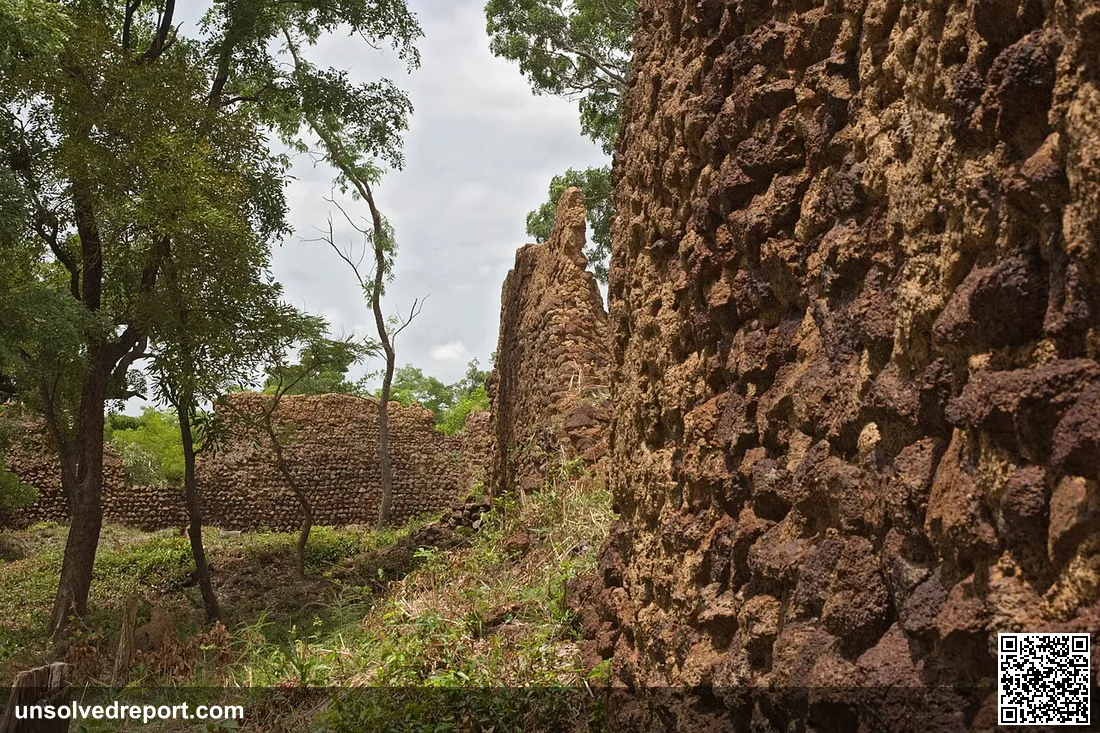
Walls of laterite stone rise straight out of the bush. Six meters tall in places. Thicker than your arm is long. They box in an empty space about the size of two football fields — and there is nothing inside. No roofs. No people. No one has lived behind these walls for roughly two hundred years.
This is the far south of Burkina Faso, near the corner where it brushes up against Côte d'Ivoire, Ghana, and Togo. And here is the part that should make the hair on your neck stand up: almost nobody can tell you who built this place.
They are called the Ruins of Loropéni. They are the last loud trace of a people called the Lohron — goldsmiths who once owned this region's gold, from the ground it came out of to the shape it left in. Gold made them rich. Gold tied their corner of West Africa to the glittering markets of the Mediterranean, an ocean of desert away. And then the Lohron slipped out of history so cleanly that the families living beside their walls today will tell you, plainly, that they do not know who dug the gold before them.
This is not a ghost story dressed up as history. It is a real mystery, sitting on hard archaeology, with the gaps left honestly open.
What We Actually Know
Start with the stone, because the stone is certain. In 2009 the Ruins of Loropéni became Burkina Faso's first UNESCO World Heritage site, listed under criterion (iii) (UNESCO World Heritage Centre). UNESCO calls it "the best preserved" of ten fortresses in the Lobi area — and just one piece of "a larger group of 100 stone enclosures that bear testimony to the power of the trans-Saharan gold trade" (UNESCO).
A hundred stone forts. Picture that. This was not a lonely outpost. It was a whole landscape built on gold — the same continent that would later hide Great Zimbabwe, another stone-walled fortune Europe long refused to credit to the people who actually built it.
The walls do not whisper, they loom: quadrangular slabs of laterite stone, up to six meters high, wrapping a settlement of roughly 11,130 square meters (UNESCO). And they are old. Recent excavations pulled radiocarbon dates from the ground showing the walled enclosure reaches back "at least to the 11th century AD," with a golden age that "flourished between the 14th and 17th centuries" (UNESCO; Wikipedia: Ruins of Loropéni).
So who lived here at the peak? UNESCO says the settlement "was occupied by the Lohron or Koulango peoples, who controlled the extraction and transformation of gold in the region when it reached its apogee from the 14th to the 17th century" (UNESCO). They sat inside one of the great trade machines of the medieval world. West African gold rode north across the Sahara — and came back as salt. That sounds like a bad swap until you grasp how rare salt was down here. The Mali Empire "gained access to new goldfields on the Black Volta (modern-day Burkina Faso)," and an 11th-century block of salt could be worth many times its own weight in gold (World History Encyclopedia).
Then the lights went out. Not all at once — the site "seems to have been abandoned during some periods during its long history" and was "finally deserted in the early 19th century" (UNESCO), joining a short, strange list of African settlements — like the planned towns of Dhar Tichitt further north — that were built to last and then simply weren't lived in anymore. The reason for the long fade is no secret. From the late 15th century, European ships started buying gold straight off the Atlantic coast, and the slow desert caravans lost their grip. Money drifted south, toward the forest kingdoms — among them the Asante (Ashanti) (World History Encyclopedia).
That explains the empty walls. It does not explain the silence.
The Question No One Can Answer
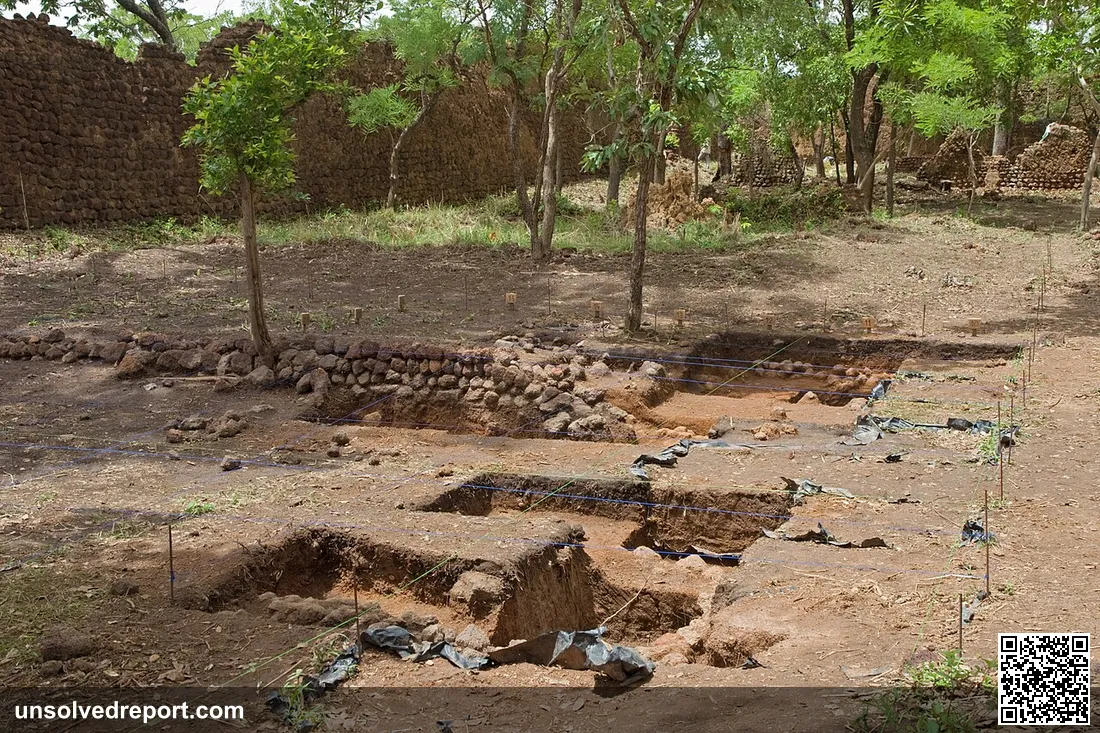
Here is the strange part. We know roughly when these forts rose, roughly when they emptied, and roughly why the gold trade moved on. What we do not know is who. The people who built the fortresses, who ran them, who pulled the gold out of the earth — they are, for the most part, faces without names. UNESCO does not hide it: "much mystery surrounds this site large parts of which have yet to be excavated" (UNESCO).
But the eeriest gap isn't in the dirt. It's in people's heads.
Dig into a peer-reviewed study in the Journal of African History, and anthropologist Katja Werthmann lands on something that stops you cold: "the present-day populations of southern Burkina who have settled there since the eighteenth century do not know who was mining gold prior to their arrival" (Werthmann, 2007). The people living around the ruins did not inherit the Lohron's gold knowledge. The thread just snapped. And in some places it gets stranger still — Werthmann found communities that refused to dig gold at all, because they believed the metal itself was dangerous (Werthmann, 2007).
Werthmann even pokes at the name we casually use. She argues that the label "Lobi" has long smeared together two separate gold zones, sitting about 200 kilometers apart along the Mouhoun (Black Volta) river (Werthmann, 2007). So the questions pile up, one on top of the next. Where were the mines? Who organized the diggers? Why did people keep moving in and walking away from this place? And the one that really nags: how does the knowledge of an entire gold empire vanish so totally that its own heirs can't name the ones who came before?
So What Happened to Them?
The trade just left. This is the calmest answer, and the best-supported one. When Atlantic ships went around the desert, the inland forts lost their whole reason to exist, and power slid south to the coast and forest states. It lines up neatly with the documented slide through the 17th to 19th centuries (World History Encyclopedia; UNESCO). It tells us why the walls emptied. It does not tell us why the memory emptied too. Call this a well-supported inference.
The builders and the last tenants weren't the same people. Several accounts say the Gan (Kaan) people drifted into the area from around the late 17th century, fleeing pressure from the Asante — and moved into fortresses they had not built (Wikipedia: Ruins of Loropéni). If group after group reused the same stone over the centuries, that churn could explain why no living community can claim an unbroken line back to the original goldsmiths. This one rests partly on oral tradition and isn't fully nailed down by the archaeology — plausible, not proven.
They kept it secret on purpose. Across the medieval gold trade, the locations of mines were guarded like treasure, because they were treasure. Rulers like Mansa Musa kept their gold sources a closely held secret, and an old "silent trade" let buyers and sellers swap goods without ever revealing who they were or where the gold came from (World History Encyclopedia) — a habit of secrecy that, centuries later and an ocean away, would curdle into the myth of El Dorado. If the Lohron played that game too, secrecy could be part of why the mine locations are lost. There's no direct proof they did — so treat this one as an intriguing guess by analogy, nothing more.
What we will not do is reach for a curse. There is no documented hex on Loropéni, no people who "vanished without a trace" in a puff of smoke. And honestly? The real answer is better than any curse. A wealthy, skilled, gold-rich society raised enormous stone walls, left almost no paper behind, and then went quiet — and the rest of the story is still buried, because large parts of Loropéni have never been excavated (UNESCO), the same way West Africa kept the Igbo-Ukwu bronzes hidden underground for a thousand years before anyone knew to look. The Lohron aren't gone, exactly. They're waiting underground to be read. Somewhere out there, a hundred more stone enclosures are keeping the same secret — and the next spade hasn't dropped yet.
Sources & further reading
- UNESCO World Heritage Centre, "Ruins of Loropéni" — https://whc.unesco.org/en/list/1225/
- Katja Werthmann, "Gold Mining and Jula Influence in Precolonial Southern Burkina Faso," Journal of African History 48, no. 3 (2007): 395–414 — https://www.cambridge.org/core/journals/journal-of-african-history/article/abs/gold-mining-and-jula1-influence-in-precolonial-southern-burkina-faso/87B1DDFE2E46F6E94AE86652B282A53E
- Mark Cartwright, "The Gold Trade of Ancient & Medieval West Africa," World History Encyclopedia — https://www.worldhistory.org/article/1383/the-gold-trade-of-ancient--medieval-west-africa/
- "Ruins of Loropéni," Wikipedia — https://en.wikipedia.org/wiki/Ruins_of_Lorop%C3%A9ni
- "Ruins of Loropeni Shed Light on Ancient Gold Trade," Ancient Origins — https://www.ancient-origins.net/ancient-places-africa/ruins-loropeni-0011179
- "Loropéni," Encyclopaedia Britannica — https://www.britannica.com/place/Loropeni
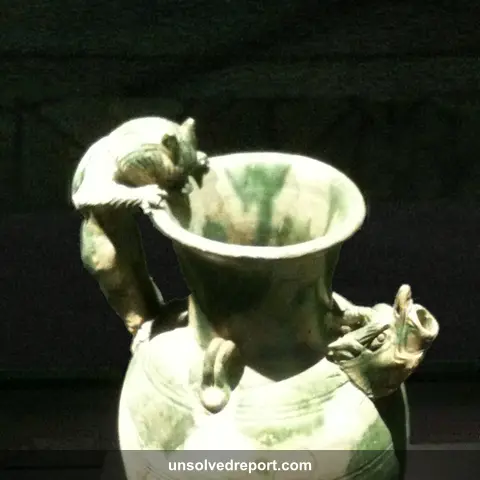
Belitung Shipwreck: A $32M Tang Hoard Inside an Arab Dhow
60,000 Tang treasures, one Arab dhow, no crew list. The Belitung shipwreck proved a lost Silk Road sea route — and no one agrees on the rest of the story.
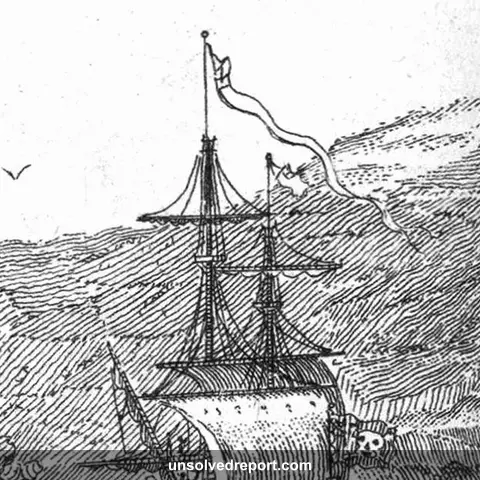
Blackbeard's Treasure: The Ship Was Found. The Gold Wasn't.
Divers found Blackbeard's flagship Queen Anne's Revenge in 1996. Three centuries of legend promised buried gold. What was actually in the hold is stranger.
Treasure of Lima: A Dying Pirate's Perfect Lie?
300+ expeditions, zero gold. Is the Treasure of Lima buried on Cocos Island — or was the whole story a condemned pirate's perfect con?