Belitung Shipwreck: A $32M Tang Hoard Inside an Arab Dhow
60,000 Tang treasures, one Arab dhow, no crew list. The Belitung shipwreck proved a lost Silk Road sea route — and no one agrees on the rest of the story.
A fisherman free-diving for sea cucumbers off the Indonesian island of Belitung in 1998 swept his hands along the floor of the Java Sea and found a mound under the silt. It was a ninth-century ship, and scattered around it lay roughly 60,000 objects from Tang dynasty China that no one had touched in over 1,100 years. The single biggest catch: it wasn't a Chinese vessel. It was a sewn-plank Arabian dhow, and that detail alone rewrote what historians could actually prove about trade between China and the Persian Gulf. Here's what the wreck confirms, what it still can't answer, and why archaeologists tried to stop a Smithsonian exhibition of it.
> The 60-Second Brief
> - ~60,000 objects recovered total, the largest cache of Tang-era artifacts ever pulled from the sea.
> - ~57,500 Changsha stoneware pieces, including roughly 55,000 near-identical export bowls.
> - 826 CE: the date incised on one Changsha bowl, matched by carbon-14 dating of the hull timbers.
> - 18 by 6.5 meters: the dhow's hull, stitched with plant fiber, its timber traced to Africa and India.
> - ~$32 million USD: what Singapore's Sentosa Development Corporation reportedly paid in 2005 for the conserved collection.
> - 2011: the year a planned Smithsonian exhibition of the find was postponed after archaeologists objected to displaying commercially salvaged material.
What We Know For Sure
Local fishermen found the wreck in 1998. Over two seasons, a firm called Seabed Explorations dug it up commercially, directed by German national Tilman Walterfang and licensed by the Indonesian government. Marine archaeologist Dr. Michael Flecker ran the second season (Smithsonian National Museum of Asian Art; Trafficking Culture, University of Glasgow).
Most of what came up was pottery, and a staggering amount of it.
| Cargo category | Count | Notes |
|---|---|---|
| Changsha stoneware (total) | ~57,500 | From kilns in Hunan province |
| Changsha export bowls | ~55,000 | Stamped with repeating motifs: flowers, birds, foliage, clouds |
| Bronze mirrors | 29 | — |
| Blue-and-white ceramic dishes | 3 intact | Among the earliest known Chinese blue-and-white anywhere; cobalt traced to Iran |
| Gold and silver vessels | dozens | Smithsonian calls them "unparalleled in quality and design" |
Sources: Smithsonian, "Dating the Belitung Shipwreck"; Roots.gov.sg, National Heritage Board of Singapore; Smithsonian press release; National Geographic; Daily Art Magazine.
How do you ship 55,000 bowls across an ocean without smashing them? The sailors stacked them, cushioned them (reportedly with straw), and crammed them inside enormous stoneware storage jars — what National Geographic called "a sort of organic bubble wrap" (National Geographic).
Then, tucked among all that everyday cargo, sat things of a completely different order: gold and silver vessels, what is reported to be the largest Tang gold cup ever found, an octagonal gold cup engraved with musicians, gold dishes and bowls, and silverwork (Smithsonian press release).
Now, how do you date a ship nobody wrote down? In this case, the ship told on itself. One Changsha bowl carries an incised date that works out to the year 826, and carbon-14 analysis of the hull lines up with it, pinning the voyage to the second quarter of the ninth century (Roots.gov.sg). Rarely is a wreck this precise.
But the real headline isn't the gold. It's the boat. Roughly 18 by 6.5 meters, with hull planks stitched together using plant fiber instead of iron nails or wooden dowels, the way Arab and Indian Ocean shipwrights built. Timber analysis traced the wood to Africa and India (National Geographic; Roots.gov.sg). That single detail makes the Belitung wreck the first hard archaeological proof of a direct sea route linking Tang China and the Abbasid world of the Persian Gulf — a maritime counterpart to the overland Silk Road towns being swallowed by desert sand at exactly the same moment in history. Chinese and Arabic texts had hinted at this link for centuries. Nobody had ever held the physical evidence in their hands, and this was happening centuries before any European ship sailed those waters (Smithsonian press release).
In 2005, Walterfang sold the conserved collection, reported at roughly 32 million U.S. dollars, to Singapore's Sentosa Development Corporation. The Tang Shipwreck Treasures now live in Singapore's Asian Civilisations Museum (Trafficking Culture; Roots.gov.sg).
The Question Nobody Can Answer
Here's the maddening part. The one question that matters most may have been erased the moment the salvage began: where exactly was this ship built, where did its voyage start, and where was it heading when it went down?
The stitched hull screams western Indian Ocean. Yet here it was, a sewn-plank Arabian-style ship stuffed almost entirely with Chinese goods. So how did a dhow built half an ocean away end up carrying a Chinese export cargo home? The ceramics say it loaded at a major Chinese port. But the people behind the journey, who built the dhow, who crewed it, who ordered that breathtaking gold and silver, left no note. The wreck stays silent on all of it.
And the way the site was dug up makes the silence worse. This was a commercial salvage, not a careful scientific excavation, so critics argued that vital context, the exact position of each object inside the hull, was never recorded to archaeological standards (Trafficking Culture). The fallout was real: a planned 2011 Smithsonian exhibition, "Shipwrecked: Tang Treasures and Monsoon Winds," was postponed after archaeologists objected that showing commercially salvaged material clashed with professional ethics guidelines (Trafficking Culture). Whatever a slow, grid-by-grid dig might have revealed about the ship's origin and route is, in part, gone for good.
So What Was Really Going On?
| Theory | The evidence for it | The gap |
|---|---|---|
| Royal-order / diplomatic gift | A silver flask stamped with paired mandarin ducks, a symbol of marital harmony, has been floated as bound for a Persian Gulf wedding | No documented provenance — informed guesswork (National Geographic) |
| Guangzhou-to-Basra trade route | Most researchers picture the voyage leaving a southern Chinese port like Guangzhou for the Persian Gulf, possibly Basra | Belitung sits on a Java Sea path, not the more direct Sumatra passage, suggesting a stop — perhaps at Bujang Valley or another Malay Peninsula entrepôt — for reasons unknown (National Geographic) |
| Standardized export manufacturing | ~55,000 near-identical Changsha bowls look like large-scale production aimed at foreign buyers | Who placed the order and how it was paid for is reconstructed, not recorded (Roots.gov.sg) |
What no one disputes is how much this wreck matters. A single sunken dhow turned a trade route known mostly from dusty old texts into something you can hold in your hand, and it left just enough unanswered to keep you wondering who, exactly, was steering it home — much like the Flor de la Mar, the Portuguese carrack that sank in these same Southeast Asian waters six centuries later with a cargo history still can't account for.
The Wreck Is Still Making News
The salvage controversy hasn't gone quiet. In 2025, University of Sydney maritime heritage scholar Natali Pearson published "Contested Maritime Heritage: The Case of the Belitung (Tang) Shipwreck" in the Palgrave Encyclopedia of Cultural Heritage and Conflict, a peer-reviewed entry revisiting why the wreck remains one of the most disputed finds in underwater archaeology — the same commercial-salvage-versus-scientific-excavation fight that stalled the Smithsonian's 2011 show (SpringerLink). Pearson is also the author of the 2022 book Belitung: The Afterlives of a Shipwreck, which traces the same dispute in depth.
Separately, objects connected to the Belitung wreck's story of Tang-era maritime trade appeared in the British Museum's "Silk Roads" exhibition in London, which ran from September 26, 2024 to February 23, 2025 — putting the wreck's evidence for a direct China-to-Persian-Gulf sea route in front of a major international audience roughly two decades after the find first surfaced (ArtNews). Note that this exhibition covered the broader Silk Roads network rather than being dedicated solely to the Belitung find.
Frequently Asked Questions
Where is the Belitung shipwreck treasure now?
The conserved collection is owned by the Government of Singapore and displayed as the "Tang Shipwreck Treasures" at the Asian Civilisations Museum in Singapore, following Singapore's Sentosa Development Corporation's roughly $32 million purchase from salvor Tilman Walterfang in 2005 (Trafficking Culture; Roots.gov.sg).
Why is the Belitung shipwreck controversial?
It was excavated as a commercial salvage operation rather than a scientific dig, so critics say the precise in-hull position of most of the roughly 60,000 objects was never recorded to archaeological standards — data a controlled excavation would normally preserve. That objection led archaeologists to push back on a planned 2011 Smithsonian exhibition of the find (Trafficking Culture).
How do we know the Belitung shipwreck dates to 826 CE?
A Changsha stoneware bowl recovered from the wreck carries an incised inscription that translates to a date equivalent to 826 CE, and carbon-14 analysis of the hull timbers independently corroborates a date in the second quarter of the ninth century (Roots.gov.sg).
Why does the ship's Arab-style hull matter so much?
The hull was stitched together with plant fiber rather than iron nails or dowels, the shipbuilding technique used in the Arab and Indian Ocean world, and timber analysis traced the wood to Africa and India. That makes the Belitung wreck the first hard physical evidence of a direct sea route between Tang China and the Abbasid Persian Gulf — a link previously known only from texts (National Geographic; Smithsonian press release).
Do historians know where the ship was sailing to or from?
No. The cargo indicates it loaded Chinese export goods at a major Chinese port and was likely bound for the Persian Gulf, possibly Basra, but the ship's exact origin, crew, and intended destination were never documented and cannot be reconstructed from the salvage record (National Geographic).
Sources & further reading
- Smithsonian National Museum of Asian Art, "Shipwrecked: Tang Treasures and Monsoon Winds" press release
- Michael Flecker, "A Ninth-Century Arab Shipwreck in Indonesia," Smithsonian National Museum of Asian Art
- "Dating the Belitung Shipwreck," Smithsonian National Museum of Asian Art
- National Geographic, "Made in China" (Tang Shipwreck)
- Roots.gov.sg, National Heritage Board of Singapore, "Sunken Treasure: A Ninth Century Shipwreck"
- Trafficking Culture (University of Glasgow), "Belitung Shipwreck" case study
- Daily Art Magazine, "The Tang Shipwreck — Southeast Asia's Maritime Heritage"
- Natali Pearson, "Contested Maritime Heritage: The Case of the Belitung (Tang) Shipwreck," Palgrave Encyclopedia of Cultural Heritage and Conflict (2025)
- ArtNews, "British Museum's 'Silk Roads' Exhibition Aims to Tell a..." (2024)
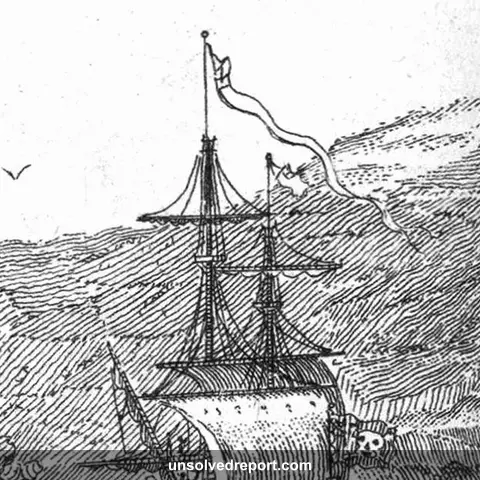
Blackbeard's Treasure: The Ship Was Found. The Gold Wasn't.
Divers found Blackbeard's flagship Queen Anne's Revenge in 1996. Three centuries of legend promised buried gold. What was actually in the hold is stranger.
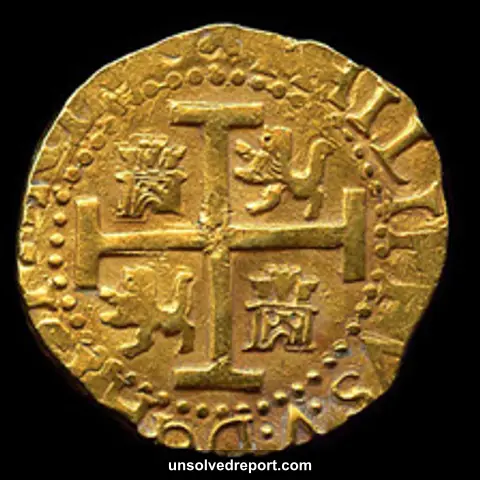
Treasure of Lima: A Dying Pirate's Perfect Lie?
300+ expeditions, zero gold. Is the Treasure of Lima buried on Cocos Island — or was the whole story a condemned pirate's perfect con?
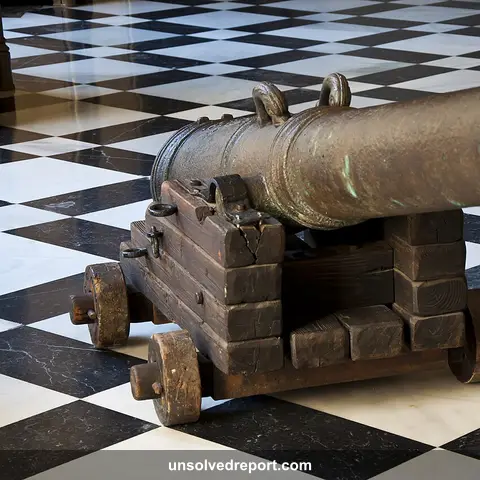
Atocha Missing Sterncastle Treasure: The Richest Half Still Lost
Mel Fisher found $400M of Atocha treasure in 1985 — but the ship's richest chamber, packed with gold and Muzo emeralds, was never among it. Where is it?