Great Zimbabwe: The Stone City a Lie Tried to Steal
Great Zimbabwe: an 11-meter stone city no mortar holds up - and the racist lie colonial rulers invented to explain who built it. What the walls prove.
Curved granite walls rise eleven meters into the air, and not a drop of mortar holds them together. They have stood that way for six or seven centuries. In the granite hills of southeastern Zimbabwe, a whole city was stacked block by block - a conical tower, hilltop enclosures, and a vast elliptical wall wrapping the ghost-footprint of homes long gone. This is Great Zimbabwe, the largest ancient stone structure south of the Sahara, the capital of a rich trading society in the African Middle Ages. Its name comes from the Shona: dzimba dze mabwe, "houses of stone." It gave a modern nation both its name and the bird on its flag.
It is also the scene of one of archaeology's ugliest chapters - a long, government-backed campaign by colonial Europeans to insist that Africans simply could not have built it.
Here's the twist. The real mystery of Great Zimbabwe was never who built it. The evidence answered that more than a century ago. The mystery is how desperately people needed that answer to be wrong.
What We Can Actually Prove
Great Zimbabwe was built by the ancestors of the Shona, the Bantu-speaking people of the region. That isn't a hunch. It's the firm consensus of archaeology, radiocarbon dating, and oral history, as laid out by Wikipedia and National Geographic.
Here is what the dirt and the stones actually tell us:
- When. The city started growing around the 11th century CE, hit its peak between roughly the 13th and 15th centuries, and was largely emptied out by the 16th or 17th. That makes it medieval - not "ancient" in the Mediterranean sense.
- How. The walls are dry-stone masonry: shaped granite blocks fitted together with no mortar at all. The largest enclosure walls run about 250 meters around and reach some 11 meters high. Getting the coursing that precise without mortar is no accident - it is serious engineering.
- A trading economy. Diggers pulled goods from astonishingly far away out of the ground here - Chinese porcelain, Persian and other Near Eastern ceramics, glass beads, gold and copper objects. Great Zimbabwe was wired into Indian Ocean trade networks stretching to the Swahili coast and beyond.
- The Zimbabwe Birds. Eight soapstone birds carved atop monoliths were found at the site. One of them now sits at the center of independent Zimbabwe's flag.
- How many. At its height the settlement may have held thousands. Older estimates ran as high as 18,000 to 20,000 - though recent statistical reassessments suggest the population more likely peaked below 10,000.
In 1986 the site became a UNESCO World Heritage Site. And not one piece of that core picture - African-built, medieval, prosperous, locally rooted - is seriously disputed by working archaeologists today.
Now look closer at the architecture, because the skill is part of the story. This isn't one wall. It's a planned landscape of stone. The Hill Complex, perched on a granite koppie, is the oldest piece - a maze of walls threaded between natural boulders. Down on the valley floor sits the Great Enclosure, its famous outer wall curving inward along a passage that leads to the solid Conical Tower, a tapering stone cone whose purpose - a symbol of authority, of fertility? - is still argued over. And how did they cut the granite? With fire and water. The builders heated the rock with flame, then doused it with water so it cracked into manageable slabs along its natural planes. They trimmed those slabs and laid them in even, mortarless courses so tight the walls outlasted the people who raised them. This is skilled, cumulative engineering, sharpened over generations.
The Lie They Built to Replace It
That consensus was hard-won. For decades, the truth was simply intolerable to the colonizers of the land that became Rhodesia.
When the German explorer Karl Mauch reached the ruins in 1871 - guided there by the trader Adam Render - he took one look and decided no African could have done this. He spun a story instead: King Solomon, the Queen of Sheba, the far-off biblical land of Ophir. A wooden beam he spotted? Must be cedar from Lebanon, he figured. Two decades later the British antiquarian James Theodore Bent, digging in the early 1890s, landed on the same conclusion - the builders were a northern, non-African people, maybe Phoenician, maybe Arabian.
These weren't honest mistakes. As World History Encyclopedia documents, the claim that Africans couldn't have built Great Zimbabwe became a handy prop for colonial rule. If some vanished foreign "white" race had raised the city and then conveniently disappeared, then European settlers could play the part of restorers rather than conquerors. And the fantasy did real, physical damage. Early treasure-hunters and antiquarians tore through and threw away exactly the stratified deposits that could have explained the site - destroying the evidence in their hunt for a lost civilization that had never existed.
Then the ground spoke up.
The professional archaeologist David Randall-MacIver, excavating in 1905-1906, concluded the structures were medieval and that every scrap of evidence pointed to one source: the ancestors of the local African population. In 1929, Gertrude Caton-Thompson - one of the pioneering women of scientific archaeology - ran careful stratigraphic excavations and reached the very same verdict. African in origin. Medieval in date. By the 1950s, with radiocarbon dating thrown into the mix, this was the mainstream scholarly position.
Here's what stops you cold: how early the science was settled, and how long the myth refused to die anyway. Caton-Thompson stated her conclusion bluntly, and the stratigraphy had her back. The imported trade goods and the local material culture fit a medieval African town and nothing else. No Phoenician temple. No Solomonic mine. No lost white kingdom anywhere in the soil. From that moment, the fight wasn't scientific at all. It was a political refusal to accept a scientific answer - which is exactly what makes Great Zimbabwe such a clean case study in how ideology bends the reading of evidence.
The Questions Still Worth Asking
With the big question closed, the genuinely interesting puzzles are the small, granular ones:
- Who used what. What was the Hill Complex actually for, versus the Great Enclosure - royal residence, ritual center, elite seclusion? Interpretations differ.
- Why they left. Leading ideas point to environmental strain, the exhaustion of local resources like grazing, soil, salt, or wood, and shifting trade routes that pulled power northward to successor states like Mutapa. Which of these mattered most is still debated.
- The numbers. As noted, even the peak population is being revised downward with better methods - a reminder that quantitative claims about the site are still a live area of study.
- What got lost. Because so much of the site was churned up by early looting, some questions about daily life, chronology, and ritual may never be fully answerable.
- The wider web. Great Zimbabwe was the biggest of hundreds of similar dry-stone sites - collectively called madzimbabwe - scattered across the region. Its exact political ties to predecessors like Mapungubwe and successors like Khami and Mutapa are still being mapped. This was a node in a long indigenous tradition, not an isolated miracle.
The trade goods open a whole line of their own. Glass beads, Chinese celadon, and Near Eastern wares show that gold and ivory from the Zimbabwe plateau were flowing east to the Swahili coast and into the Indian Ocean economy. Working out exactly how that commerce ran - who controlled the gold, how goods moved, how wealth turned into the labor that raised the walls - is active research right now. And none of it needs foreign builders. The imports are precisely what a prosperous African trading state would naturally pile up. They prove wealth, not outsiders.
The Fringe Theories, Named Plainly
The Phoenician, Sabaean, Solomonic, and "lost white race" origin stories are not mysteries to be politely entertained. They are debunked colonial-era pseudohistory, and they deserve to be called that. The archaeology never supported them. They survived not on evidence but on racism and political convenience. And under the white-minority government of Rhodesia, the pressure got darker still: the regime is documented to have leaned on archaeologists and museum officials to soften or erase the African origin of Great Zimbabwe in official guidebooks and displays. Researchers - including Peter Garlake - faced political interference for telling the truth. Censoring archaeology to protect a racial myth is about as pure an example as you'll ever find of ideology trampling evidence.
So let's be blunt about it. The only reason "who built Great Zimbabwe?" was ever treated as a deep mystery is that the obvious, evidence-based answer - skilled local Africans - was unacceptable to the people in power.
Why It Still Matters
In 1980, Zimbabwe won independence and reached straight for these stone walls. The new nation took its name from them and put the soapstone bird on its flag - a deliberate reclaiming of a heritage that colonial scholarship had spent a century trying to give away. Great Zimbabwe is a monument twice over. First to the medieval Shona society that quarried, shaped, and stacked granite into a trading capital of the Indian Ocean world. And second to the long, patient work of toppling a comfortable lie with stubborn evidence. The achievement was always African. The only mystery was ever the refusal to admit it.
Sources & further reading
- Great Zimbabwe - Wikipedia - https://en.wikipedia.org/wiki/Great_Zimbabwe
- Great Zimbabwe - National Geographic Education - https://education.nationalgeographic.org/resource/great-zimbabwe/
- The Impact of Prejudice on the History of Great Zimbabwe - World History Encyclopedia - https://www.worldhistory.org/article/1429/the-impact-of-prejudice-on-the-history-of-great-zi/
- Archaeology and racism - Wikipedia - https://en.wikipedia.org/wiki/Archaeology_and_racism
- Great Zimbabwe National Monument - UNESCO World Heritage - https://whc.unesco.org/en/list/364/




Göbekli Tepe: The Temple That Came 6,000 Years Too Early
Göbekli Tepe: hunter-gatherers raised 7-ton carved pillars 11,500 years ago — before farming, pottery, or the wheel existed. So who taught them to build? The evidence, and the open question.
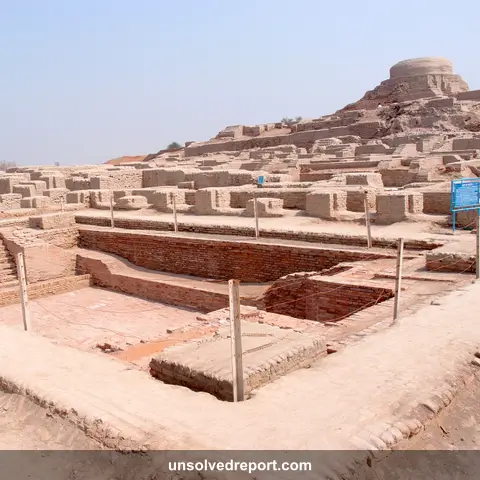
Why Was Mohenjo-daro Abandoned? No War, No Bodies, No Answer
Why was Mohenjo-daro abandoned? No war. No bodies. No ruler ever found. Just a 4,500-year-old city gone silent — and the real reason is still argued over.
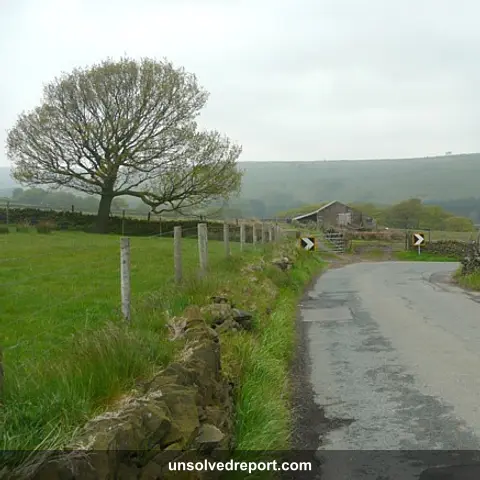
Seahenge: The 4,000-Year-Old Mystery Nobody Can Explain
Seahenge: a Norfolk tide gave back a 4,000-year-old oak circle felled in 2049 BC. The facts are exact — so why does nobody know what it was for?