Sungbo's Eredo: The 100-Mile Wall Hidden in a Forest
Sungbo's Eredo: a 100-mile wall hidden in Nigeria's rainforest for centuries, taller than a six-story building. Who built it — and for what vanished queen?
There is a wall in the rainforest of southwestern Nigeria so long that, for most of its life, almost nobody knew the whole thing was there. The forest ate it. Vines smothered it. Roads cut across it like it was just another bump in the dirt. Then, in the late 1990s, a British archaeologist finally walked and measured the entire thing — and the numbers stopped people cold. One single hand-dug rampart and ditch, wrapping around an area bigger than Greater London. More earth shifted by human hands than went into the Great Pyramid of Giza. Its name is Sungbo's Eredo. And it is named after a woman nobody can quite identify — one of West Africa's most stubborn riddles, in the same company as the vanished builders of Dhar Tichitt further north.
So there are really two stories tangled together here. The first is rock-solid: a giant monument you can survey, photograph, and date. The second is pure legend: a figure called Bilikisu Sungbo, and a belief that refuses to die — that she was the biblical Queen of Sheba. Keep those two strands apart, and the real wonder snaps into focus.
What We Actually Know
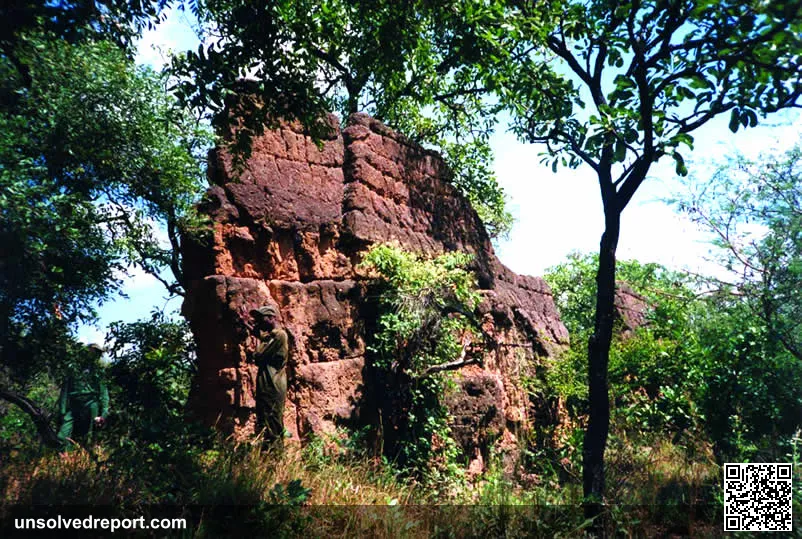
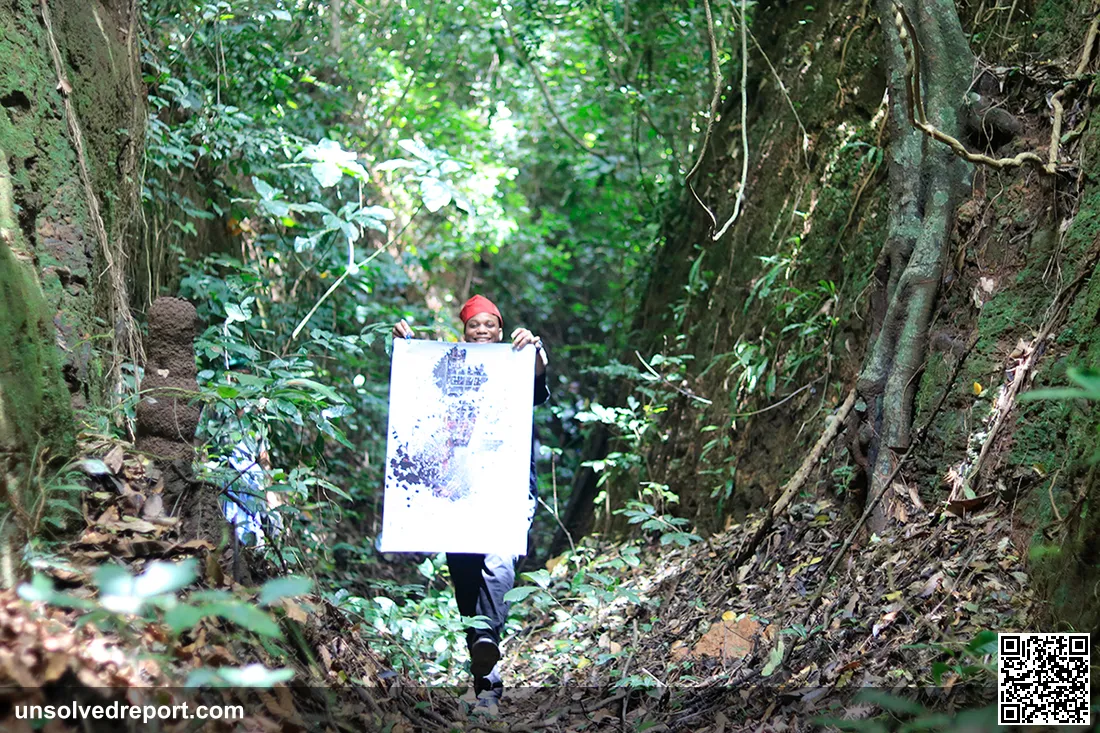
Start with the thing itself. Sungbo's Eredo is one unbroken loop of ditches and banks ringing the old Ijebu kingdom, just southwest of the Yoruba town of Ijebu-Ode in Ogun State, Nigeria (Wikipedia). It is not a castle or a temple. It is an earthwork: a moat-like trench with a steep wall of piled earth rising behind it.
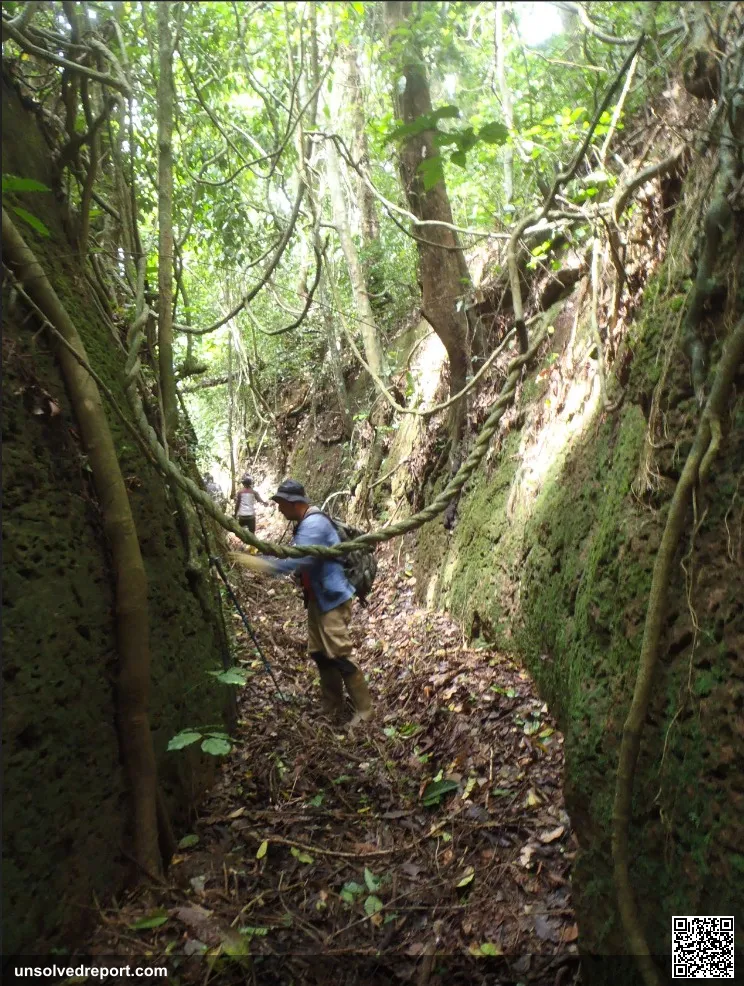
The first thing that grabs you is the sheer size. The loop runs about 160 kilometers — roughly 100 miles. And at its deepest, the climb from the floor of the ditch to the top of the inner bank hits about 20 meters, or 66 feet (Wikipedia). Stand at the bottom and you're staring up at a face of earth taller than a six-story building. Reports on the monument estimate the diggers hauled out something on the order of 3.5 million cubic meters of soil — carving a ditch longer than Hadrian's Wall in Britain (about 117.5 km) and fencing in an area people keep comparing to the size of Greater London (HeritageDaily). They worked the region's red laterite soil. And here's an odd detail: surveyors found ditch walls in places that were unusually smooth and nearly vertical, with some stretches apparently dug deep enough to reach groundwater (Wikipedia).
The man who first mapped the whole circuit was the late British archaeologist Patrick Darling, then at Bournemouth University. Between roughly 1993 and 1998, working with student teams, he traced sections that the forest had swallowed long ago — and in September 1999 his findings hit the international press (W&M News; Wikipedia). Darling made a bold claim: by sheer volume, the Eredo was the single largest ancient monument in all of Africa, with more earth moved than the Egyptian pyramids (Wikipedia).
And the case has only gotten stronger since. A multi-year campaign led by William & Mary historian Gérard Chouin used LiDAR — laser scanners fired from the air, the same technology that later uncovered a lost mountain city hidden beneath the Cambodian jungle — to see straight through the leafy canopy and map the entire structure. The survey covered about 1,000 square kilometers and spat out more than a terabyte of data, recording what's described as the world's largest earthen enclosure system, a project roughly 30 times bigger than every previous LiDAR survey in Africa put together (W&M News). Anthropologist Neil Norman summed up the mental flip it takes to grasp it: Western brains expect a monument to rise into the sky, but in West Africa, "a lot of the architectural monuments protrude into the ground" (W&M News). This monument goes down, not up.
So what was it for? The leading answer: a boundary, a defensive wall, and a flex of power, all in one — built by an organized state, the Ijebu kingdom. And here's the kicker. To dig something this big, you need a central authority calling the shots, a real plan, and a huge labor force all pulling together (W&M News). Which means the Eredo is hard physical proof of a sophisticated, well-run West African state — standing centuries before any European ship or the Atlantic trade ever showed up, much like the stone walls of Great Zimbabwe further south.
The Question Nobody Can Answer Yet
Now the honest mystery — the one that still has experts arguing. Not what it is. When it was built. The dating is genuinely up for grabs, and trustworthy sources flat-out disagree.
Patrick Darling's work pointed to the 10th–11th centuries AD, an era when power was consolidating in the southern Nigerian rainforest (Wikipedia). Some radiocarbon results have been read as backing a window of roughly AD 670–1050 (HeritageDaily). But then came the more recent Ife-Sungbo Archaeological Project — run by Chouin alongside Nigerian colleagues — and it yanked the date much later: into the final decades of the 14th century and the early 15th, based on a fresh batch of radiocarbon dates from carefully controlled digs (OpenEdition / Afrique: Archéologie & Arts).
That gap is not a rounding error. A 10th-century wall and a late-14th-century wall come from completely different worlds — different kings, different threats, different reasons to dig, different ties to the rising Ijebu kingdom and the trade routes around it. And it gets murkier. Some carbon dates from the site reach all the way back into deep prehistory — around 2000 BCE — but researchers wave a caution flag: an old date in the dirt "does not necessarily indicate that the ditch was constructed at that time" (Wikipedia). Old material can get shoved around and reburied; a chunk of charcoal can be far older than the day someone started digging. Chouin himself reckons that picking apart the new LiDAR data will take at least a decade (W&M News). Think about that. The birth date of Africa's biggest earthwork is, even now, still being worked out.
The Stories People Tell
The Bilikisu Sungbo tradition (oral history). The monument carries the name of Oloye Bilikisu Sungbo, remembered in local tradition as a staggeringly rich, childless widow of the Yoruba nobility. One thread of the legend says the great ditch was dug as her memorial — or on her own orders (HeritageDaily; Wikipedia). This isn't a carved inscription with a date. It's living memory passed mouth to mouth — and that makes it precious in its own right.
The Queen of Sheba connection (legend, not evidence). Here's where the story gets electric. A bolder tradition says Bilikisu Sungbo was the biblical and Quranic Queen of Sheba herself — Bilqis — and that a sacred grove at Oke-Eri holds her tomb (HeritageDaily). But let's be clear, because it matters: there is no archaeological evidence at all tying this Nigerian earthwork to the Queen of Sheba of Near Eastern lore (HeritageDaily). Even Darling kept his footing here — he reportedly said he didn't want to "overplay the Sheba theory," but added that "the local people believe it and that's what is important" (Wikipedia). Treat the Sheba link as folklore and faith, then — a beautiful story, not a verified one.
A living, sacred place. Whoever raised it and whenever, the grove at Oke-Eri is no museum piece. It's a working pilgrimage site, still pulling in Christian and Muslim visitors who come to honor Sungbo (Wikipedia). That devotion, alive right now, is part of the monument too.
And that's the quiet thrill of Sungbo's Eredo: the legend, romantic as it is, almost gets upstaged by the plain documented truth. Someone — an organized, ambitious West African society — shifted millions of cubic meters of earth to wrap an entire kingdom in a wall longer than Hadrian's. That part is solid as the laterite it's built from. Who Bilikisu Sungbo really was, and the exact year her people raised this colossal ring — those answers the forest is still letting go of, slowly, one trench at a time.
Sources & further reading
- Sungbo's Eredo — Wikipedia: https://en.wikipedia.org/wiki/Sungbo's_Eredo
- LiDAR project maps world's largest earthen enclosure — William & Mary News (Gérard Chouin), 2024: https://news.wm.edu/2024/12/05/lidar-project-maps-worlds-largest-earthen-enclosure/
- Sungbo's Eredo – The 'Queen of Sheba's Embankment' — HeritageDaily, 2021: https://www.heritagedaily.com/2021/03/sungbos-eredo-the-queen-of-shebas-embankment/137500
- Earthwork Landscapes of Protection and Regulation: Chronology, Construction, and Meaning at Sungbo's Eredo — Afrique: Archéologie & Arts (Ife-Sungbo Archaeological Project), OpenEdition: https://journals.openedition.org/aaa/5904
- New Lights on the Archaeology of Sungbo Eredo, South-Western Nigeria — ResearchGate (academic paper): https://www.researchgate.net/publication/335013603_New_Lights_on_the_Archaeology_of_Sungbo_Eredo_South-Western_Nigeria
Hessdalen Lights: The Valley Nobody Can Fully Explain
The Hessdalen lights blaze over a Norwegian valley on schedule since the 1980s. Scientists brought radar to catch it — what they found still baffles them.
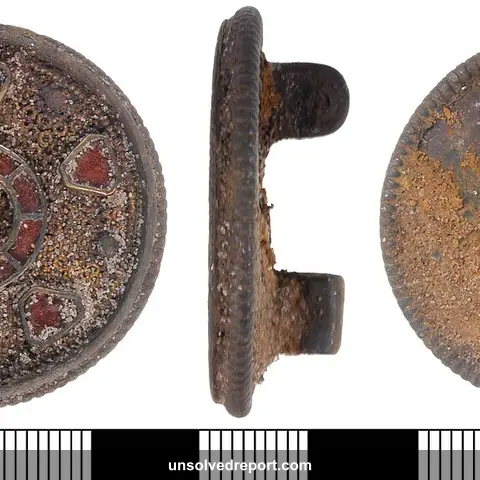
Sutton Hoo: The King Who Left No Body
Sutton Hoo's 90-foot ship hid a king's fortune in gold — and no body. Where did the corpse go, and whose was it? The soil finally gave up its secret.

HD 139139: The Star That Blinks With No Pattern
HD 139139 blinked 28 times in 87 days — no orbit fits, no glitch explains it, and astronomers even checked for aliens. So what's really out there?