Genghis Khan's Tomb: The Grave Nobody Can Find After 800 Years
He conquered half the world, then vanished without a trace. 800 years, satellites, and AI later - why can't anyone find Genghis Khan's tomb?
One man ruled the largest connected empire that has ever existed - a wall of horsemen and law stretching from the Pacific Ocean to the doorstep of Europe. Then he died. And his own people made him disappear.
Genghis Khan was buried in 1227. Today we have satellites that read the ground from orbit, drones that map a mountain in an afternoon, and radar that can see through dirt. We still can't say for sure where he lies.
Here's the strange part. This isn't a treasure someone lost. This is a treasure someone hid - on purpose, with terrifying care - and the hiding worked. Eight hundred years later, it is still working. Let's separate what's written down, what's whispered, and why the search is as much about respect as it is about archaeology.
The death we know, the grave we don't
The death itself is solid history. Genghis Khan died in August 1227, in the middle of a campaign against the Western Xia (Tangut) state, in what is now northwestern China. He was about 60.
How he died is murkier. The Secret History of the Mongols - the oldest Mongolian literary source we still have - says he took a fall from his horse while hunting, before the campaign, and never truly recovered. Marco Polo, writing later, said an arrow killed him. Other accounts blame plain illness. The fall is usually treated as the most reliable version, but honestly? Nobody knows for certain.
On one point, though, the sources agree. The burial was a secret. His body was carried back toward the Mongol heartland and put in the ground with no marker, no monument - exactly as steppe tradition liked it. No grand tomb. No statue. Nothing for anyone to find.
A funeral that may have killed to stay quiet
Now the written record goes thin, and legend takes the wheel. The legends are extraordinary - and dark.
The most repeated stories claim the Mongols protected this secret with blood:
- The escort of soldiers carrying the body is said to have killed everyone they passed on the road, so no witness lived to talk.
- Those soldiers were then killed by a second group - who were themselves executed - wiping out every single person who knew the spot.
- A herd of horses was driven over the grave again and again, until the churned earth looked like ground nobody had ever touched.
- A river was diverted across the site, or a forest was planted over it, letting nature swallow the grave whole.
Chilling, right? Now take a breath - because these are stories, not proven facts. As Snopes and historians note, the mass-execution tales aren't well documented in the primary sources, and they carry all the fingerprints of folklore that swelled over the centuries. They may hold a true memory of real secrecy. But those exact body counts? Unverified.
Here's the detail that lingers. When Marco Polo came through the region later in the 13th century, he asked around - and not one Mongol could tell him where the Great Khan lay. Whether by murder or by reverent silence, the location was already a hole in the world.
The mountain that holds the strongest clue
Our best lead is a mountain. Several traditions tie Genghis Khan to Burkhan Khaldun, a peak in the Khentii mountains of northeastern Mongolia. In life, he is said to have revered it - a place of refuge, a place that meant something to his spirit. The Secret History returns to that mountain again and again.
So many scholars believe he was buried somewhere in the wider Khentii region, very possibly on or near Burkhan Khaldun. But the mountain is huge. The terrain is thick. And reverence, here, has been turned into a weapon - a wall of holiness keeping everyone out.
Let's be honest about what this clue is and isn't. A mountain being sacred to Genghis Khan, and being the region linked to imperial burials, is not the same thing as a confirmed grave. No surviving source hands us coordinates. The Secret History of the Mongols - our clearest window into his life - goes quiet right where we want it loud, almost certainly on purpose, because the silence was the plan. Some scholars even warn that the peak we point to today as Burkhan Khaldun might not be the exact mountain 13th-century Mongols meant by that name. So the strongest clue we have is a sacred region. Not an X on a map.
Ikh Khorig: the Great Taboo
After the khan died, his people sealed off the land. They called it the Ikh Khorig - the "Great Forbidden Area" - a sacred no-go zone, guarded for centuries to keep outsiders away. Elite watchmen, traditionally said to come from a group called the Darkhad, stood guard. Access was choked down to almost nothing. And the ban outlived the empire that made it.
Then the modern world arrived, and the wall simply changed shape. Through the Soviet-aligned 20th century, the region became a controlled military area - keeping researchers out all over again. Today Burkhan Khaldun is a UNESCO World Heritage site, honored for its sacred and cultural weight, which piles yet another layer of protection and caution over any thought of digging.
Add it up and you get something remarkable: the single most likely resting place of Genghis Khan has spent roughly eight centuries as one of the most deliberately locked-off patches of ground on Earth.
The search that refuses to dig
Modern researchers mostly gave up on the shovel. They turned to remote sensing instead - partly because they have no choice, and partly out of respect for how deeply Mongolians feel about disturbing a sacred ancestor.
- A high-profile hunt led by researcher Albert Yu-Min Lin, backed by National Geographic, proposed studying Burkhan Khaldun with satellite imagery, drones, ground-penetrating radar, and magnetometry - and even handed satellite images to crowds of online volunteers to comb through. The survey turned up all sorts of archaeological features. It did not turn up the tomb.
- Later remote-sensing and machine-learning projects have flagged hundreds of possible burial mounds scattered across the Khentii region. Not one has been confirmed as Genghis Khan's grave.
The technology keeps getting sharper. The confirmed tomb keeps not showing up.
Here's why. The Mongols left almost nothing for the machines to catch. A steppe burial built to be invisible - no mound, no stone, no chamber, the surface carefully smoothed back to normal - is just about the worst target remote sensing can face. These instruments shine at spotting walls, rooms, and disturbances in the soil. But disturbance is exactly what the builders erased. The original concealment was so good that it's still beating the modern search. Finding hundreds of maybe mounds across a vast region is nothing like confirming that one of them is the grave - and tearing them all open is neither allowed nor wanted.
Why many Mongolians hope it's never found
Here's what sets this mystery apart from any other treasure hunt: a great many Mongolians don't want the tomb found.
Genghis Khan is a revered national founder. Disturbing his grave is widely seen as deeply disrespectful - even dangerous. The secrecy his followers engineered lines up perfectly with a living wish: let him rest. Leave the man in peace.
That's why this will probably never look like the day they cracked open Tutankhamun's tomb. Any future discovery would have to clear not just terrain and technology, but the consent of a whole nation that may prefer the void to stay a void.
And there's a warning in the past. When Soviet and Mongolian archaeologists - and later other expeditions - disturbed elite Mongol-era burials, some local communities answered with anger and unease, and more than a few researchers and onlookers tied later misfortunes to the digging. You don't have to believe in curses to feel the force here. The reluctance is real and powerful. For many Mongolians the question isn't only where the tomb is. It's whether anyone has the right to go looking at all. That weight doesn't hang over treasure tales about sunken galleons. Here it sits at the very center.
A different kind of mystery
It's worth stepping back, because this isn't your usual lost-treasure story. The San Jose galleon went down by accident. The Florentine Diamond was tucked away for safekeeping. The Nazi gold train may never have existed in the first place.
Genghis Khan's tomb is something else entirely. It is a thing that definitely exists. Its makers knew exactly where it was. And they concealed it so well that the knowledge died right along with the people who carried it. This is not a riddle nobody managed to solve. It is a secret somebody managed to keep - forever. That is rarer, and in its own eerie way more impressive, than any treasure map ever drawn.
So what's the treasure?
If the tomb were ever opened, historians guess it might hold extraordinary grave goods - the personal belongings of a world conqueror, maybe riches pulled from across the empire. But guess is the right word. This is informed speculation, not knowledge. No one has seen inside Genghis Khan's tomb. There is no inventory to price. The honest answer is that the contents are completely unknown.
Maybe the real treasure of this story is the engineering of the secret itself. A burial hidden so well it outlasted Marco Polo, defeated Soviet surveyors, slipped past satellite arrays, and shrugged off artificial intelligence. The Mongols set out to make their khan vanish into the steppe. By every measure we have, they won.
Fact versus legend
- Fact: Genghis Khan died in 1227 during the campaign against the Western Xia and was buried in secret, with no visible monument.
- Fact: Burkhan Khaldun in Mongolia's Khentii mountains is the strongest candidate region; the area was protected for centuries as the forbidden Ikh Khorig and is now a UNESCO site.
- Fact: Modern non-invasive searches, including Albert Lin's National Geographic project, have found archaeological features but not the tomb.
- Legend: The mass executions of funeral escorts, the trampling horses, the diverted river - culturally famous, but not reliably documented.
- Speculation: That the tomb holds vast treasure. Plausible, but entirely unconfirmed; no one has located the grave, let alone opened it.
Sources & further reading
- Facts and Details - Death of Genghis Khan and the Search for His Tomb - https://factsanddetails.com/asian/cat65/sub423/entry-5249.html
- Live Science - Where is the tomb of Genghis Khan? - https://www.livescience.com/where-is-genghis-khan-buried
- Wikipedia - Burial place of Genghis Khan - https://en.wikipedia.org/wiki/Burial_place_of_Genghis_Khan
- Snopes - Were 2,000 people executed to keep Genghis Khan's burial site secret? - https://www.snopes.com/fact-check/genghis-khan-tomb-executions/
- National Geographic - Where is Genghis Khan's tomb? - https://www.nationalgeographic.com/history/article/genghis-khan-tomb-location
Catalhoyuk's No-Streets Mystery: Why This Town Had No Doors
9,000 years, zero streets, zero front doors — just rooftops and ladders. A 2025 DNA study just reopened the debate over why. Here's the evidence, ranked.
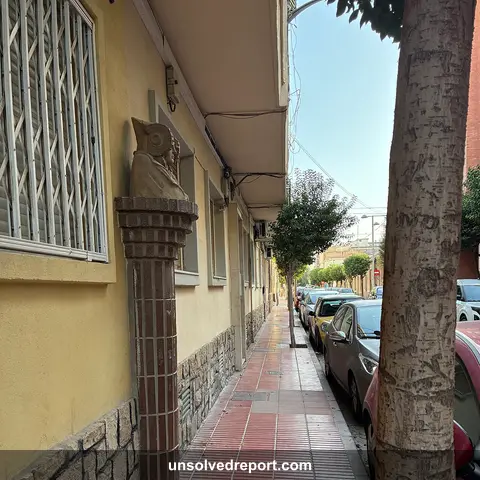
Lady of Elche: The Buried Face That Won't Stop Lying
A farmhand's tool hit stone in 1897 and a 2,400-year-old face stared back. Real Iberian icon or a clever Victorian fake? Scientists finally tested her paint.
Nebra Sky Disc: The Bronze Age Star Map Looters Nearly Erased
The Nebra Sky Disc may be the oldest star map on Earth — but looters buried its proof. Is it 3,600 years old, or a thousand years younger than we think?