Atocha Missing Sterncastle Treasure: The Richest Half Still Lost
Mel Fisher found $400M of Atocha treasure in 1985 — but the ship's richest chamber, packed with gold and Muzo emeralds, was never among it. Where is it?
July 20, 1985. A diver keys his radio and says four words back to a salvage boat off Key West: they had found the "mother lode." Below him lay a reef of silver bars, stacked like cordwood, the prize at the end of one of the most famous treasure hunts in American history. The Nuestra Señora de Atocha had finally given herself up.
Or so it seemed. Four decades later, after roughly $400 million in recovered riches, the salvors will tell you something that stops you cold: they never found the part of the ship that mattered most. The galleon's sterncastle—the towering rear structure that held the captain's cabin and the richest cargo aboard—is, by the salvage company's own account, still out there somewhere. Lost.
So the real puzzle was never "is there treasure?" There was, and a fortune of it has come up. The puzzle is this: where did the richest section of a 17th-century warship go?
How a Treasure Ship Vanished Twice
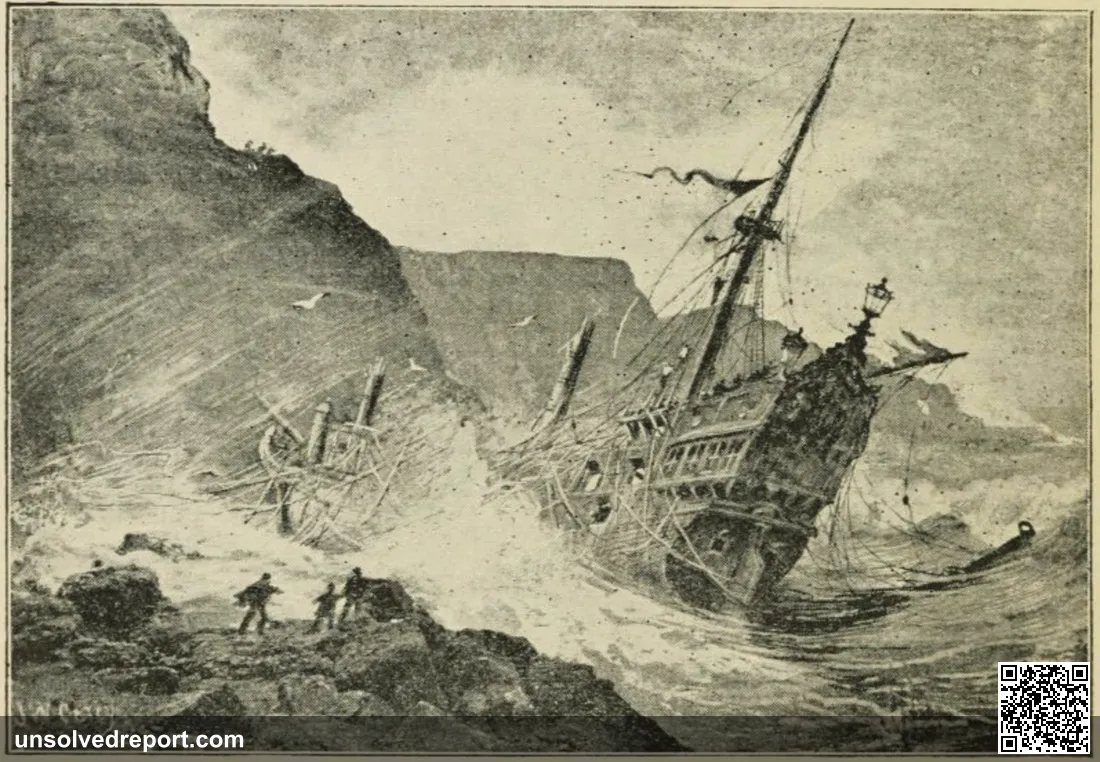
The Atocha was no merchant tub. She was the almiranta—the heavily armed rear guard—of Spain's 1622 Tierra Firme fleet, a 28-ship convoy that left Havana for Spain in early September 1622. Within a day or two, it sailed straight into a hurricane in the Florida Straits. The galleon struck a reef and went down on September 6, 1622, in about 55 feet of water. Of the 265 people aboard, five lived. Contemporary accounts say the survivors clung to the mizzenmast, which still poked above the waves like a grave marker (EBSCO Research Starters; Wikipedia: Nuestra Señora de Atocha).
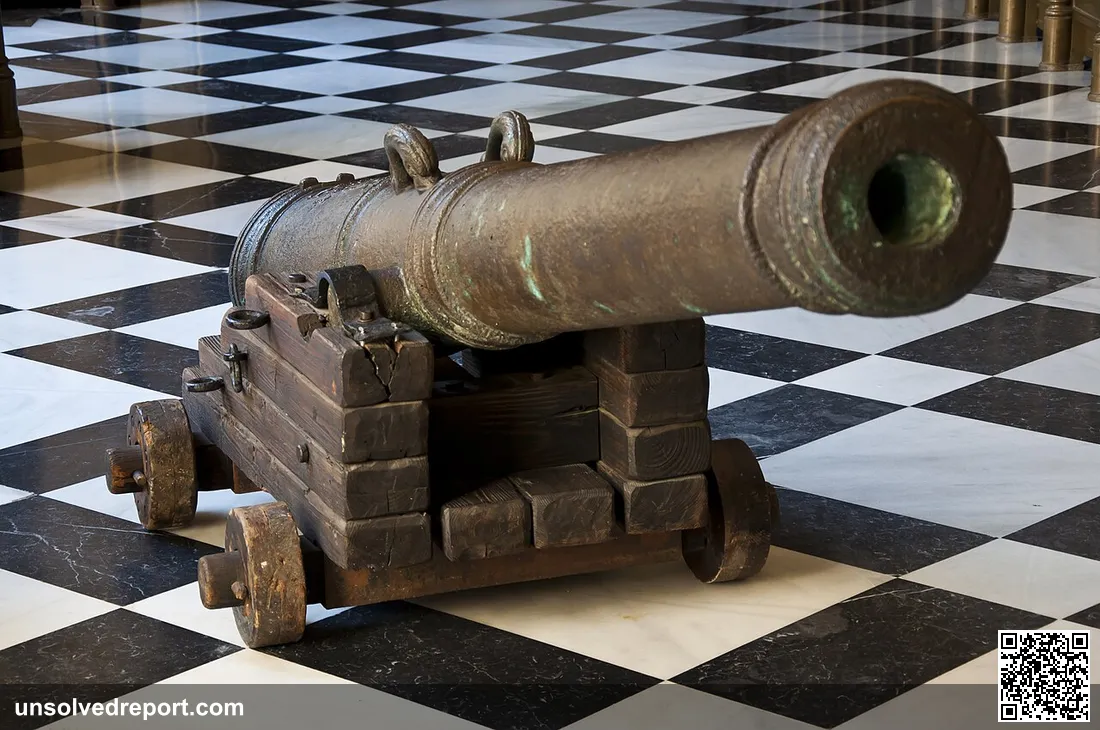
Here's where the story turns. Spanish salvors under Captain Gaspar de Vargas found the hull mostly intact, its mast still standing. They tied buoys to the site and sailed off to work other wrecks first, planning to come back (EBSCO Research Starters). Big mistake. In October 1622 a second hurricane slammed the Lower Keys. It ripped away the marker mast and the buoys, then tore the hull apart and flung wreckage and cargo across the seafloor (EBSCO Research Starters; Cannon Beach Treasure Company). When Vargas returned, the Atocha was simply gone—as if the sea had swallowed her a second time. The Spanish kept searching, on and off, for some 60 years. They never found her (Wikipedia). They had better luck with her sister ship, the Santa Margarita, which Francisco Núñez Melián salvaged over roughly a decade using an early diving bell (Maritime Research & Recovery)—a rare case of a Spanish wreck actually giving up its hold, unlike the San José galleon, whose fortune still sits on the seabed under legal dispute.
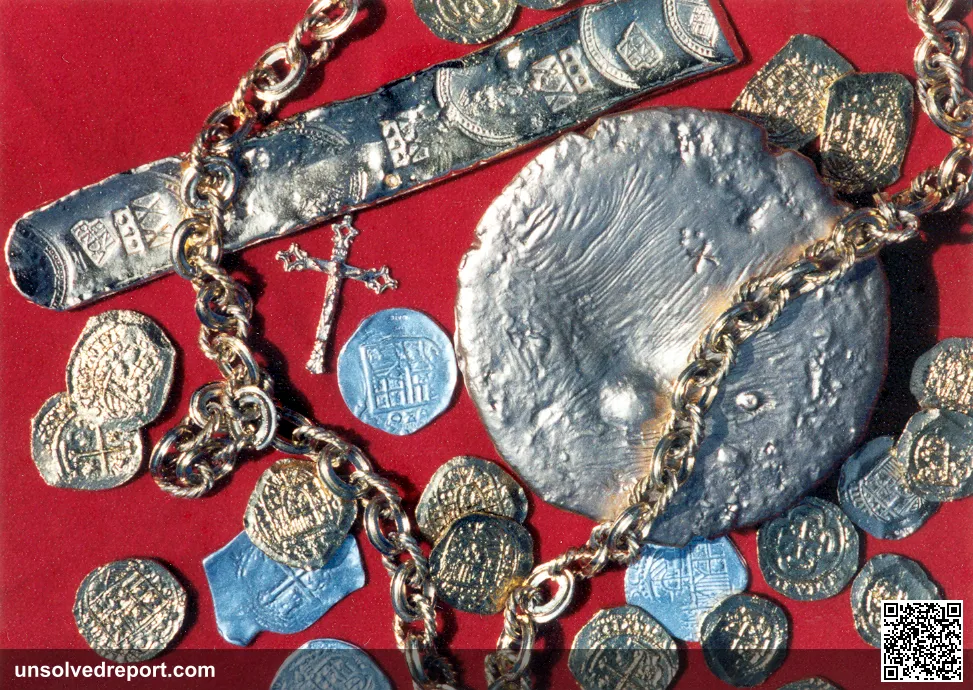
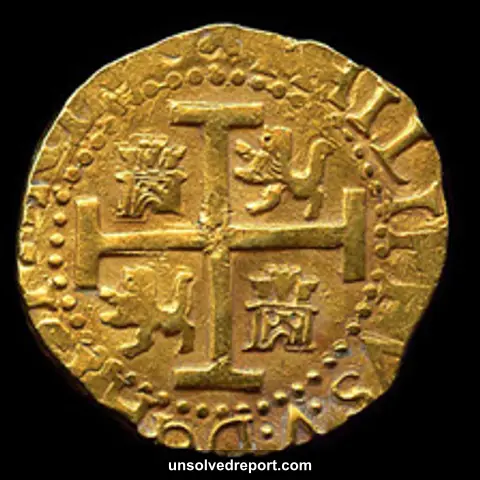
And the cargo? Staggering. Period sources and the ship's own manifest list silver from the mines of Bolivia, Peru, and Mexico; gold and emeralds from Colombia; pearls from Venezuela; bronze cannon; worked silverware. Add up what the Atocha and Margarita carried between them and you get roughly 40 tonnes of gold and silver, plus about 32 kilograms—71 pounds—of emeralds (Wikipedia).
Treasure hunter Mel Fisher and his company went after it starting in 1969, in the same era of American treasure diving that would later crack open the pirate wreck of the Whydah Gally off Cape Cod. For years they chased a trail of crumbs—silver bars, cannon, scattered coins—through the 1970s and early 1980s. Then came July 20, 1985, and the main pile: silver bars and chests of coins, the "mother lode" at last (EBSCO Research Starters; Cannon Beach Treasure Company). And the recovery isn't some closed chapter. On June 17, 2026, Mel Fisher's Shipwreck Expeditions announced its crew had raised a 22.5-pound silver bar—the first silver bar pulled from the site since 1999 (GlobeNewswire press release).
Which raises the question that won't go away. If they're still finding bars in 2026, what else is down there?
The Half No One Has Found
Picture the Atocha as she sailed: a Spanish galleon's sterncastle was the tall, ornate rear of the ship, built up some 35 feet above the waterline and crowned by the high poop deck (Mel Fisher's Treasures). This was officer country. The captain and senior men had their cabins here. And on a treasure galleon, that's exactly where you'd expect the densest valuables to ride—the contraband and registered gold bars, boxes of jewelry, the finest emeralds from the Muzo mine—because the highest-ranking people kept the highest-value goods close.
The salvage company's claim is blunt: that section has never been found. As one widely cited history of the site puts it, "the stern castle and captain's cabin, where the gold bars and Muzo mine emeralds would have been stored, still eludes search teams" (Cannon Beach Treasure Company). Tally the manifest against what's come up, and—by the salvors' accounting—huge amounts of cargo are still missing. In June 2026, company president Gary Randolph rattled off what's unaccounted for: "thousands of silver coins, hundreds of silver bars, gold artifacts, jewelry, and emeralds," all still down there somewhere (GlobeNewswire).
So the mystery is concrete, and it's physical. When that October 1622 hurricane smashed the buoyed hull, where did the upper stern—and whatever was packed inside it—finally settle? Forty years of combing the known debris trail haven't turned it up.
Three Ways to Read the Gap
So where is it? There are a few honest answers, and they don't all agree.
Theory 1 — It's still out there, just off the map. The salvors' favorite: the sterncastle tore loose in the second storm and drifted some distance from the main pile, coming to rest in a patch of sand nobody has searched yet—the same frustrating gap between a confirmed hull and a missing hoard that has stalled searchers at Blackbeard's Queen Anne's Revenge. Worth saying plainly—this is the salvage industry's own framing, and it has an obvious commercial upside, because it keeps the search funded year after year. It's plausible, given how far the documented debris already spread. But "an unsearched patch of seafloor" is a hope, not a location.
Theory 2 — There's no intact "it" left to find. A colder reading: wooden upper works are buoyant and fragile, so the sterncastle may have been beaten to splinters, with its heavy cargo scattered so thin and so wide that no single intact deposit survives at all. Some of it the Spanish may have grabbed; some may have spilled overboard as the ship broke up. This is speculation—but marine archaeologists generally warn that organic ship structure rarely survives centuries on a shallow, storm-swept reef.
Theory 3 — The "missing half" is partly an accounting trick. Historians of the 1622 fleet point out that galleons routinely smuggled unregistered contraband, so the manifest is a shaky guide to what was actually aboard. Read that way, the gap between paper and recovery may be as much about bad bookkeeping and smuggling as about one lost compartment.
What nobody disputes is the spine of the story: a galleon lost in 1622, a second hurricane that erased the marked wreck, a "mother lode" found in 1985, and a richest section never confirmed recovered—joining the short, stubborn list of famous shipwrecks that swallowed fortunes and never gave them back. Everything else—where it lies, whether it survives at all—stays an honest, open question. The sea kept its best secret, and forty years of divers haven't talked it out of her yet.
Sources & Further Reading
- EBSCO Research Starters, "Sinking of the Atocha" — https://www.ebsco.com/research-starters/history/sinking-atocha
- Wikipedia, "Nuestra Señora de Atocha" — https://en.wikipedia.org/wiki/Nuestra_Se%C3%B1ora_de_Atocha
- Mel Fisher's Treasures, "The Atocha and Margarita Story" — https://www.melfisher.com/Library/AtochaMargStory.asp
- Maritime Research & Recovery, "History of the Santa Margarita" — https://www.mrronline.com/copy-of-history
- Cannon Beach Treasure Company, "Shipwreck Guide to Mel Fisher's Atocha 1622" — https://cannonbeachtreasure.com/pages/atocha-1622
- GlobeNewswire, "Mel Fisher's Crew Recovers First Atocha Silver Bar Since 1999" (June 17, 2026) — https://www.globenewswire.com/news-release/2026/06/17/3313499/0/en/Mel-Fisher-s-Crew-Recovers-First-Atocha-Silver-Bar-Since-1999.html
San Miguel 1715 Fleet Treasure: The Ship Nobody Can Find
The 1715 Fleet Treasure hurricane sank eleven ships. Ten were found on the reefs. The San Miguel vanished a day early — empty manifest, no grave. Why?
Brink's-Mat: £26M Vanished Gold Every Robber Got Caught, Not the Loot
Six men stole £26M in gold at Heathrow in 1983. Every robber was caught — but most of the bullion vanished. A final TV season now reopens the chase.
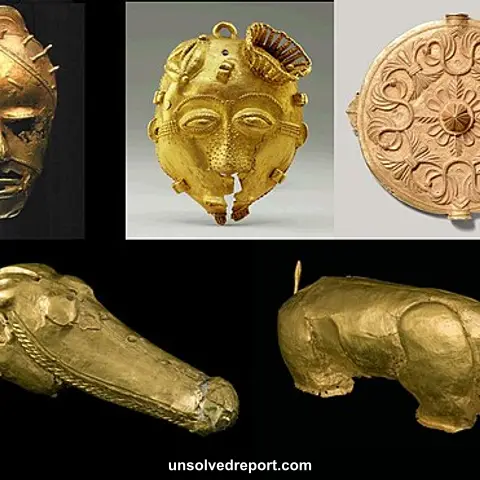
Golden Rhinoceros of Mapungubwe: The One-Horned Riddle Nobody Can Solve
A 1934 grave gave up a palm-sized golden rhino with an anatomically impossible one horn. Why did its makers change nature — and why did a gold kingdom vanish?