San Miguel 1715 Fleet Treasure: The Ship Nobody Can Find
The 1715 Fleet Treasure hurricane sank eleven ships. Ten were found on the reefs. The San Miguel vanished a day early — empty manifest, no grave. Why?
July 31, 1715. The sky over Florida's coast goes the color of a bruise, and a hurricane slams a fleet of Spanish treasure ships onto the reefs in the dark before dawn. By the time the wind dies, nearly a dozen ships are kindling and close to a thousand people are gone. Three centuries pass. Divers, salvors, and archaeologists comb the wreck line and pull up almost every lost vessel, one by one, named and mapped. Almost every one. There is a single ship nobody can find — not on the reefs, not in the Spanish salvage logs, not under any modern diver's hose. Sailors and treasure hunters have a name for the one that got away: the "ghost ship" of the 1715 fleet, the San Miguel. Here is exactly what the records say, exactly where they stop cold, and where the legend rushes in to fill the silence.
What We Actually Know
Make no mistake — this is one of the best-documented sea disasters in all of colonial America. The fleet that left Havana on July 24, 1715, wasn't really one fleet. It was two, lashed together for safety on the long, nervous run home to Spain: the Nueva España (New Spain) squadron under Captain-General Juan Esteban de Ubilla, and the Tierra Firme squadron under Antonio de Echeverz y Zubiza (Wikipedia: 1715 Treasure Fleet; National Park Service). Tagging along loosely was one outsider — a French frigate called Le Grifon. Remember her. She matters.
Seven days out, in the small hours of July 31, the storm found them. The ships were hugging the Florida shore, the usual coast-following route home, when the hurricane closed its fist (HISTORY). The Spanish ships were torn apart along a stretch of central Florida coast that today, with grim accuracy, sells itself as the "Treasure Coast." How many died? The sources don't fully agree, and that disagreement is part of the story: History.com puts the dead at "between 700 and 1,000," while Cuban records cited by Wikipedia push the number nearer 1,500 (HISTORY; Wikipedia). And the cargo? The registered haul across the fleet came to roughly 14 million pesos in gold and silver coin — a fortune that still doesn't touch the disputed billions claimed for the San José galleon (HISTORY). Now, that French ship. Le Grifon stayed farther out to sea, rode it out, and limped into Brest, France, the next month — the only vessel of the whole convoy to make it home (Wikipedia).
The Spanish didn't waste a day. Officials in Havana fired off salvage ships, pitched camps right on the beach, and by April 1716 had clawed back an estimated 80 percent of the registered treasure; the rest sat on the sea floor for two and a half centuries, until modern salvors finally found the wrecks again starting in the 1960s (HISTORY). And this isn't dusty history — it's still happening. In the summer of 2025, a licensed salvage crew pulled more than $1 million in silver and gold coins out of the fleet's debris field (Boston.com / Associated Press). Two of the wrecks, the Urca de Lima among them, are now protected as Florida Underwater Archaeological Preserves (National Park Service).
Here's where it gets strange — and both strange parts come straight from the Spanish archives, not from campfire stories. First: the San Miguel, a ship of the Echeverz squadron, broke away from the convoy about a day before the storm hit, according to research drawn from Casa de Contratación records and related colonial files. Second — and this is the detail that won't let researchers sleep — the San Miguel's manifest listed no registered cargo at all. Nothing. Even though she'd been sent to Havana to collect tobacco (Amelia Research & Recovery, salvor research summary).
The One Real Question Nobody Can Answer
Strip away everything else and here's the mystery, clean and hard: of all the ships that sailed in 1715, the San Miguel is the only one never confirmed on the sea floor. The rest of the convoy met the reefs in a known patch of coast and got salvaged, mapped, named. The San Miguel simply isn't there. Or if she is, nobody has found her.
And here's the cruel part — the old records go quiet at the worst possible second. The ship peels off from the convoy a day before the hurricane, and right there the paper trail thins to a thread. Spanish officials did later report "fragments of a ship or ships" washing ashore north of St. Augustine, well above where the main fleet died. But they couldn't tell you whose fragments they were — the San Miguel's, or another lost vessel, the so-called French Prize (Amelia Research & Recovery). No confirmed hull. No confirmed debris field. No recovered cargo to match against a manifest. So we're left with a ship the records swear existed and swear set sail — and that has no confirmed grave. That gap, between a documented departure and an ending nobody wrote down, is the real puzzle. Everything from here on is people trying to fill it.
Theories — and Which Ones Are Just Stories
Past this line, it's all interpretation. So let's be honest about which is which.
Theory 1: She wrecked far north, near St. Augustine or Amelia Island. (Speculative.) The San Miguel split off a day before the storm, and Spanish officials found unidentified wreckage north of St. Augustine — so some researchers, especially modern salvage groups working that coast, argue she was driven ashore far above her sisters, maybe near Mayport, Fernandina Beach, or Amelia Island's Nassau Sound (Amelia Research & Recovery; Grunge summary). Geographically? It fits. Proven? Not even close — the very Spanish report that mentions that northern wreckage flatly admits it couldn't tell the San Miguel from another ship.
Theory 2: She was loaded with contraband. (Speculative.) The blank manifest is the spark that lit the whole legend. Smuggling to dodge the crown's tax — the quinto real, the royal fifth — was everywhere in this era, so an empty cargo list on a ship sent to a major port has tempted some writers to imagine her riding low with undeclared gold and silver (History Hidden). But there's a far duller explanation that fits just as well: maybe the ship genuinely "probably had little registered treasure on board," as the salvor research itself admits (Amelia Research & Recovery). The smuggling angle is a guess dressed as a clue, not a record.
Theory 3: The fastest ship outran the storm — then sank alone. (Legend-flavored speculation.) This is the version people love to tell: the San Miguel was the quickest ship in the fleet, she sprinted out ahead of the worst of the hurricane, fled north, and went down somewhere off the coast with her secrets still aboard — the same pull that still draws divers to the Whydah Gally, wrecked barely two years later. It's a gorgeous story. It's also built almost entirely on enthusiast retellings rather than primary documents, so read it as folklore painted over a very thin layer of fact.
About that "$2 billion." You'll see the San Miguel's supposed treasure splashed across the internet at $2 billion or more. Treat that number as marketing, not history — the same kind of inflation that follows Blackbeard's treasure every time his sunken flagship comes up. It grows out of the contraband theory — itself unproven — and out of the pure romance of a hull nobody has touched. The sober truth points the other way, away from any jackpot: her manifest was empty, and what she actually carried, nobody knows.
So what survives, after every theory burns off? The bones. A real fleet. A real hurricane. A real ship that left the convoy and was never confirmed found. The San Miguel haunts us not because we know what's lying down there in the dark — but because, after three hundred years of diving, we still have absolutely no idea.
Sources & Further Reading
- 1715 Treasure Fleet — Wikipedia
- Hurricane Sinks Spanish Treasure Ships — HISTORY
- The Spanish Treasure Fleets of 1715 and 1733 — National Park Service
- Florida Shipwrecks teaching resource — National Park Service
- Salvagers found $1M in coins in 2025 — Boston.com / Associated Press
- Research on the San Miguel — Amelia Research & Recovery (salvor research; treat as primary-source-driven but commercially motivated)
- The Mystery of the Long-Lost Treasure of the San Miguel — Grunge
- 300th Anniversary of the Spanish Silver Fleet's hurricane — NOAA AOML

Brink's-Mat: £26M Vanished Gold Every Robber Got Caught, Not the Loot
Six men stole £26M in gold at Heathrow in 1983. Every robber was caught — but most of the bullion vanished. A final TV season now reopens the chase.
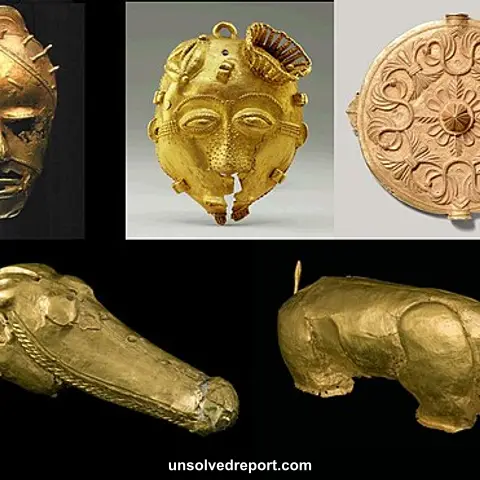
Golden Rhinoceros of Mapungubwe: The One-Horned Riddle Nobody Can Solve
A 1934 grave gave up a palm-sized golden rhino with an anatomically impossible one horn. Why did its makers change nature — and why did a gold kingdom vanish?
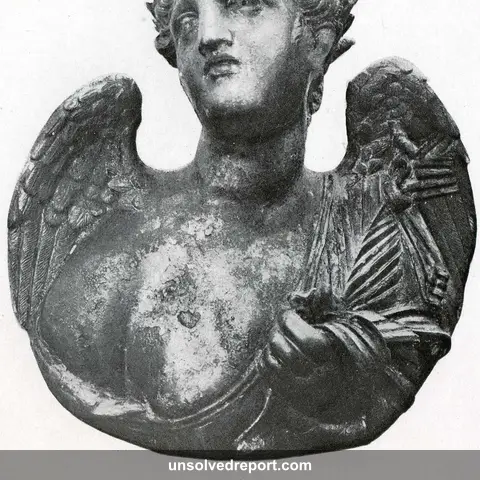
Mahdia Shipwreck: The Greek Treasure Ship No One Can Explain
Sponge divers off Tunisia found bronze gods and 200 tons of marble on the seabed — a 2,000-year-old cargo so strange, no one agrees why the ship was even sailing.