Ban Chiang Bronze Age: The 1,000-Year Fight Nobody Can Settle
A Harvard student's trip over a tree root uncovered a lost civilization — but top archaeologists still can't agree when its bronze age began. Off by 1,000 years. Why?
He tripped. He fell flat on his face. And when he looked up from the dirt, a row of ancient clay pots was staring back at him.
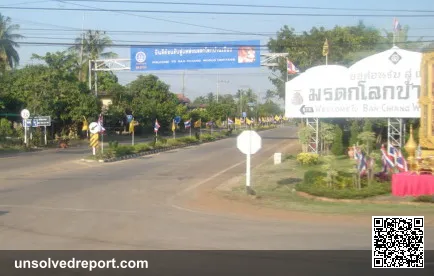
It was 1966. The man in the dirt was Stephen Young, a Harvard junior and the son of a former U.S. ambassador to Thailand, walking a dusty road through a quiet village in the country's northeast. The root of a kapok tree caught his foot. Down he went. But instead of just brushing himself off, Young noticed what his nose had nearly landed on: the rims of buried pots poking up through the path. He knew old when he saw it, and he told the authorities (Penn Museum, Expedition Magazine).
That clumsy moment cracked open one of the most important — and most argued-over — archaeological sites in all of Asia: Ban Chiang. For a while, it looked like Young's stumble had rewritten the story of where humans first learned to pour molten bronze. Then the dates started to wobble. And here's the strange part: they have never stopped wobbling. The big question about Ban Chiang today isn't whether it matters. It's when its people first cast metal — and the world's top experts still disagree by roughly a thousand years.
What the dirt actually gave up
Locals had been pulling gorgeous pottery out of the ground for years. But Young's 1966 find is what finally brought the scientists running. In 1973, Thailand's Fine Arts Department teamed up with the University of Pennsylvania Museum of Archaeology and Anthropology for a joint dig (Penn Museum). The real work hit in 1974 and 1975, co-led by Chester Gorman of the Penn Museum and Pisit Charoenwongsa of Thailand's National Museum in Bangkok.
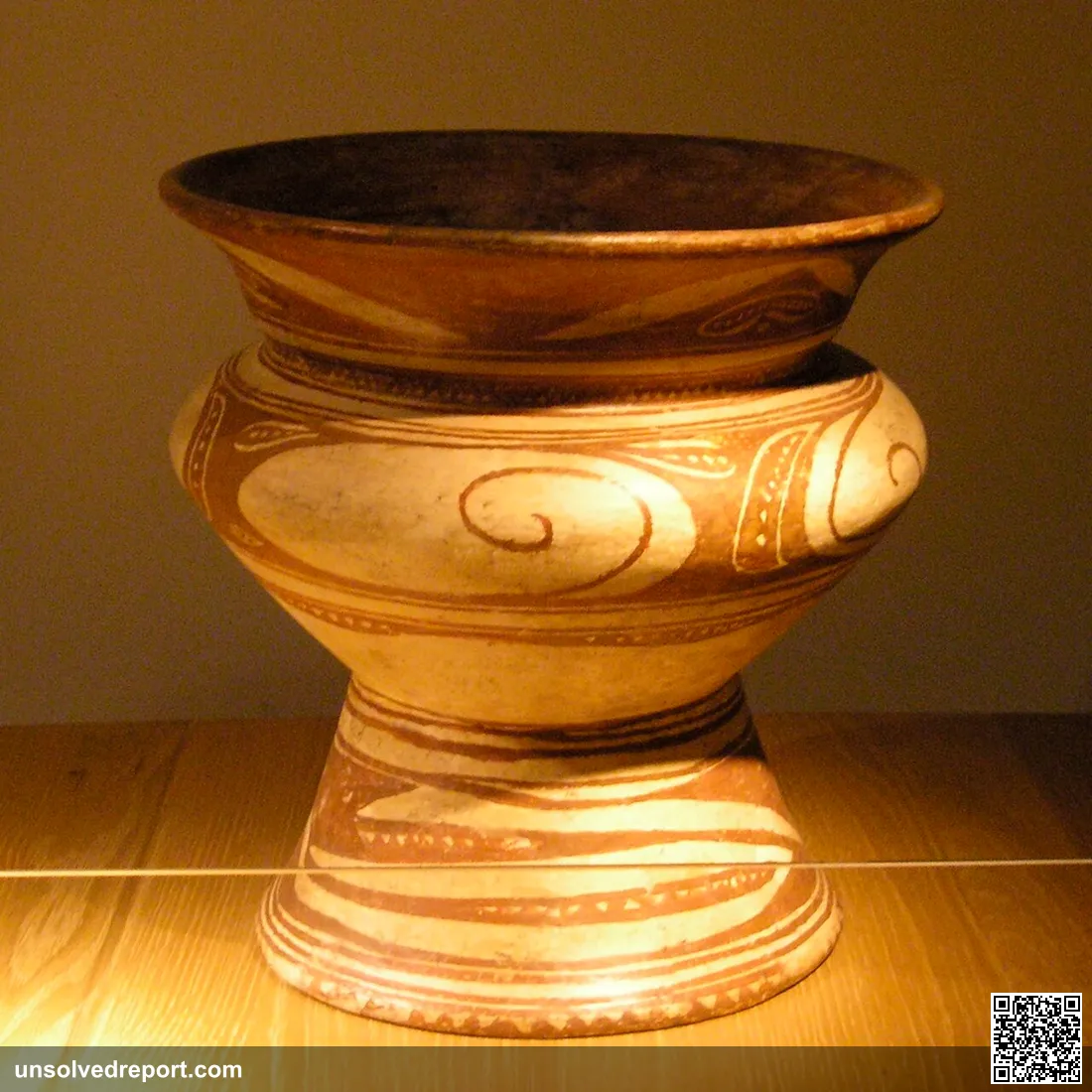
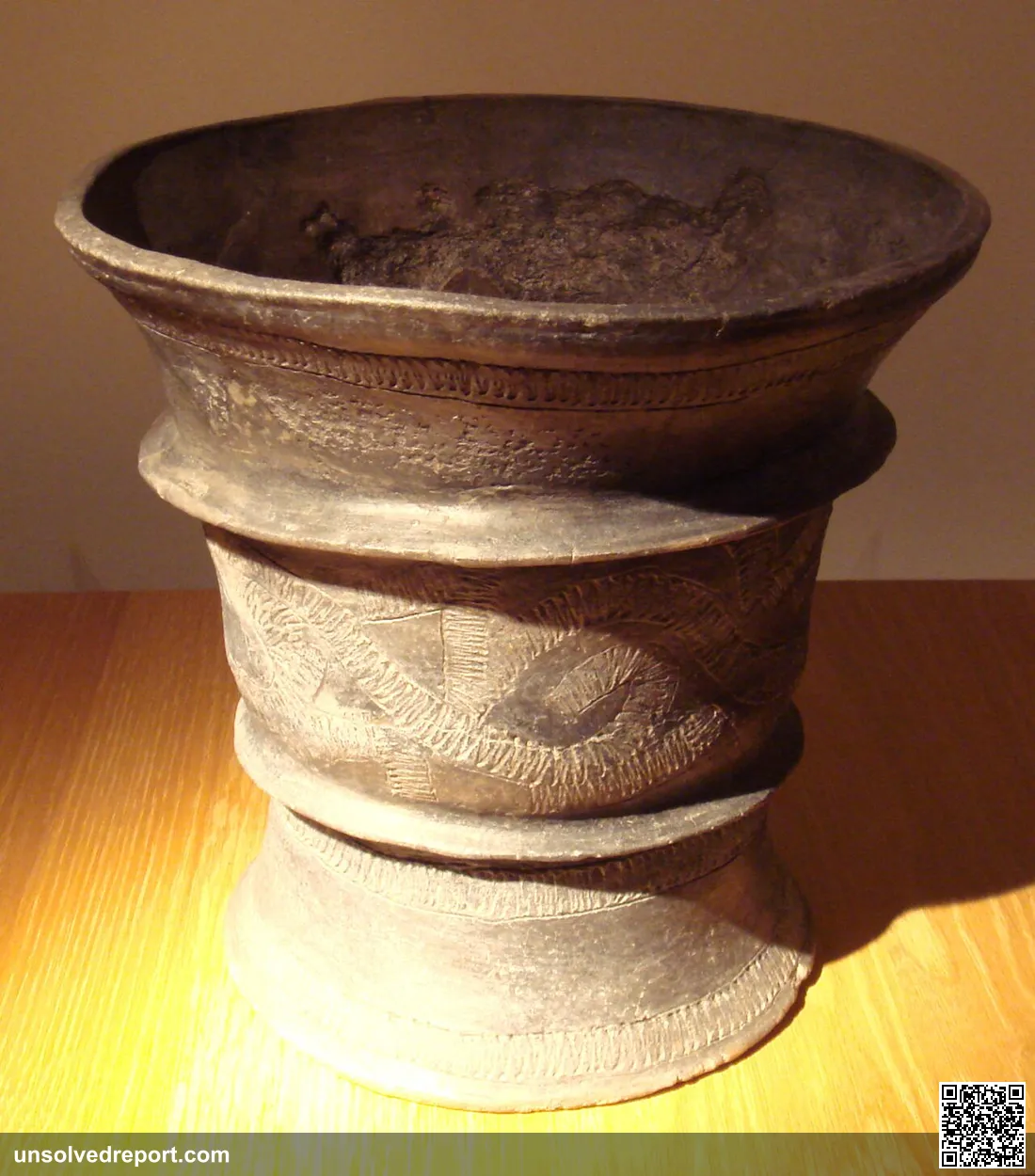
What came up was staggering. The teams dug down three to four-and-a-half meters, hauled out roughly 18 tons of material, and logged more than 7,000 pots — plus 126 human skeletons, later studied by Michael Pietrusewsky of the University of Hawaii (Penn Museum). And the pottery is the showstopper. The late-period buff ware, swirling with red painted designs, is so striking it has become a kind of national emblem of Thai prehistory (Smarthistory).
Picture this not as one frozen snapshot but as a film running for centuries. Ban Chiang wasn't a single moment — it was a place lived in, generation after generation, from Neolithic rice farmers all the way through the arrival of bronze and, later, iron. Diggers found bronze spearheads and ornaments in the older layers, then iron blades — smelted and forged — in the newer ones, even objects that fused both metals together (Penn Museum). In 1992, UNESCO made it a World Heritage Site, calling it the most important prehistoric settlement ever found in Southeast Asia — a region that also hides sites as strange as the stone jars scattered across Laos (UNESCO World Heritage List).
But the thing that made Ban Chiang famous around the globe wasn't a pot or a skeleton. It was a number.
Early thermoluminescence tests on the pottery sherds at the Penn Museum spat out dates that were shockingly old — somewhere around 4420 to 3400 B.C. (New World Encyclopedia). Pair that with early radiocarbon results pointing to the fourth millennium B.C., and the conclusion was electric: bronze working at Ban Chiang may have begun around 3600 B.C. — possibly making it the oldest bronze-producing culture on the planet (World Archaeology). Think about what that meant. Not the Near East. Not China. A village in northeastern Thailand might have invented bronze all on its own — a claim as radical, in its way, as the disputed dating fights over Gunung Padang in Indonesia.
It was the kind of claim that turns a quiet dig into headline news. And it didn't last.
So when did the bronze really start?
That dazzling early timeline collapsed. And pulling it apart uncovered a deeper problem that nobody has fully solved to this day.
Charles Higham, an emeritus professor at the University of Otago who has spent decades digging in Thailand, has laid out exactly why those oldest dates smelled wrong from the beginning. The thermoluminescence figure of around 4000 B.C. simply "did not seem credible" to many specialists (World Archaeology). Here's the trap. The stuff being dated was treacherous. Unspeciated charcoal "can only provide a date before an event took place" — because nobody knows how old the tree already was when it burned. And dating crushed potsherds is its own minefield, since the clay itself "may contain an unknown fraction of old carbon" that drags results artificially far back in time (World Archaeology).
So strip away the bad numbers, and the real question stands naked: when did the Bronze Age actually begin at Ban Chiang? This is the genuine open question — and the field has split into two camps, separated by nearly a full thousand years.
Call the first the Long Chronology. Joyce White, longtime keeper of the Ban Chiang materials at the Penn Museum, argues for an early start. Her work leaned on AMS radiocarbon dating — including dates pulled from rice-chaff temper baked into the pottery and from rice phytoliths — to put the dawn of bronze around 2000–1800 B.C. (White & Hamilton, summarized in PLOS One, 2015).
Now the Short Chronology. In 2015, Charles Higham and Thomas Higham of the Oxford Radiocarbon Accelerator Unit fired back with a rival timeline. Drawing on dated samples from five sites — human bone among them — they pegged the start of the region's Bronze Age at roughly 1200–1000 B.C. (68.2% probability), with first settlement near 1500 B.C. and the switch to bronze around 1000 B.C. (Higham & Higham, PLOS One, 2015).
Two careful teams. The same ground, the same bones, the same pots. And a gap of about a thousand years between their answers. Nobody has yet produced a single result that closes it — which is precisely why Ban Chiang is still a live mystery instead of a finished chapter.
Why a thousand years changes everything
This isn't dry calendar-keeping. The date you trust completely rewrites the story of how bronze ever reached this corner of the world. What follows are rival scholarly readings of the same evidence — ideas, not verdicts.
Idea one: an early, maybe homegrown invention (the Long Chronology). This is a hypothesis, not a fact. If bronze really shows up around 2000 B.C., then Southeast Asia sits among the earliest metal-working regions anywhere — which would mean either contact with far-off Eurasian metalworkers, like the Altai-region traditions thousands of kilometers away, or a spark of local genius firing on its own (World Archaeology).
Idea two: it came down from China (the Short Chronology). Also a hypothesis. If bronze arrives closer to 1000 B.C., the Highams argue the cleanest explanation is diffusion — the knowledge drifting south out of Bronze Age China, the same sprawling metalworking world that produced the strange bronze masks of Sanxingdui, slotting Ban Chiang neatly into a broader, later regional story (World Archaeology).
And the old "cradle of bronze" dream? Mostly retired now. That thrilling notion of Ban Chiang as the planet's very first bronze culture, born in the fourth millennium B.C., no longer convinces most specialists. They trace those ancient dates back to old-carbon contamination and outdated thermoluminescence methods — bad tools, not a buried truth (New World Encyclopedia).
Here's what nobody disputes. A man tripped over a tree root and uncovered a whole world of farmers, potters, and metalworkers who thrived for centuries in northeastern Thailand — a reminder that Southeast Asia still keeps secrets as buried as the lost city hiding under Malaysia's Bujang Valley. The clay pots are real. The bronze is real. The only thing still hidden is the exact century the first crucible glowed orange in the dark — and that question, genuinely, is still waiting for an answer.
Sources & Further Reading
- University of Pennsylvania Museum, Expedition Magazine, "Ban Chiang" — https://www.penn.museum/sites/expedition/ban-chiang/
- Smarthistory, "Ban Chiang, a prehistoric archaeological site" — https://smarthistory.org/ban-chiang-archaeological-site/
- UNESCO World Heritage Centre, "Ban Chiang Archaeological Site" — https://whc.unesco.org/en/list/575/
- Higham, C.F.W. & Higham, T.F.G., "A New Chronology for the Bronze Age of Northeastern Thailand," PLOS One (2015) — https://journals.plos.org/plosone/article?id=10.1371%2Fjournal.pone.0137542
- Charles Higham, "The dating game and the saga of Ban Chiang," World Archaeology — https://www.world-archaeology.com/world/asia/thailand/charles-higham-the-dating-game-and-the-saga-of-ban-chiang/
- New World Encyclopedia, "Ban Chiang" — https://www.newworldencyclopedia.org/entry/Ban_Chiang
Igbo-Ukwu Bronzes: The 9th-Century Metal Too Perfect to Believe
A farmer's well uncovered Igbo-Ukwu bronzes cast so flawlessly that scholars accused the dates of lying. What actually happened 1,000+ years ago?
Cochno Stone: Scotland Buried It on Purpose. Twice.
Scotland deliberately buried the Cochno Stone in 1965, briefly dug it up in 2016, then reburied it. What do its 90 carved rings actually mean?
Genghis Khan's Tomb: The Grave Nobody Can Find After 800 Years
He conquered half the world, then vanished without a trace. 800 years, satellites, and AI later - why can't anyone find Genghis Khan's tomb?