Cuerdale Hoard: 88 Lbs of Viking Silver Nobody Ever Reclaimed
88 pounds of Viking silver, buried by a river in 905 AD and never dug up again. The largest hoard ever found — so who owned it, and what stopped them coming back?
A spade hits something that isn't dirt. A spring afternoon in 1840, a Lancashire riverbank, a crew of laborers patching the embankment. Then the side of a buried lead chest gives way, and silver pours out of the ground: coins by the thousands, brooches hacked into chunks, arm-rings bent out of shape, stubby little ingots. The men had just broken into what is still, almost two centuries later, the largest hoard of Viking silver ever found in western Europe.
Here's the strange part. Every scrap of that metal has been counted, weighed, cataloged, and tucked behind museum glass. We know it down to the last clipped coin. But the people who buried it? Still nameless. That gap between the object we can describe perfectly and the hands we can't name at all is exactly what keeps the Cuerdale Hoard a real mystery.
What We Actually Know
Start with the things nobody disputes. The date is locked in. On May 15, 1840, workmen repairing the embankment on the southern bank of the River Ribble, near Cuerdale Hall a few miles from Preston, drove their tools into a buried deposit of silver (British Museum, via Wikipedia; Ashmolean Museum). The treasure had been packed into a lead chest and, as the Ashmolean puts it, "is dated to the Viking period" (Ashmolean Museum).
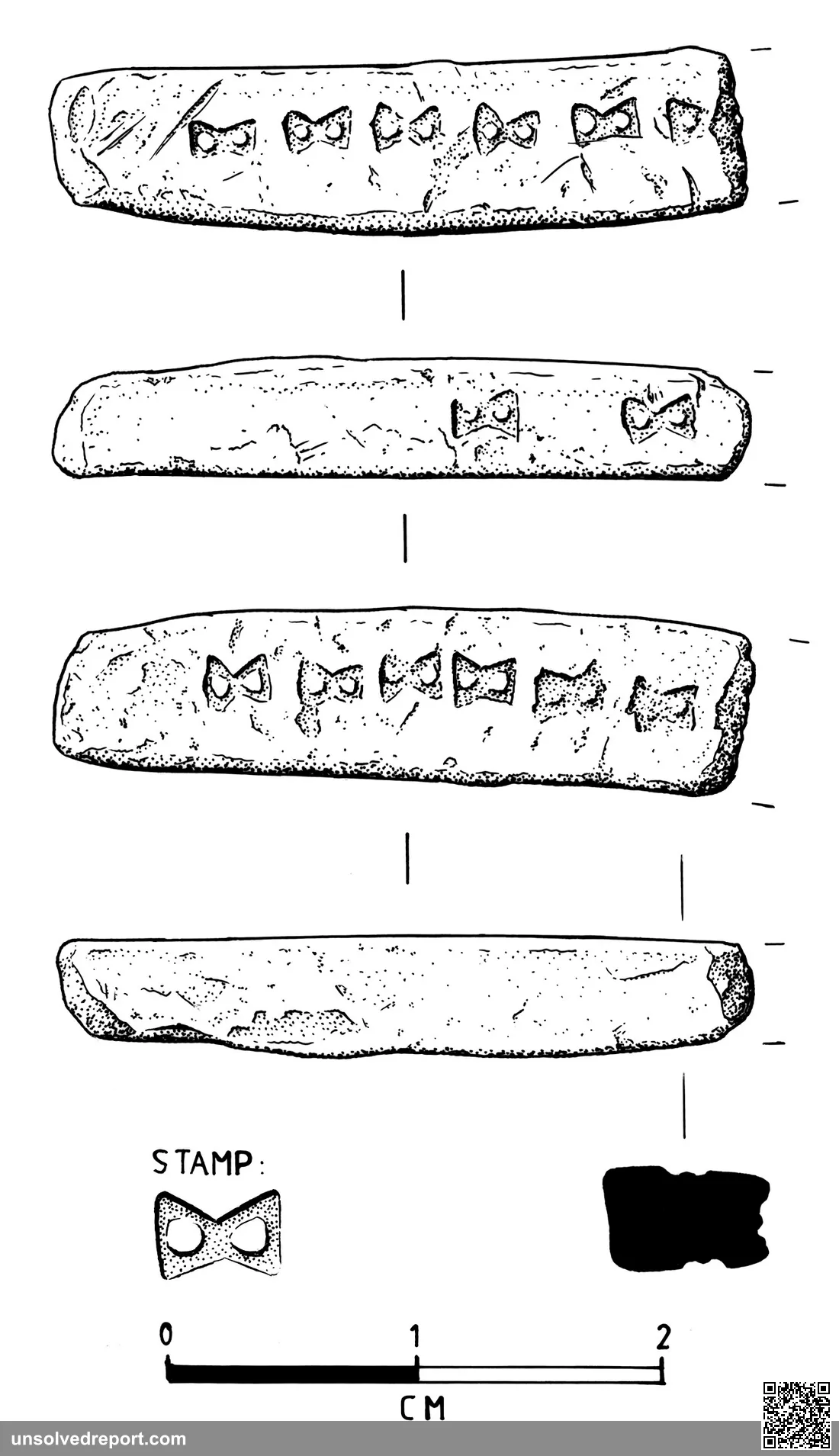
Now the size, which is almost hard to believe. More than 8,600 items came out of that box, and the weight estimates cluster around 40 kilograms, roughly 88 pounds of silver (Ashmolean Museum; The Viking Herald). The Ashmolean splits it roughly into 7,500 coins plus about 1,000 ingots, ornaments, and cut fragments (Ashmolean Museum). A lot of that non-coin silver is what specialists call hacksilver: jewelry and bullion deliberately chopped into pieces, meant to be weighed out on a scale rather than spent like coins. Add it all up and you get the largest Viking-Age silver hoard known from western Europe, dwarfing even England's own Staffordshire Hoard of Anglo-Saxon war gold and leaving its closest rivals in Britain and Ireland far behind (The Viking Herald).
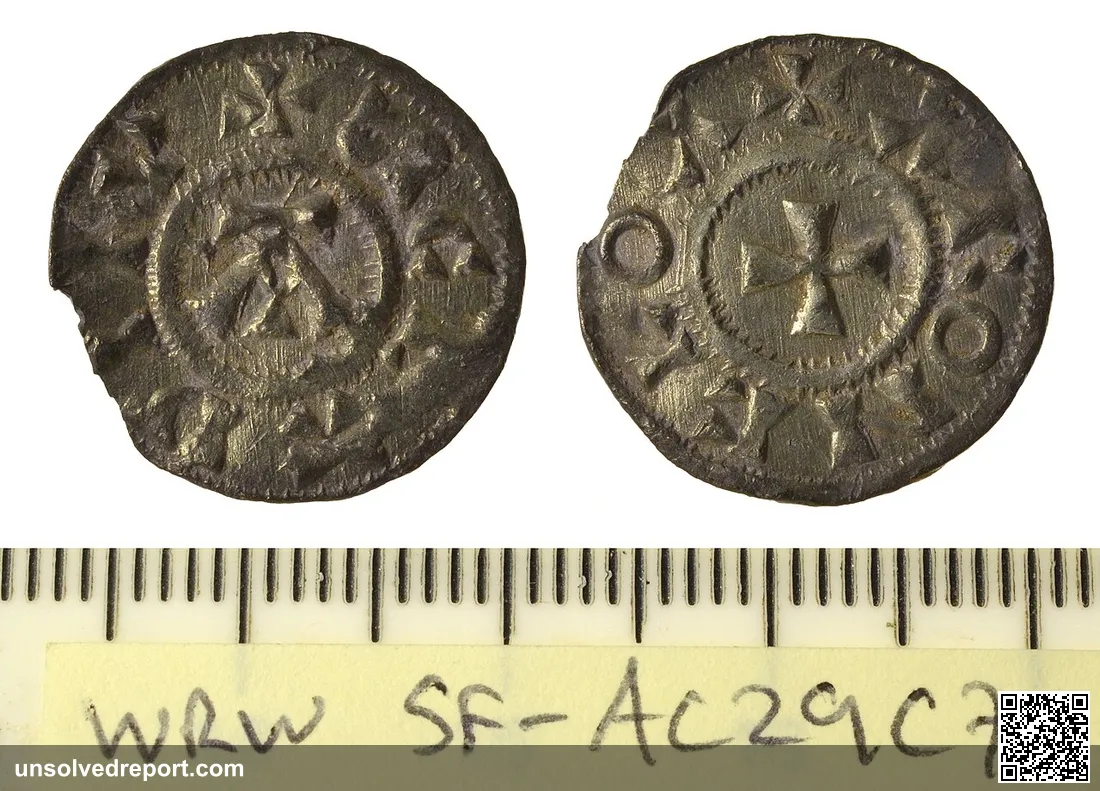
But the wildest thing isn't the weight. It's where the silver came from. Yes, the coins lean heavily on issues from the Viking-controlled Danelaw and the Anglo-Saxon kingdom of Wessex. Then it keeps going, far past England: Frankish (Carolingian) coins, pieces from Scandinavia and the Baltic, North Italian and papal coinage, and dirhams from the Islamic lands of Central Asia and the Middle East, all sitting beside bullion that is largely Irish or Irish-Norse in style (Ashmolean Museum; British Museum, via Wikipedia). One buried box. A whole interconnected world of trade and raiding, frozen mid-snapshot.
When was it buried? The youngest coins do the dating, and they point to somewhere in the first decade of the 900s. The Ashmolean leans on coins of AD 901–905 to set a terminal date (Ashmolean Museum), while other summaries stretch the likely window out to around 905–910 (The Viking Herald; British Museum, via Wikipedia).
What happened next is on the record too. Under the law of treasure trove, the same legal doctrine that later claimed the Hoxne Hoard's Roman silver for the nation, the find went to the Crown in its role as Duke of Lancaster, and was later handed to the British Museum, which still holds most of it. The Ashmolean notes the hoard was scattered to more than 170 recipients soon after it surfaced, with surviving portions today in the British Museum and National Museums Liverpool (Ashmolean Museum; British Museum, via Wikipedia). Since then it has been studied in depth, most famously by archaeologist James Graham-Campbell, whose work on the find is the standard scholarly reference (The Medieval Review).
The Question No Spade Can Answer
So here's what no catalog will ever tell you: who buried it, and why did they never come back?
Think about the math for a second. Forty kilograms of silver is not loose change. That's enormous, portable wealth, the kind a king, an army, or a band of organized raiders might control. And the way it was hidden tells you something too. A lead chest buried beside a navigable river isn't a panicked toss into a ditch. It's a deliberate cache, the kind you bury fully intending to dig back up.
Except they didn't.
That one fact is the whole mystery. People come back for buried treasure, the way every entry in the world's long list of famous lost treasures still missing proves someone always meant to return, unless something stops them cold: death, defeat, flight, sudden exile. The Cuerdale silver sat untouched for roughly nine centuries, which means whoever hid it met a fate sharp and final enough to tear them away from a fortune. The hoard records the wealth. The silence records the catastrophe. We can describe the treasure to the last bent coin and still know nothing for certain about the human story that put it in the ground and then walked away.
Who Did It? The Best Guesses
The leading explanation lines up archaeology and history so neatly it feels solved. It isn't, quite. It's still a hypothesis. Here's where the evidence points, and where it runs out.
Theory 1: A war chest for exiles from Dublin (the favored idea). In AD 902, Irish forces drove the Norse rulers out of Dublin, and the survivors scattered, many of them heading for northwest England and the Irish Sea region (Kingdom of Dublin, Wikipedia). Now line that up with the hoard. The date fits. The heavy load of Irish-Norse bullion fits. And the Ribble sits on a strategic corridor between the Irish Sea and Viking York, exactly where displaced raiders might pool their resources. Put those together and many scholars read Cuerdale as a war chest, silver gathered by these exiles to bankroll a return to Dublin (British Museum, via Wikipedia; The Viking Herald). It's an elegant story. But hold on: as one historical summary points out, some experts think 902 runs a touch early for a deposit dated closer to 905–910, which makes the connection plausible rather than proven (Tha Engliscan Gesithas).
Theory 2: An army's pay-chest, plain and simple. The more cautious read drops the drama. Maybe the hoard is just the accumulated, weighable wealth of a Viking force working the region, piled up from raiding, trade, and tribute, the bullion-economy version of a payroll. No single catastrophe required, only the ordinary bad luck that could keep an army from ever circling back for its silver.
The legend (and it is only a legend). There's a Lancashire tradition, said to predate the discovery itself, that anyone standing on the south bank of the Ribble near Walton-le-Dale and looking upriver would be within sight of the richest treasure in England (British Museum, via Wikipedia). A lovely tale, and an almost too-good coincidence. But there's no evidence the old story actually tracked the real hoard, so treat it as local folklore, not testimony.
What's certain is the silver, and the question it still guards. Somewhere around the year 905, someone hid a fortune beside an English river and never managed to dig it back out. The metal kept its secret for nine hundred years. It's keeping the best part of it still.
Sources and Further Reading
- Ashmolean Museum, British Archaeology Collections, "Cuerdale Hoard": https://britisharchaeology.ashmus.ox.ac.uk/highlights/cuerdale-hoard.html
- "Cuerdale Hoard," Wikipedia (citing the British Museum): https://en.wikipedia.org/wiki/Cuerdale_Hoard
- The Viking Herald, "The Cuerdale Hoard: England's largest Viking silver treasure": https://thevikingherald.com/article/the-cuerdale-hoard-england-s-largest-viking-silver-treasure/931
- The Medieval Review, review of James Graham-Campbell, "The Cuerdale Hoard": https://scholarworks.iu.edu/journals/index.php/tmr/article/view/17906/24024
- "Kingdom of Dublin," Wikipedia (902 expulsion): https://en.wikipedia.org/wiki/Kingdom_of_Dublin
- Tha Engliscan Gesithas, "The Cuerdale Hoard": https://www.tha-engliscan-gesithas.org.uk/archaeology-and-important-finds/the-cuerdale-hoard/
Lohron Gold Trade: The Goldsmiths Nobody Remembers
Six-meter walls still stand empty in the Burkina Faso bush. The Lohron ran a gold fortune here, then vanished so fully their own neighbors can't name them. Why?
Belitung Shipwreck: A $32M Tang Hoard Inside an Arab Dhow
60,000 Tang treasures, one Arab dhow, no crew list. The Belitung shipwreck proved a lost Silk Road sea route — and no one agrees on the rest of the story.
Blackbeard's Treasure: The Ship Was Found. The Gold Wasn't.
Divers found Blackbeard's flagship Queen Anne's Revenge in 1996. Three centuries of legend promised buried gold. What was actually in the hold is stranger.