Why Was Mohenjo-daro Abandoned? No War, No Bodies, No Answer
Why was Mohenjo-daro abandoned? No war. No bodies. No ruler ever found. Just a 4,500-year-old city gone silent — and the real reason is still argued over.
No ash. No fallen soldiers. No conqueror's boast carved into stone. Just a great city, left to the wind.
About 4,500 years ago, while Egypt stacked its pyramids and Mesopotamia raised its ziggurats, a third city was matching them step for step on the muddy floodplain of the Indus River. Mohenjo-daro had straight streets laid out in a grid. It had covered drains running under those streets. It had fired bricks made to the same size again and again, and a watertight public pool we now call the Great Bath. This was a city that worked.
And then, over a few centuries, the people just walked away. The desert moved in and pulled a blanket of sand over the whole thing. So why was Mohenjo-daro abandoned? Here's the honest answer: we still don't fully know. And the space between what we can prove and what we can only guess — that's exactly where this mystery lives.
What We Actually Know
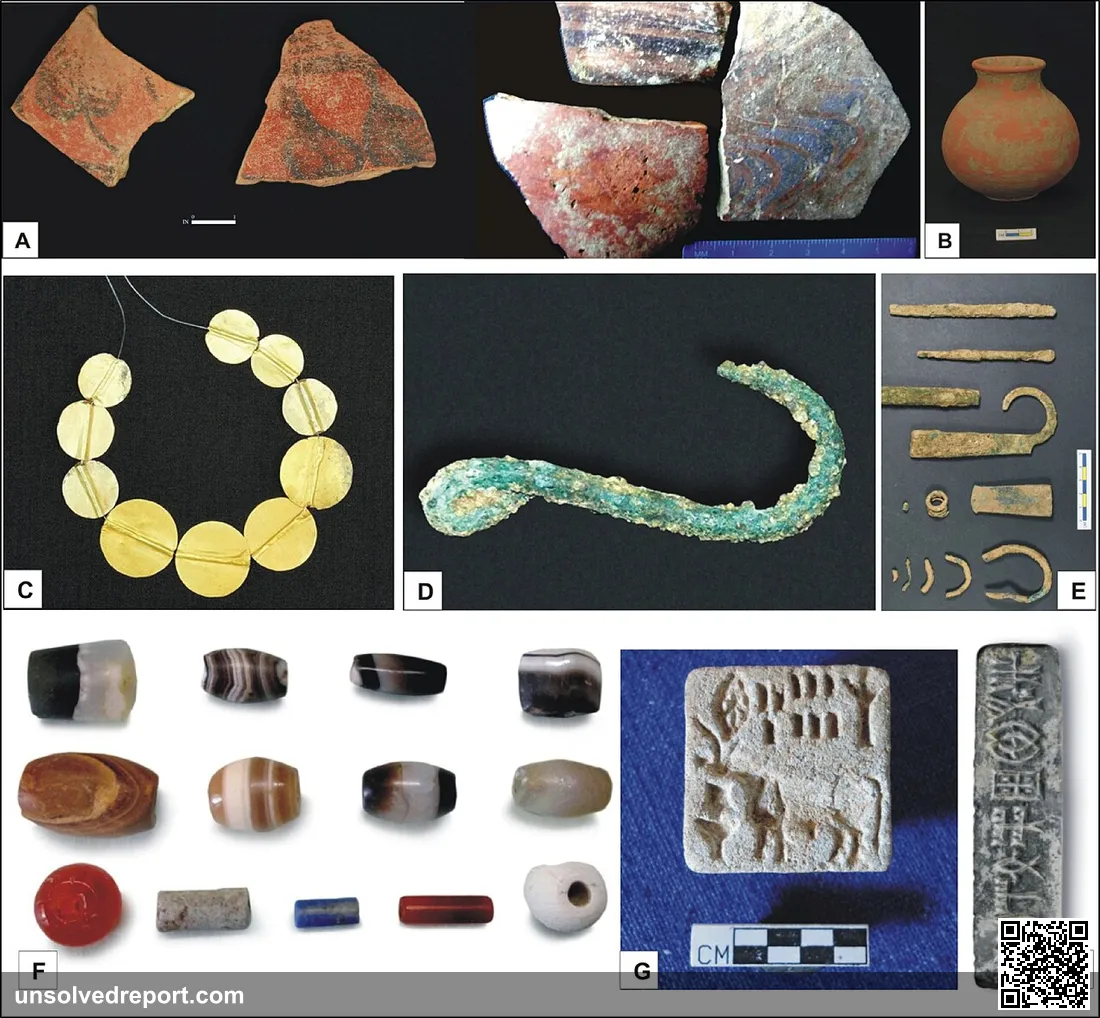
Mohenjo-daro sits in Sindh, in what is now Pakistan, and it was no village. It was a true metropolis of the Indus (or Harappan) civilization. The city thrived from roughly 2500 to 1900 BCE and sprawled across about 250 acres on a cluster of mounds (National Geographic). Then it vanished from human memory entirely — gone, forgotten, for thousands of years. It stayed lost until 1922, when R. D. Banerji of the Archaeological Survey of India realized what he was standing on. Big digs followed under Sir John Marshall, running from 1922 to 1931, and they uncovered just how massive the place had been — including, in 1926, the tiny bronze Dancing Girl figurine whose identity nobody has ever settled. Before those 1920s excavations at Harappa and Mohenjo-daro, the entire Indus Valley civilization was a blank — modern scholars had no idea it had ever existed (National Geographic). Today the ruins are a UNESCO World Heritage Site.
Now here's the strange part. What the diggers found was haunting less for what was there than for what wasn't. Yes, there was the careful street grid, the elaborate drainage, the bathing areas and wells dotted through the homes (National Geographic). But there was no throne. No palace you could point to. No grand temple. No towering monument to some king or queen with a name. A city this advanced, and nobody seems to have been in charge of it. The closest thing to a sacred building is the Great Bath, sitting up on its brick platform (National Geographic).
And the ending wasn't a bang. It was a fade. By around 1900 BCE the great Harappan cities were emptying out, and what the evidence shows is slow unraveling, not sudden ruin. A team led by geologist Liviu Giosan of the Woods Hole Oceanographic Institution — publishing in the Proceedings of the National Academy of Sciences — rebuilt the ancient rivers and rainfall of the region and found that the civilization "slowly disintegrated" across many centuries (WHOI; Sci-News summary). And here's the key: the people didn't die out. They picked up and moved, scattering into smaller villages, many of them drifting toward the Himalayan foothills and the Ganges basin to the east (WHOI).
One more number, and it matters because of the bloody legend you may have heard. In nine years of digging at Mohenjo-daro, archaeologists pulled out roughly 37 skeletons or partial skeletons from the Indus period — for a city about three miles around, that is almost nothing (Penn Museum, Expedition). Hold onto that. We'll come back to it.
The Real Mystery
So what's the actual puzzle? It's this: several different disasters seem to crowd into roughly the same stretch of time, and experts still can't say which one did the most damage. The Indus civilization covered a huge area, and Mohenjo-daro's ending might not have one neat cause — it might not even share the same cause as the cities next door.
The trickiest part is timing. A river sliding just a few miles could have cut off a single city's water and trade in one stroke. But a local river shifting can't explain why so many Indus settlements faded out across the same broad window (Arab News summary of researchers). Climate works on the whole region at once — but it moves slowly, which makes it almost impossible to pin to a single "last day" at Mohenjo-daro. And worst of all, the Harappans wrote things down in a script we still cannot read. So nobody from that city ever gets to tell us why they left. We're reading their goodbye out of drains and bricks and cores of old mud — not a single human word. That silence is the whole mystery.
The Leading Suspects
Suspect 1: The rains failed (the top scientific view). Giosan's team studied sediment from the ocean floor off Pakistan and watched the summer monsoons grow weaker and weaker, starting around 2500 BCE. Less rain meant farming got riskier every year; the weakening rains starved the river flooding that fields depended on, and without a reliable harvest surplus, big cities simply can't hold together (WHOI; Sci-News). Other climate research backs this up, pointing to a centuries-long run of frequent drought lining up neatly with the cities' final chapter (Archaeology Magazine summary) — the same drought-driven pattern later blamed for the Classic Maya collapse half a world away. Status: the strongest evidence we have — though the fine details and timing are still argued over.
Suspect 2: The river moved. Some scholars think the Indus itself wandered off course, wrecking both the farmland and Mohenjo-daro's job as a trading hub. Archaeologist Jonathan Kenoyer has pointed out that a shift in the river's path would have crippled the local farm economy (National Geographic). Status: a believable local factor, but hard to stretch across the whole civilization.
Suspect 3: Floods and poisoned soil. Archaeologist George Dales argued that environmental change — including a rise affecting the Arabian Sea coastline — triggered flood after flood and slowly salted the soil until crops failed, nudging people to drift away (Penn Museum). Status: an old idea, and one piece of the bigger environmental-stress picture.
Suspect 4: The great "Aryan invasion massacre" (the legend that fell apart). This is the famous one — and the one to handle with the most care. After the 1920s digs, Sir Mortimer Wheeler looked at those scattered skeletons and saw victims of a brutal conquest. He even pointed a finger at a god, declaring that the Vedic deity "Indra stands accused" (Penn Museum). It's a thrilling image, and it stuck for decades. There's just one problem: it isn't true. Later researchers, including Dales and biological anthropologist Kenneth A. R. Kennedy, went back to the bones and found no layer of destruction, no defenders, no weapons, no real sign of battle wounds. Many of the bones were scattered and looked like burials, not slaughter — and not one body was found inside the fortified citadel (Penn Museum). On top of that, Marshall himself had placed the city's end about two centuries before any later migration (Harappa.com). Status: specialists reject the massacre story. Treat it as a tale about how history gets told, not as history.
So what most likely happened is quieter, and somehow more chilling. Nobody stormed Mohenjo-daro. The land itself simply outlasted it. As the water turned unreliable and the harvests thinned, the people did what people have always done — they walked toward an easier life and left the brick streets to the dust. That's why the abandonment still gnaws at us. Not because something violent was buried here, but because something slow and ordinary happened, and even now we can't quite name it.
And that's the thing about silent endings. The Indus script that could explain it all is still sitting in front of us, uncracked. The day someone finally reads it, this whole story might change overnight.
Sources & Further Reading
- National Geographic, "The lost city of Mohenjo Daro" — https://www.nationalgeographic.com/history/article/mohenjo-daro
- Woods Hole Oceanographic Institution, "Climate change likely caused migration, demise of ancient Indus Valley civilization" — https://www.whoi.edu/press-room/news-release/climate-change-likely-caused-migration--demise-of-ancient-indus-valley-civilization
- Sci-News, "Study Suggests Climate Change Led to Collapse of Harappan Civilization" — https://www.sci.news/archaeology/article00350.html
- Penn Museum, Expedition, "The Mythical Massacre at Mohenjo-Daro" — https://www.penn.museum/sites/expedition/the-mythical-massacre-at-mohenjo-daro/
- Harappa.com, "Who Were the 'Massacre Victims' at Mohenjo-daro? A Craniometric Investigation" — https://www.harappa.com/content/who-were-%E2%80%98massacre-victims%E2%80%99-mohenjo-daro-craniometric-investigation
- Archaeology Magazine, "How centuries of drought doomed the Indus Valley Civilization" — https://archaeologymag.com/2025/11/how-drought-doomed-indus-valley-civilization/
- UNESCO World Heritage Centre, "Archaeological Ruins at Moenjodaro" — https://whc.unesco.org/en/list/138/

Seahenge: The 4,000-Year-Old Mystery Nobody Can Explain
Seahenge: a Norfolk tide gave back a 4,000-year-old oak circle felled in 2049 BC. The facts are exact — so why does nobody know what it was for?
Bujang Valley: SE Asia's Oldest City Is 90% Buried
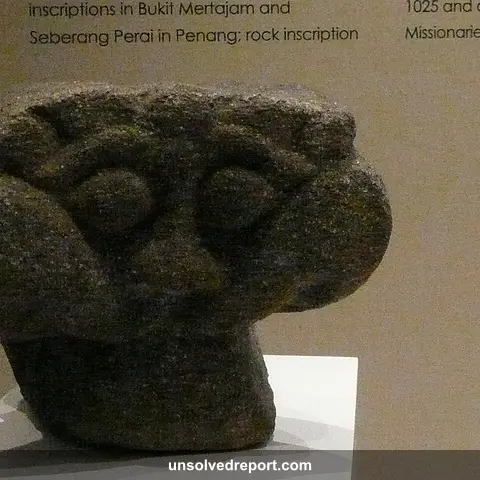
Beneath Malaysian palm groves lies what may be Southeast Asia's oldest civilization — iron furnaces, river jetties, and 90% still buried. So how old is it really?
Sacsayhuaman: The 100-Ton Stones That Won't Budge
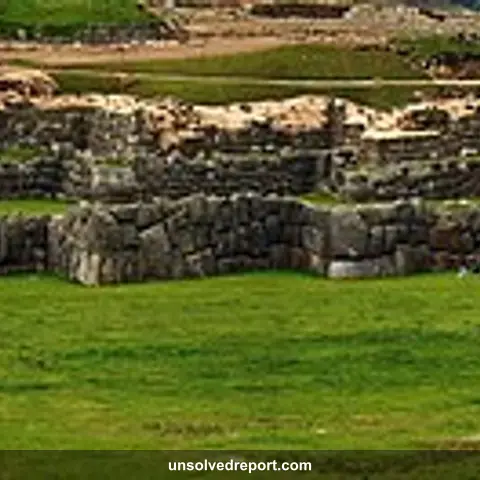
No mortar, no iron tools, no wheels, yet these 100-ton Inca stones fit so tight a paper can't slide between them. How did Sacsayhuaman get built?