Indus Script Undeciphered: The 4,000-Year Code Nobody Can Crack
Thousands of Indus Valley seals. Over 100 failed attempts. A $1 million prize still unclaimed. So what is this ancient script actually hiding?
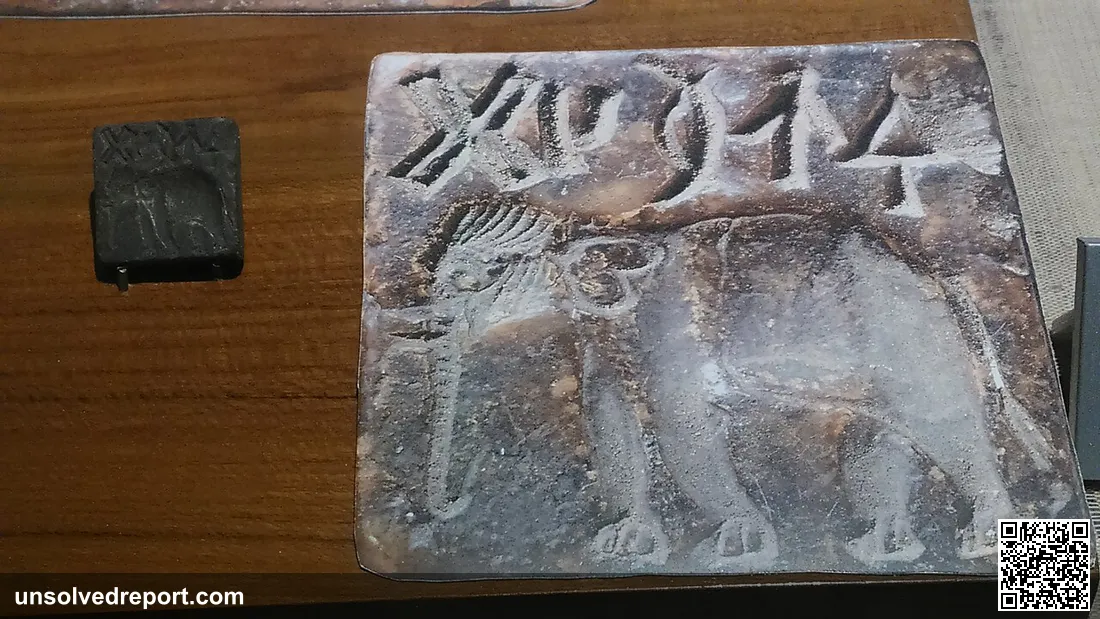
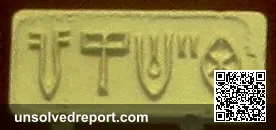
It fits in your palm. A little carved seal, no bigger than a postage stamp, sitting under glass in a museum. A neat row of symbols runs across it, next to the picture of a one-horned animal. Someone carved it on purpose, about 4,000 years ago, in one of the first great cities humans ever built. They were trying to tell us something exact.
We can hold it. Photograph it. Measure it down to the millimeter. And we have no idea what it says.
Now picture that seal multiplied by several thousand. That's the case file. It's one of archaeology's most stubborn cold cases: the Indus Valley script — one of the last great writing systems of the ancient world that nobody on Earth can read. The objects aren't lost. We have boxes of them. Yet after more than a century of trying, and over a hundred serious attempts, the code has never cracked.
A lost civilization, found in a week
You can't tell the story of the script without the story of the people who made it — and they came back from the dead almost overnight. On September 20, 1924, Sir John Marshall, then Director-General of the Archaeological Survey of India, dropped a bombshell on the public. He published an article called "A Forgotten Age Revealed" in The Illustrated London News, announcing that a sophisticated Bronze Age civilization had been hiding in the Indus Valley all along (Harappa.com).
What the excavators were pulling out of the ground at Harappa and Mohenjo-daro was staggering. Cities laid out on a grid. Advanced drainage. Standardized weights. Trade routes stretching all the way to Mesopotamia. And during the mature urban phase — roughly 2600–1900 BCE — these people were stamping out inscribed objects by the thousand (World History Encyclopedia).
Here's the gut-punch. For all that engineering genius, they left no readable archive behind. Their writing survived. Their voice didn't.
What we actually know
This is where you have to be careful and split the proven from the guessed. Start with the solid ground — the facts the surviving evidence backs up.
Real, everywhere, and very, very short
Thousands of inscriptions are known, dug up from some 60 different sites (World History Encyclopedia). And they don't show up where you'd expect — not on grand monuments or long tablets. They turn up on the small stuff of daily life: seals and the clay impressions they left, pottery, copper and bronze tools, ivory, shell, and little steatite tablets.
Now the catch. These messages are tiny. The average inscription is only about five signs long, and the longest one we've ever found runs to about 26 signs on a single surface (World History Encyclopedia). There's no Indus version of a royal decree or an epic poem. Just short, repeated bursts of symbols — like the world's oldest sticky notes.
About 400 signs, mostly read right to left
Count the signs and you land at a bit more than 400 basic ones — though the number shifts depending on how you tally the variants. The Indian epigrapher Iravatham Mahadevan's famous 1970s corpus listed 419 distinct signs; later researchers have argued for both more and fewer (Britannica; Wikipedia). The writing usually flows right to left, with a few rule-breakers going the other way (World History Encyclopedia).
And the way those signs are used tells you something. A small handful of them do almost all the heavy lifting, while a long tail of symbols barely shows up — some only a couple of times in the entire known collection.
There is no Rosetta Stone
Here's the single biggest wall, and it's brutally simple: no bilingual text has ever been found. Egyptian hieroglyphs got cracked because the Rosetta Stone laid them right next to Greek — same message, two scripts, instant key. The Indus script has no such bridge, putting it in the same silent company as the Voynich manuscript and other scripts nobody can read. No matching passage in any language we can already read (World History Encyclopedia). Worse, we're not even sure what spoken language — if any — these symbols were recording.
Why nobody can crack it
Line those facts up and the difficulty snaps into focus. Anyone trying to decode this thing is fighting three problems at the same time, and each one makes the others worse:
- The texts are too short. Five signs hand a code-breaker almost nothing. The patterns that would leap out of a long document simply never get a chance to form.
- The language is a ghost. We don't even know what tongue is hiding underneath. So researchers are chasing two unknowns at once — the signs and the speech they stand for.
- There's no anchor. Without one confirmed translation — not even a single inscription — every proposed reading just floats in mid-air, impossible to truly prove or disprove.
So why haven't computers just brute-forced it? They've tried. Statistical and machine-learning studies have measured the script's structure and found regularities that look genuinely language-like. But here's the limit: a machine can tell you exactly how the signs behave without telling you what a single one of them means.
The theories — and yes, the experts disagree
Everything from here down is educated guessing, not settled fact. Serious scholars genuinely fight about this, and not one reading has been confirmed. Keep that in mind.
Theory 1: It's a real language (probably Dravidian)
The view a lot of specialists lean toward: this is true writing — most likely logo-syllabic — that recorded an actual spoken language. The biggest name behind it is the Finnish Indologist Asko Parpola, who has argued for decades that the language probably belonged to the Dravidian family (Wikipedia: Asko Parpola).
His most famous clue is a sign shaped like a fish. In many Dravidian languages, the word for fish is meen — and meen also means "star." Same sound, two meanings. Parpola's idea: the fish symbol might be a visual pun, drawing a fish but meaning a star or a heavenly body (Harappa.com). Supporters add another twist — Brahui, a Dravidian language still spoken in pockets of Pakistan today, might be a living relative of whatever was once spoken here.
It's elegant. It's built on real evidence. And it's still, crucially, unproven — a hypothesis, not a translation.
Theory 2: It isn't language at all
Then there's the rebel position that attacks the whole idea. In a much-argued-over 2004 paper, Steve Farmer, Richard Sproat, and Michael Witzel claimed the Indus symbols might not be writing in the first place. Instead, they could be nonlinguistic signs — badges for clans, gods, goods, or ideas, more like coats of arms than sentences, not unlike the standoff still raging over Rongorongo on Easter Island. Their case: the inscriptions are absurdly short, tons of signs appear only rarely, and you don't see the kind of repetition you'd expect if someone were recording actual speech (Wikipedia: Indus script).
Parpola and others have hit back hard, pointing out that even scripts we know are real can have plenty of rare signs — and that short little seal texts wouldn't need much repetition anyway (Wikipedia: Indus script). Nobody has landed the knockout punch. The fight is still genuinely open.
One quick word on the fringe. You'll sometimes see the Indus script dragged into stories about lost continents or ancient aliens. That's entertainment folklore, plain and simple — there's nothing in the archaeological record to support it.
A million dollars on the table
The puzzle has gotten so famous that someone has put real money behind it. In January 2025, at a conference in Chennai marking 100 years since the civilization's rediscovery, Tamil Nadu Chief Minister M. K. Stalin announced a $1 million prize for anyone who can convincingly crack the script (Archaeology News Online Magazine; The Logical Indian).
Whether anyone ever collects it, the offer points at a strange and humbling truth. We've mapped the human genome. We've photographed a black hole. And yet a short row of symbols, scratched out by some clerk four thousand years ago, still won't give up its secret. Somewhere in a museum drawer, that little seal is still talking. We just never learned how to listen.
The case file at a glance
| Question | What the evidence says | Source |
|---|---|---|
| When was the script in use? | Mature urban phase, roughly 2600–1900 BCE | World History Encyclopedia |
| How many inscriptions survive? | Thousands, recovered from some 60 sites | World History Encyclopedia |
| What do they appear on? | Seals and seal impressions, pottery, copper/bronze tools, ivory, shell, steatite tablets | World History Encyclopedia |
| How long are the texts? | About 5 signs on average; the longest known runs to about 26 signs on one surface | World History Encyclopedia |
| How many distinct signs? | 419 in Mahadevan's corpus; scholars have argued for both more and fewer | Britannica; Wikipedia |
| Which direction does it read? | Usually right to left, with occasional exceptions | World History Encyclopedia |
| Is there a bilingual "Rosetta Stone"? | No — none has ever been found | World History Encyclopedia |
| Is any reading confirmed? | No — every proposed decipherment remains an unverified hypothesis | Wikipedia |
| Is there a reward? | $1 million, announced January 2025 in Chennai by Tamil Nadu CM M. K. Stalin | Archaeology News |
Key dates in the hunt
- 1875 — Alexander Cunningham publishes the first drawing of a seal bearing Harappan symbols — the script's first appearance in modern scholarship (Wikipedia: Indus script).
- c. 2600–1900 BCE (the subject itself) — The Mature Harappan period, when strings of Indus signs were stamped onto seals and everyday objects by the thousand (World History Encyclopedia; Wikipedia: Indus script).
- 1924-09-20 — Sir John Marshall, Director-General of the Archaeological Survey of India, announces the civilization's rediscovery in The Illustrated London News article "A Forgotten Age Revealed" (Harappa.com).
- 1977 — Indian epigrapher Iravatham Mahadevan publishes his corpus and concordance of Indus inscriptions, listing 419 distinct signs (417 originally, plus 2 in a late addendum) (Wikipedia: Indus script).
- 2004 — Steve Farmer, Richard Sproat, and Michael Witzel publish their paper arguing the Indus symbols are nonlinguistic signs, not writing — igniting a debate that is still open (Wikipedia: Indus script).
- 2025 (January) — At a Chennai conference marking 100 years since the rediscovery, Tamil Nadu Chief Minister M. K. Stalin announces a $1 million prize for a convincing decipherment (Archaeology News).
What the evidence actually shows
A quick honesty check on the two serious camps — what each has going for it, where each is weakest, and what it would take to settle the fight. No new facts here; this just weighs what's already on the table above.
The Dravidian-language hypothesis (Parpola). Its strength: the script's internal statistics behave in language-like ways, and readings like the fish/meen/"star" pun are internally coherent and rooted in a real language family with a possible living relative (Brahui). Its weakness: with no bilingual text and no confirmed reading of even one inscription, every proposed value is unfalsifiable — elegant readings can be constructed, but none can be checked against an independent key.
The nonlinguistic-signs hypothesis (Farmer, Sproat, Witzel). Its strength: it takes the oddities seriously — extremely short texts, a long tail of signs that appear only once or twice, and less repetition than speech-recording would predict. Its weakness: as Parpola's side counters, genuine scripts also carry plenty of rare signs, and short seal texts simply don't demand much repetition — so the same evidence fits both stories.
What would actually resolve it: a bilingual inscription, or a substantially longer text where language-like patterns could either emerge or conclusively fail to. Until one of those surfaces, the honest verdict is the one this article has held throughout — the case stays open.
Sources & further reading
- https://www.worldhistory.org/Indus_Script/
- https://www.britannica.com/topic/Harappan-script
- https://en.wikipedia.org/wiki/Indus_script
- https://en.wikipedia.org/wiki/Asko_Parpola
- https://www.harappa.com/script/parpola15.html
- https://www.harappa.com/video/discovery-ancient-indus-civilization-september-20-1924
- https://archaeologymag.com/2025/01/prize-offered-to-decipher-indus-valley-script/
- https://thelogicalindian.com/tamil-nadu-cm-stalin-offers-1-million-prize-to-decipher-elusive-indus-valley-script/
Classic Maya Collapse Mystery: One City Didn't Even Have Drought
Tikal and Copán emptied by 900 CE, population fell 90%. Now a 2025 lake-sediment study found one city collapsed with no drought at all. So why did it fall?
Cleopatra's Tomb: The 20-Year Hunt That Found Everything But Her
A lawyer-turned-archaeologist has spent 20 years hunting Cleopatra's tomb at Taposiris Magna—finding coins, a tunnel, a sunken port. So where is she?
Costa Rica's Stone Spheres: The Balls the Bulldozers Almost Erased
Costa Rica's stone spheres: carved without metal tools, unearthed on a banana plantation, then dynamited by treasure hunters. What were they really for?