Kenneth Arnold 1947: The Sighting That Named Flying Saucers by Mistake
Pilot Kenneth Arnold clocked nine objects at 1,700 mph over the Cascades — then a reporter's mishearing coined 'flying saucer.' What did he actually see?
A businessman is alone in a small plane, hunting for a crashed transport in the mountains, hoping to pocket a $5,000 reward. Instead, a flash of light catches his eye. He turns. And nine bright objects are tearing past the peaks faster than anything humans had ever built.
He landed, told a reporter, and accidentally named a phenomenon that would haunt the next eighty years. The word he never actually used? Saucer.
The Documented Facts
The date was June 24, 1947. Kenneth Arnold — a private pilot and fire-equipment salesman from Boise, Idaho — was flying his CallAir A-2 from Chehalis to Yakima, Washington. He'd taken a detour to look for a downed U.S. Marine Corps C-46 transport near Mount Rainier, lured partly by a reward (Wikipedia).
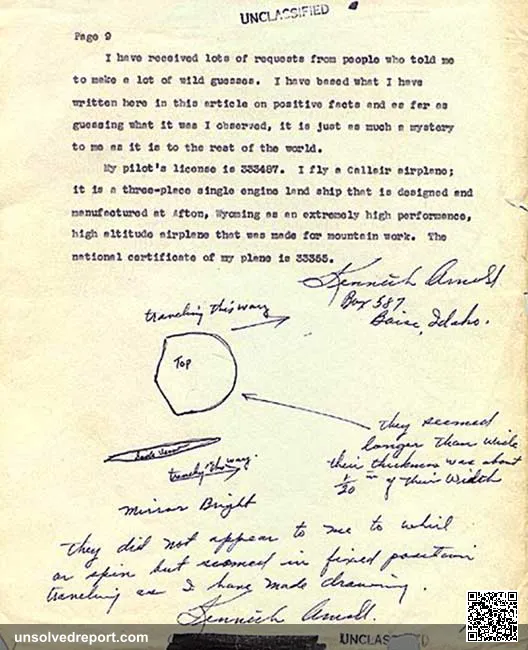
Around 3:00 p.m., at roughly 9,200 feet, a bright flash lit up his cockpit. He looked north and saw nine shiny objects flying in a stepped-down chain formation, weaving along the Cascade Range "like the tail of a Chinese kite." One, he said, looked crescent-shaped; the rest were flat and round (Wikipedia).
Then Arnold did the thing that makes his story stick: he did math. He timed the objects as they crossed from Mount Rainier to Mount Adams — about 50 miles — using his cockpit clock. The run took one minute and forty-two seconds, which pencils out to roughly 1,700 miles per hour (HISTORY). That's nearly three times faster than any aircraft flying in 1947. Unsure anyone would believe a number that wild, he rounded it down to 1,200 mph for the press (Wikipedia).
Here's where the legend gets born — and where it goes sideways. The next day, Arnold told reporters at the East Oregonian in Pendleton what the objects looked like as they moved: they flew, he said, "like a saucer would if you skipped it across the water." He was describing the motion, not the shape (Spokesman-Review).
Reporter Bill Bequette and editor Nolan Skiff ran a tight 191-word story on June 25. Notably, that first article never used the phrase "flying saucer" at all — its headline was "Impossible! Maybe, But Seein' Is Believin', Says Flyer" (Spokesman-Review). But once the Associated Press picked it up and other writers got hold of the "saucer" line, the leap happened: editors and headline writers assumed Arnold meant the objects were shaped like saucers. Within days, papers nationwide were shouting about "flying saucers" (Wikipedia).
A linguistic slip had minted a cultural icon. And the timing was explosive: just two weeks later, a New Mexico newspaper reported that an Army airfield near Roswell had recovered a "flying saucer" — quickly walked back to a weather balloon (HISTORY). The floodgates were open. The U.S. would go on to log thousands of sightings, eventually spawning the Air Force's Project Blue Book, which collected over 12,000 reports between 1952 and 1969 and left about 6% formally "unidentified" (HISTORY).
The Genuine Open Question
So what did Kenneth Arnold actually see?
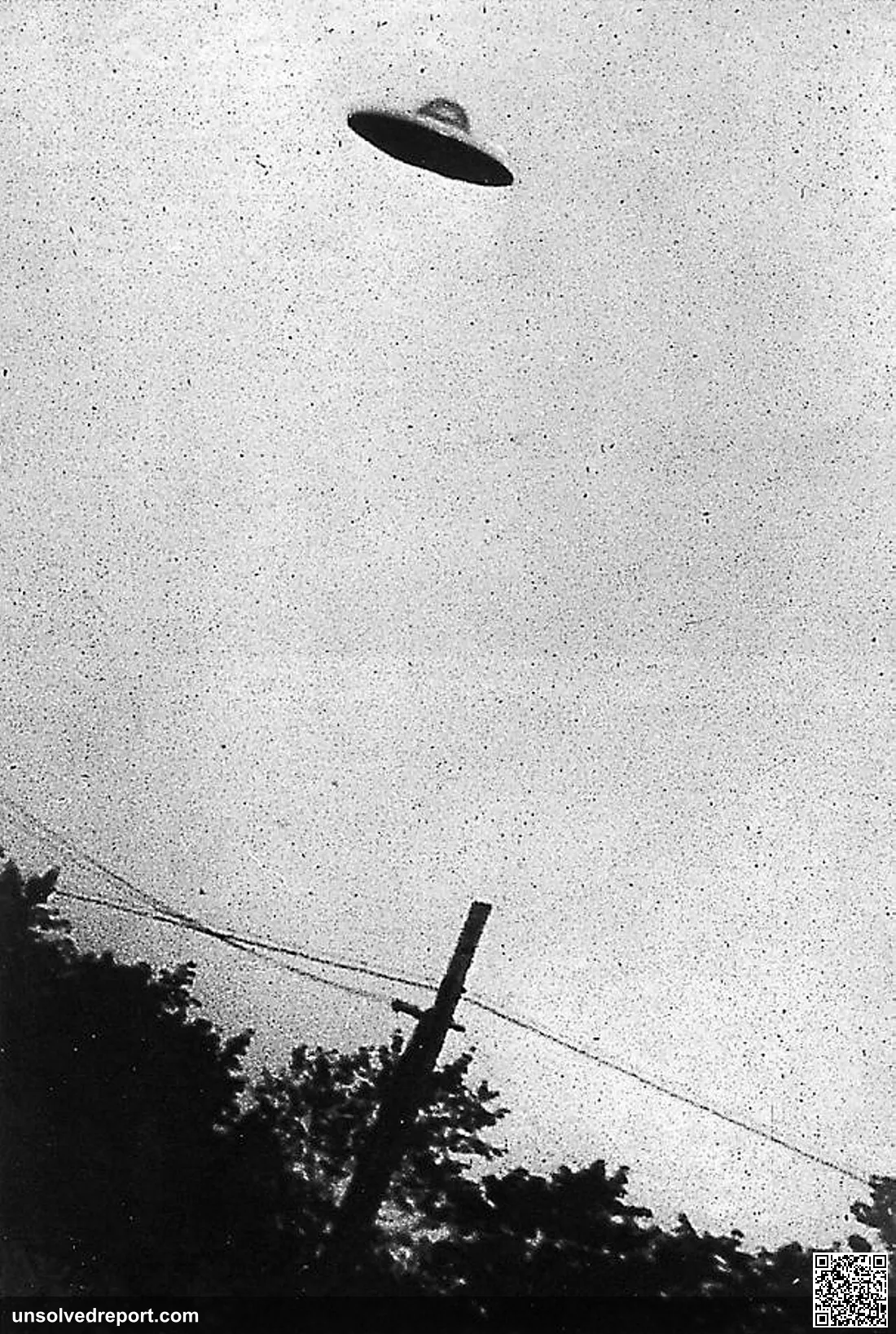
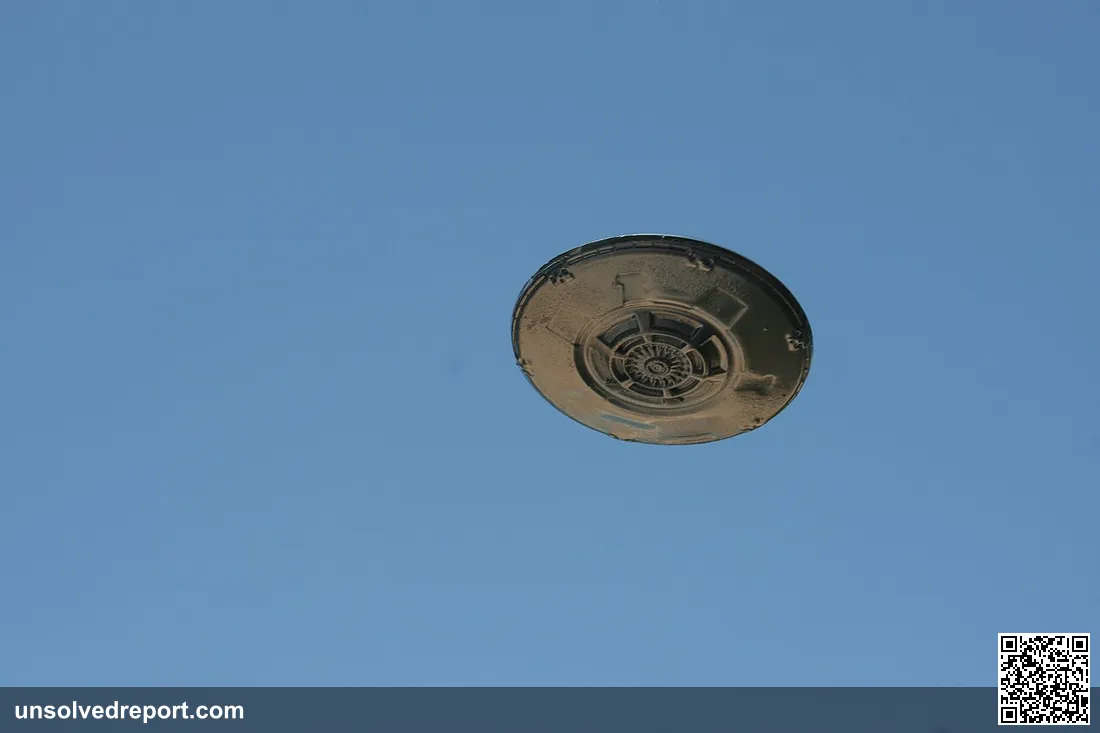
That's the honest, unsolved core. There's no photo. No wreckage. No second instrument reading. What there is, is a credible witness — a working pilot familiar with aircraft — and a careful, timed observation he never recanted. Even the Army Air Force investigators who interviewed him concluded he "actually saw what he stated," citing his character and integrity (Wikipedia).
But "this man was sincere and competent" is not the same as "those were spacecraft." A reliable witness can still be fooled by light, distance, and motion. The gap between Arnold clearly saw something fast and strange and here is exactly what it was has never been closed — not in 1947, and not now.
Theories and Interpretations
Everything below is interpretation, not settled fact. Treat each as a possibility, not a verdict.
Military or experimental aircraft. Arnold himself first assumed he'd seen a new type of jet (HISTORY). The trouble: no known 1947 aircraft could hit 1,700 mph, and the Air Force later said no such flights were happening there. Plausible in spirit, unproven in detail.
A mirage or atmospheric trick. Some Army analysts landed on "mirage" — sunlight bending off snow-capped peaks, or a temperature inversion warping distant objects into bright, gliding shapes (Wikipedia). This handles the dazzle and the speed illusion neatly. Critics counter that it strains to explain nine distinct, formation-flying objects.
Birds, meteors, or a misjudged distance. Other skeptics proposed a flight of white pelicans catching the sun, or meteoric debris (Wikipedia). If the objects were closer (and smaller) than Arnold assumed, his speed estimate collapses to something ordinary. Mundane — but it requires a veteran pilot to badly misread the sky.
Genuine extraterrestrial craft. This is the famous reading and the engine of the entire modern UFO era. It is also the least supported by physical evidence — there is none. As an explanation it remains firmly unverified and speculative, no matter how compelling the original sighting feels.
Notice what trips up every theory: the precise timing, the nine-object formation, and a witness whose credibility nobody could puncture. The thing that's easiest to explain — the name "flying saucer" — turns out to be the one part we're sure was a mistake.
Nine objects, one badly chosen word, and a question that outlived everyone who first asked it. But Arnold at least got to land and tell his tale. Some witnesses to the things in our skies were never so lucky — and the next case left behind wreckage that people are still arguing over.
Sources & Further Reading
- Wikipedia — "Kenneth Arnold UFO sighting"
- Wikipedia — "Flying saucer"
- HISTORY — "Kenneth Arnold"
- The Spokesman-Review — "Flying saucers still evasive 70 years after pilot's report"
- The Seattle Times — "'Flying saucers' became a thing 70 years ago"
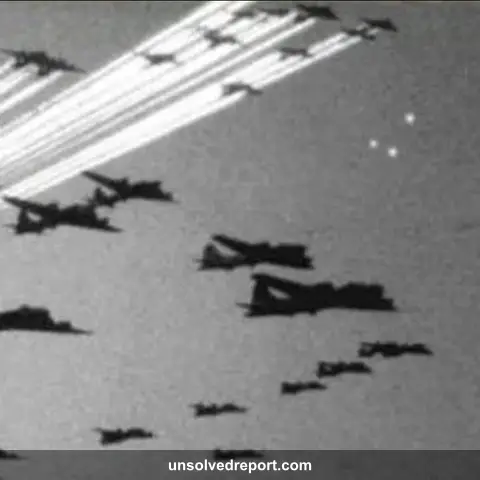
Foo Fighters WWII: The Glowing UFOs Nobody Could Shoot Down
WWII combat pilots reported glowing orange balls that matched every maneuver and couldn't be shot down. They called them foo fighters. What were they?

The 1973 Pascagoula Abduction: The UFO Case Even the Police Couldn't Debunk
Pascagoula abduction 1973: two fishermen, one hidden police tape, and a story that never fell apart. What really happened on that riverbank?

JAL 1628: The 50-Minute UFO the FAA Radar Confirmed, Then Denied
A JAL 747 crew tracked a carrier-sized object over Alaska for 50 minutes in 1986. FAA radar caught it too — then officials said the briefing never happened. What's confirmed, what isn't.