Foo Fighters WWII: The Glowing UFOs Nobody Could Shoot Down
WWII combat pilots reported glowing orange balls that matched every maneuver and couldn't be shot down. They called them foo fighters. What were they?
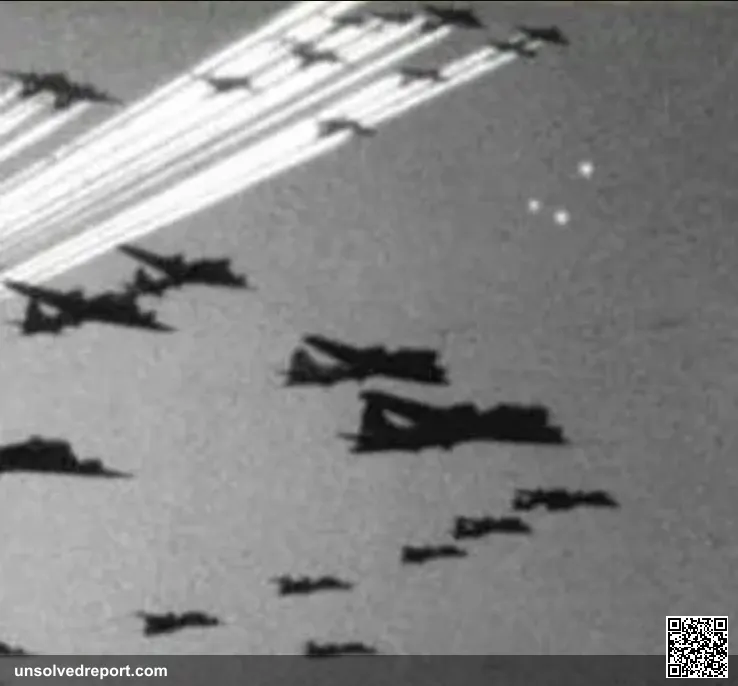
Picture a pitch-black night over the Rhine, December 1944. A night fighter slices through the dark, hunting German planes. Then the radar operator looks up — and there they are. Eight to ten glowing orange balls, hanging in the sky in a neat row, like Christmas lights nobody hung.
The pilot guns the engine. He banks. He dives. The lights stay glued to his wingtip, matching every move. Then, all at once, they blink out.
Back on the ground, ground radar showed nothing. The crew wasn't crazy — these were combat veterans with sharp records. So what in the world had been flying next to their plane? They needed a name for it. The one they picked stuck for eighty years: foo fighters.
The Documented Facts
The foo fighters were real reports made by real airmen — that part isn't in question. Between 1944 and 1945, Allied flight crews over Europe and the Pacific kept describing the same strange thing: fast, glowing balls of light that paced their aircraft and refused to behave like anything they knew.
The name came from the U.S. 415th Night Fighter Squadron. Radar operator Donald J. Meiers, a guy from Chicago who loved the comic strip Smokey Stover, borrowed its catchphrase — "where there's foo, there's fire." After one mission late in November 1944, with the lights still fresh in his mind, Meiers reportedly slapped down his comic and called them "another one of those [foo] fighters." His squadron commander later cleaned up the phrase for the official records (HISTORY).
The sightings clustered fast. On November 27, 1944, pilot Lt. Ed Schlueter and his crew reported a red ball of fire that chased them through high-speed turns near the French-German border (HISTORY). Intelligence officer Lt. Fred Ringwald said he first spotted "eight to 10" glowing orange lights in a row near Strasbourg. Schlueter tried to chase them. They vanished — and Allied ground radar never picked them up (HISTORY).
More came in. On December 17, a pilot at 800 feet near Breisach watched five or six flashing red and green lights in a "T" shape close to within 1,000 feet, then disappear. On December 22 over Hagenau, two crews reported orange lights that rose up from the ground to 10,000 feet and tailed their fighter for about two minutes before peeling away (HISTORY).
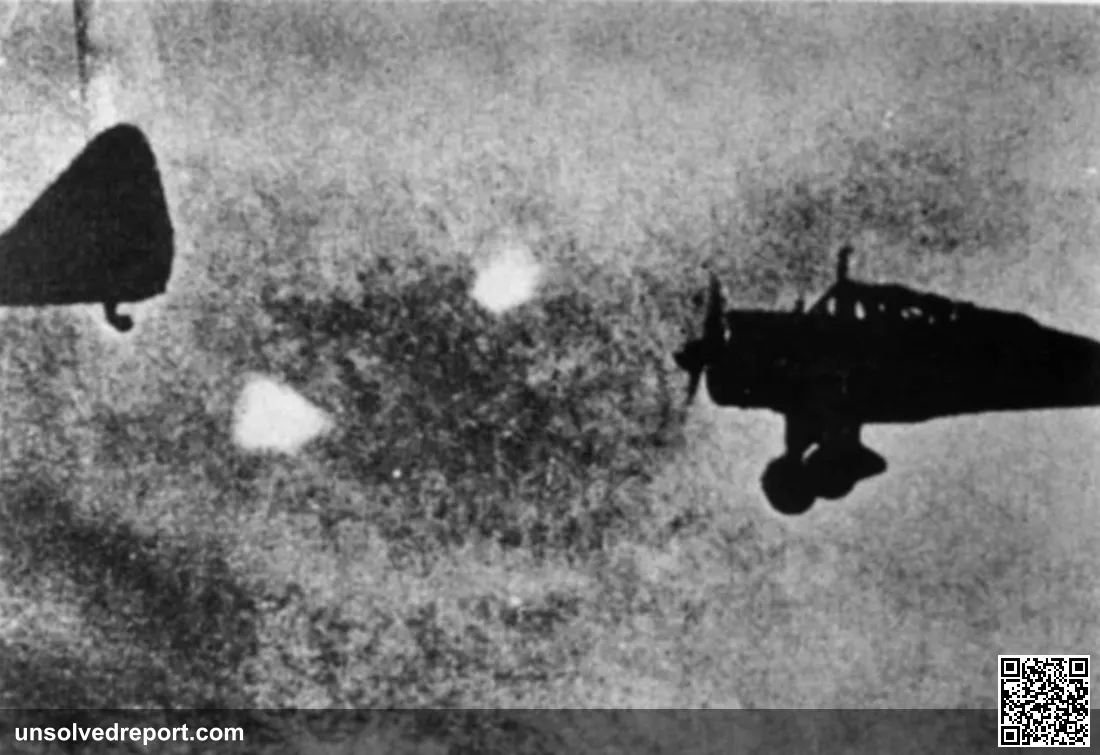
Pilots described the objects as fiery and glowing — red, white, or orange — and some said they looked exactly like Christmas-tree lights. They "flew together in formation with their aircraft and behaved as if they were under intelligent control, but never displayed hostile behavior." Crucially, they "could not be outmaneuvered or shot down" (Wikipedia).
This wasn't just an American thing, either. RAF crews had reported lights following their aircraft as early as 1942, and the U.S. 422nd Night Fighter Squadron logged its first sightings in early October 1944 — though the flood really hit in the last week of November (Wikipedia).
The brass took it seriously. On December 13, 1944, Supreme Headquarters Allied Expeditionary Force in Paris put out a press release — printed in The New York Times the next day — calling the phenomenon a "new German weapon." By January 15, 1945, Time magazine ran a story titled "Foo-Fighter," reporting that balls of fire had been trailing American night fighters for over a month (Wikipedia).
The Genuine Open Question
Here's the honest heart of it: nobody ever pinned down what the foo fighters actually were.
The Allies were sure they'd cracked it — a secret Nazi weapon, maybe a psychological trick to rattle pilots. But the war ended, Germany's labs were combed through, and no "foo fighter" device ever turned up. The Axis powers, it turned out, were reporting their own unexplained lights and thought the Allies were behind them.
So that's the open question that has never closed. The reports are well-documented. The witnesses were trained, sober, and unusually consistent. But the lights left no wreckage, no photographs anyone could verify, and no radar signature on the ground. We're left with a lot of credible testimony pointing at something — and no agreement on what that something was.
Theories and Interpretations
Everything below is interpretation, not settled fact. Treat each as a candidate, not a verdict.
St. Elmo's fire and other electrical effects. This is the leading down-to-earth explanation. St. Elmo's fire is a real plasma glow that can flicker around an aircraft's wings during certain weather. The postwar Robertson Panel (1953) leaned this direction, suggesting the foo fighters may have been "electrostatic phenomena similar to St. Elmo's fire, electromagnetic phenomena, or simply reflections of light from ice crystals" (Wikipedia). It's plausible — but skeptics note it struggles to explain lights that seemed to chase planes and hold formation.
Ball lightning. Some foo fighter descriptions closely match accounts of ball lightning — a rare, glowing sphere that floats and then vanishes (Wikipedia). Trouble is, ball lightning itself is still poorly understood, so this swaps one mystery for another.
Pilot disorientation and optical illusion. Flying at night, fatigued, with reflections bouncing off canopy glass, the human eye can invent motion that isn't there. A U.S. Navy study launched in April 1945 specifically looked into "aviators' vertigo" and night-flying visual illusions (Wikipedia). This could explain some reports — though it's a hard sell for crews who saw the same thing at the same time.
A secret enemy weapon. The wartime favorite. Decades later, author Renato Vesco claimed the Germans built a ground-launched "Feuerball" drone. But here's the catch: there is no hard evidence such a device ever existed (Wikipedia). File this one under unproven.
Extraterrestrial craft. This is the headline-grabbing reading — that the foo fighters were alien UFOs (what we'd now call UAP) decades before the term "flying saucer" existed. The Robertson Panel itself mused that "if the term 'flying saucers' had been popular in 1943–1945, these objects would have been so labeled" (Wikipedia). It's a thrilling idea — and the least supported by evidence. No recovered craft, no verified photo, no physical trace. As an explanation, it remains entirely speculative and unverified, however much the maneuvers sounded otherworldly.
Eighty years on, the foo fighters still hang there in the historical record — glowing, unexplained, refusing to be shot down. And they weren't the last time a sky full of trained witnesses swore they saw something the official report couldn't name. Sometimes the crowd was even bigger. Sometimes the witnesses were children.
Sources & Further Reading
- Mysterious UFOs Seen by WWII Airmen Still Unexplained — HISTORY
- Foo fighter — Wikipedia
- The World War II story of the first time US military pilots encountered UFOs — Task & Purpose

The 1973 Pascagoula Abduction: The UFO Case Even the Police Couldn't Debunk
Pascagoula abduction 1973: two fishermen, one hidden police tape, and a story that never fell apart. What really happened on that riverbank?

JAL 1628: The 50-Minute UFO the FAA Radar Confirmed, Then Denied
A JAL 747 crew tracked a carrier-sized object over Alaska for 50 minutes in 1986. FAA radar caught it too — then officials said the briefing never happened. What's confirmed, what isn't.
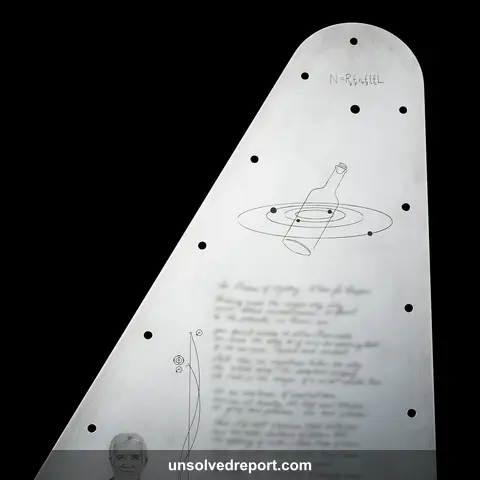
Drake Equation Explained: 6,000 Planets In, Still Zero Signals
6,000+ exoplanets confirmed and counting, yet the Drake Equation's answer still swings from millions of civilizations to just us. Here's why the math won't settle it.