Mantell UFO Incident 1948: The Pilot Who Chased It to His Death
A fighter pilot chased a metallic giant across Kentucky skies, then never landed. What really killed Thomas Mantell in 1948? The evidence surprises.
A fighter pilot looks up, keys his radio, and says the object ahead of him is metallic and "tremendous in size." He climbs after it, higher and higher, past the altitude where his plane is safe to fly. Then the radio goes quiet. A few hours later, searchers find his Mustang scattered across a Kentucky farm — and the pilot dead inside.
His name was Thomas Mantell. He is often called the first person to die chasing a UFO — coming barely a year after Kenneth Arnold's 1947 sighting had put the term "flying saucer" into every American newspaper. And nearly eighty years later, people still argue about what was actually up there in the sky that day.
The Documented Facts
It was the afternoon of January 7, 1948. Around 1:15 p.m., the control tower at Godman Army Airfield, on the Fort Knox military reservation in Kentucky, started getting calls. Hundreds of people across central Kentucky had spotted something strange and bright hanging in the sky (U.S. Army).
The tower crew at Godman saw it too. They described the object as "white and round on top with a conical shape underneath" — one observer compared it to an ice-cream-filled cone (U.S. Army).
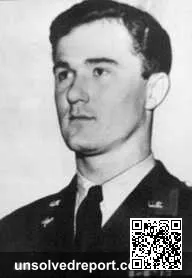
Right around then, four F-51D Mustang fighters happened to be passing nearby. They belonged to C Flight of the 165th Fighter Squadron, Kentucky Air National Guard (Wikipedia). The flight leader was Captain Thomas Francis Mantell Jr., age 25 — no rookie. He had flown through World War II, logged thousands of hours, and earned the Distinguished Flying Cross and four Air Medals (U.S. Army). Godman's tower asked the pilots to take a closer look.
Three of them turned and climbed after the object. As they rose, Mantell radioed what he was seeing. He reported the object ahead of him and above him, "moving at about half my speed." A little later: "It appears to be a metallic object or possible reflections of sun from a metallic object" (U.S. Army).
Here's the catch with those P-51s: they had no pressurized cockpits and, that day, no oxygen gear suited for very high altitude. Two of Mantell's wingmen broke off near 22,000 feet because the air was getting too thin to breathe (U.S. Army). Mantell kept going. He pushed up to roughly 25,000 feet, still chasing.
Then the transmissions stopped. His Mustang spiraled out of the sky and tore apart over a farm south of Franklin, Kentucky, near the Tennessee line. Searchers reached the wreck by evening. Mantell was dead. His wristwatch had stopped at 3:18 p.m. (U.S. Army).
The most famous line attached to the case — that the thing "looks metallic and it's tremendous in size" — comes with an asterisk. Air Force investigator Edward Ruppelt, who later ran the official UFO project, wrote that UFO writers credited Mantell with that quote, but the Godman tower operators he interviewed couldn't actually remember him saying it (Wikipedia). In other words, the single most dramatic detail of the story may be folklore stacked on top of a real tragedy.
What investigators did settle on was the cause of the crash: Mantell almost certainly blacked out from lack of oxygen at high altitude, after which his plane nosed over and went down (Wikipedia). That part is not really in dispute.
The Genuine Open Question
The pilot's death was explained. The thing he was chasing was not — at least, not for years, and arguably not to everyone's satisfaction even now.
The Air Force's first public guess was awkward. Officials suggested Mantell had been fooled by the planet Venus, which can shine in daylight. The astronomer brought in to consult, J. Allen Hynek, floated that idea early — then walked it back, noting Venus simply wasn't bright enough that afternoon to explain what so many people saw (Wikipedia). A planet also doesn't look "round on top with a cone underneath."
So the honest open question is this: what was the large, pale, cone-shaped object that hundreds of Kentuckians and a tower full of soldiers watched for over an hour? A bright dot you can blink away doesn't send four fighters scrambling — four years later, a similar radar-and-jets scramble over the nation's capital would produce the 1952 Washington DC UFO incident. Something was genuinely up there. The argument is only over what.
Theories and Interpretations
Everything below is interpretation, not settled fact. Weigh each as a possibility.
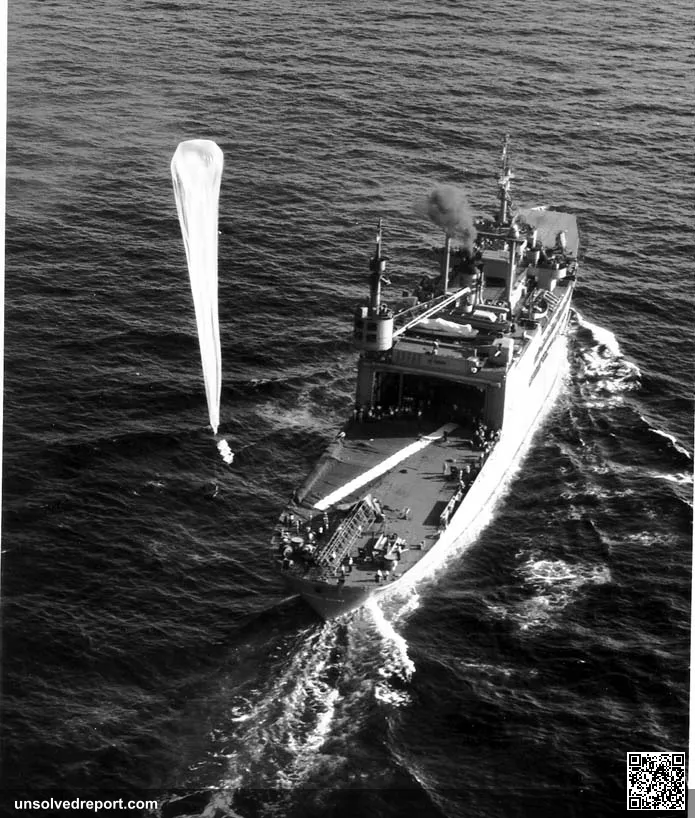
A secret Skyhook balloon. This is the explanation most historians now favor. In 1952, the Air Force's Project Blue Book re-examined the case and concluded Mantell had likely been chasing a Skyhook — a giant classified Navy research balloon that could climb to extreme altitudes (Wikipedia). The fit is good: Skyhooks were huge, made of shiny material, and looked pale and rounded on top with hardware dangling below — much like an "ice-cream cone." Because the program was top secret in 1948, Mantell would have had no idea such a thing existed (Military.com). Strikingly, a Vanderbilt University astronomer who watched the object that day, Carl Seyfert, described it as "a pear-shaped balloon with cables and a basket attached" (Wikipedia). The weak spot: no surviving record pins one specific balloon to that exact sky at that exact hour, so it remains a strong, well-supported inference rather than airtight proof.
Venus, or another ordinary sky object. The original official line. Mostly abandoned after Hynek himself backed off it, and it never matched the detailed shape witnesses reported. Treat this one as largely discredited.
An alien spacecraft. This is the version that made Mantell a legend — that he chased and was somehow killed by a craft from elsewhere. It is also the least supported. There is no wreckage of anything unusual, no recovered object, no physical trace beyond Mantell's own crashed plane, which failed for a plain and well-understood reason: thin air at altitude. As an extraterrestrial explanation it is unverified and speculative, however gripping it sounds. The drama of the story has steadily outrun its evidence.
The most likely truth is quieter than the myth: a brave, experienced pilot fixed on a Cold War secret he wasn't cleared to know about, climbing past the edge of safety to get a better look — and paying for it with his life.
The Mantell case is famous because a man died and the official story kept changing — much like the Roswell incident just a few months earlier, where the government's explanation shifted more than once. But it isn't the only daylight sighting a crowd of credible witnesses swears they saw — and some of those came with photographs the experts still can't fully explain.
Sources & Further Reading
- U.S. Army — "Questions remain 75 years after mysterious Fort Knox UFO incident, downed pilot"
- Wikipedia — Mantell UFO incident
- Military.com — "The First Air Force Pilot to Die Chasing a UFO Was Actually Chasing a Secret Balloon"
- The Debrief — "What Was Pilot Thomas Mantell Chasing When His Plane Crashed in 1948?"
Westall UFO at 60: Why 200+ Witnesses Still Won't Recant
60 years after 200+ Australian students watched a UFO land at Westall High, witnesses are still telling the same story. What's the strongest documented explanation?

Lonnie Zamora UFO Case 1964: The Sighting Nobody Could Debunk
The 1964 Lonnie Zamora UFO case still stumps the Air Force: a cop, an egg-shaped craft, burn marks in the dirt. So what really landed in that gully?
'Oumuamua: The Visitor That Shouldn't Exist
An interstellar object flew past the Sun in 2017, then sped up with no visible cause. What pushed 'Oumuamua? Scientists still can't agree.