Roswell Incident 1947: Why the Official Story Changed 4 Times
Saucer, then balloon, then Mogul, then dummies -- the Army's Roswell story flipped four times. New 2026 Pentagon files add pages. Which version holds up?
For one day in July 1947, the United States Army told the world it had caught a flying saucer.
Not a rumor. Not a maybe. A real press release, from a real Army air base, splashed across the local paper under the headline "RAAF Captures Flying Saucer On Ranch in Roswell Region." Then the clock ran out. Less than 24 hours later, the same Army shrugged and said: never mind. Just a weather balloon. Almost 80 years and four official explanations later, the Pentagon is still releasing new pages from that same case file. This is what has actually been proven, what changed in 2026, and what's still unresolved.
> The 60-Second Brief
> - July 8, 1947 — Roswell Army Air Field publicly announces it recovered a "flying disc"; the retraction (weather balloon) follows within about 24 hours.
> - 1994 — U.S. Air Force admits the balloon story was false and identifies the real program: Project Mogul, a classified balloon-borne surveillance effort.
> - 1995 — Congress's GAO (report NSIAD-95-187) finds no record of any recovered craft after searching the files.
> - 1997 — The Roswell Report: Case Closed attributes remembered "bodies" to crash-test dummies dropped in the 1950s.
> - May 8, 2026 — The Department of War publicly releases 162 UAP-related files (120 PDFs, 28 videos, 14 images), including an updated version of FBI case file 62-HQ-83894 with fewer redactions and newly declassified Roswell-related pages.
> - 4 separate official explanations for the debris and bodies have been issued since 1947 — saucer, balloon, Mogul, dummies.
What we actually know happened
A rancher found junk in a field.
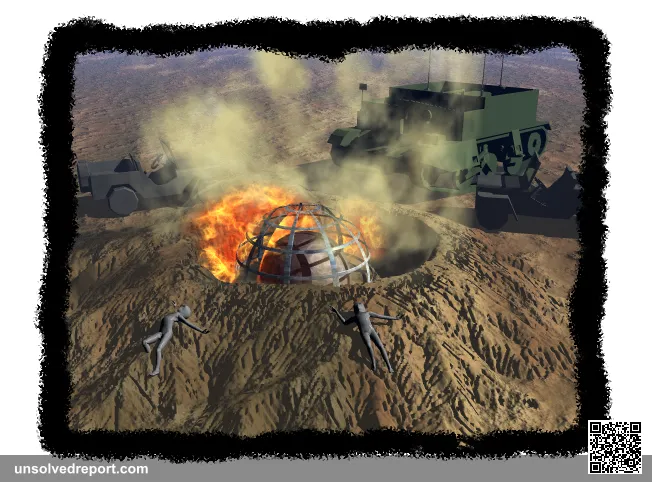
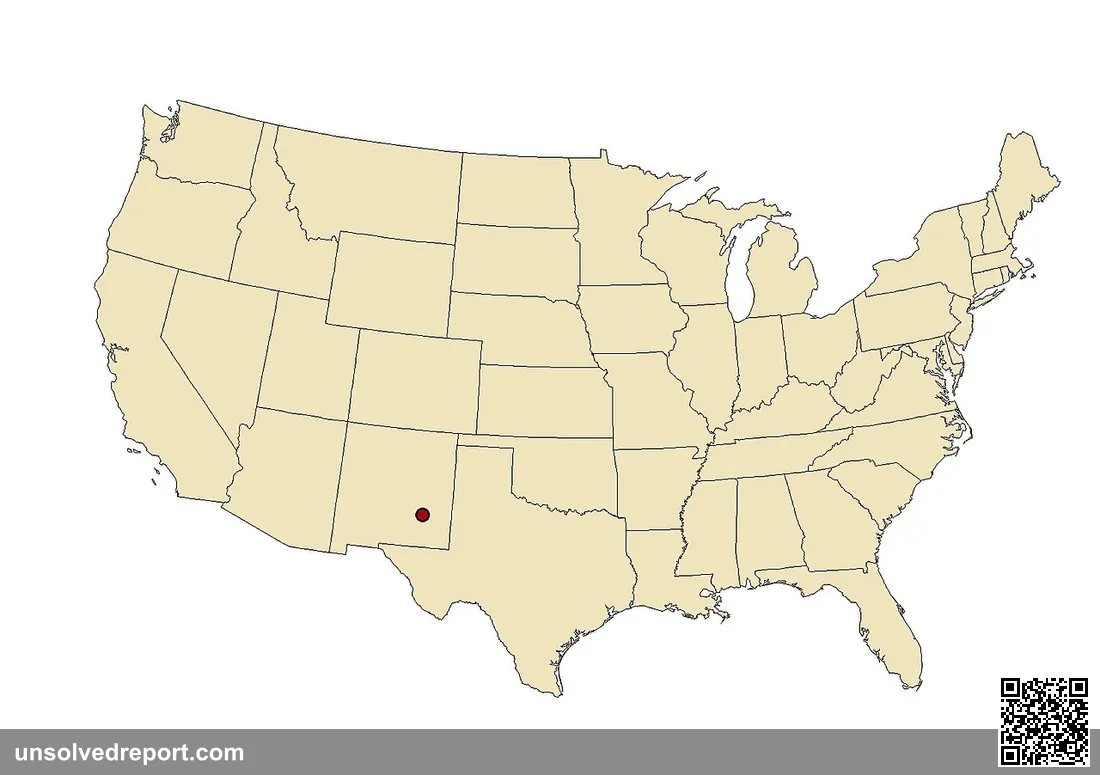
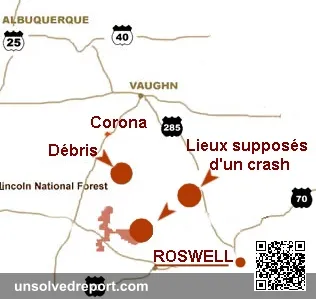
His name was W.W. "Mac" Brazel, and in late June or early July 1947 he stumbled onto a wide spread of strange debris on the Foster ranch, about 75 miles northwest of Roswell, New Mexico. Tinfoil. Rubber strips. Tough paper. Tape. Lightweight sticks. Scattered all over the ground like something had come apart in the sky (Britannica).
He told the sheriff. The sheriff called the Roswell Army Air Field. The base sent an intelligence officer — Major Jesse Marcel — to scoop up the wreckage (Britannica).
Here's where it gets strange.
On July 8, 1947, the base's public information office — acting under orders — put out a press release announcing the Army had recovered a "flying disc." The Roswell Daily Record ran it the very same day (UNT Libraries).
And within hours, somebody upstairs slammed the door shut. General Roger Ramey stepped in front of reporters at Fort Worth and said: no saucer. None. Just a downed weather balloon with a radar reflector — a kite-ish gadget of foil-backed paper on a balsa-wood frame. Photographers crowded in, Marcel knelt beside a heap of crumpled foil and sticks for the cameras, and just like that, the "flying disc" was dead (History.com).
For thirty years, nobody cared. Roswell was a footnote nobody read.
Then 1978 happened. UFO researcher Stanton Friedman tracked down a retired, elderly Jesse Marcel — who now told a very different story: the balloon photos were staged, he said, and the real wreckage was nothing from this Earth (UNT Libraries). Two years later, authors Charles Berlitz and William Moore spun that claim into a bestseller, The Roswell Incident. The legend didn't just come back. It came back bigger.
So the public pushed, and eventually the government cracked the file back open. In 1994, after a formal inquiry, the U.S. Air Force admitted something startling: yes, the weather-balloon story was a lie — but not to hide aliens. The truth was Project Mogul, a top-secret Cold War operation that floated long trains of high-altitude balloons carrying microphones, listening from the edge of space for the shockwaves of Soviet atomic tests (Report of Air Force Research Regarding the "Roswell Incident," 1994 (PDF)).
Picture that. A secret balloon, eavesdropping on the sky for the sound of the apocalypse.
The likely culprit even has a name: NYU Flight 4, a Mogul balloon string fitted with radar reflectors, launched from the Alamogordo area in early June 1947 (Skeptical Inquirer / Center for Inquiry (PDF)). Foil, balsa, rubber, taped paper — match that against Brazel's "tinfoil and sticks" and it lines up uncomfortably well. NYU engineer Charles B. Moore, who helped design and launch those balloons, later swore to the resemblance under oath. And those weird "hieroglyphics" some witnesses swore they saw? Engineers remembered the reflectors being patched up with flowery, taped-on paper from a novelty company. Symbols from a toy shop, not a star system.
The doubters dug too. In 1995, Congress's own investigators — the Government Accountability Office — combed the records and landed in the same place: no alien craft, no trace of any "saucer" ever climbing the chain of command (U.S. GAO, NSIAD-95-187).
But the rumors that wouldn't die were about the bodies. So in 1997, the Air Force published The Roswell Report: Case Closed to tackle them head-on. Its answer: the small "bodies" people remembered were probably crash-test dummies — dropped from high-altitude balloons in the 1950s, then blurred together in memory with real injured airmen and accident victims from those same years (Baltimore Sun).
Four official answers, then. Saucer, balloon, Mogul, dummies. Notice anything?
The question that still won't die
If the government answered everything, why is Roswell still alive?
Here's the catch. The honest mystery was never really "what was the debris?" For the debris, the case is genuinely strong — a classified balloon train, matching materials, launched at the right time, in the right place. That's not a hand-wave. That's an explanation with receipts.
The trouble is the bodies.
The Air Force's own fix asks witnesses to have shoved their memories backward in time — to remember events from the 1950s as if they'd happened in 1947, sliding the calendar by years, sometimes a whole decade. Plenty of researchers buy it. Critics call it a stretch the report never quite nails down (Baltimore Sun).
So the real open question is quieter, and harder, than "was it aliens?" It's this: how much of Roswell is genuine misfiled memory — and how much is a story that simply grew in the retelling, thirty years later, shaped by the very people asking the questions?
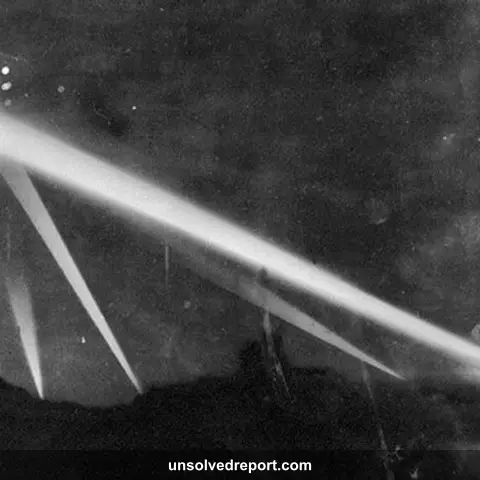
And it doesn't help that the official line changed four separate times. Saucer. Then balloon — a flat lie, by the Air Force's own admission. Then Mogul. Then dummies. Every single version was sold as the final word. Confident claim, quiet correction, repeat — a pattern the Army had already practiced in 1942 over Los Angeles. That's the exact rhythm that keeps a mystery breathing.
So what's the best bet?
Everything below is interpretation, not settled fact. Weigh each one on its evidence.
Project Mogul — the documented favorite. Declassified flight records, named engineers, materials that match the debris. Nothing else fits the wreckage so cleanly, though some researchers grumble that the paper trail for the exact flight has gaps. Best-supported by a mile — but a few fine details stay inferred rather than proven.
An ordinary weather balloon. The 1947 retraction. Almost certainly too simple — it never explained why anyone needed secrecy — but it's where the cover-up-of-a-cover-up began.
A crashed alien craft and recovered bodies — unproven. The legend that made Roswell famous. Remember, it only went mainstream in 1978, through Friedman and an aging Marcel. The 1980 book then bolted on alien corpses — a detail Marcel himself never claimed. No craft. No remains. No authenticated document in public hands. A gripping story, and a firmly speculative one.
A deeper cover-up — speculation. Some argue the official reports are themselves disinformation, hiding something stranger still — the same instinct that later fueled belief in the alleged Majestic-12 documents. By its nature, you can't confirm or refute it with public evidence. Which is precisely why it never goes away.
The "alien autopsy" film — debunked. In 1995, footage surfaced claiming to show a real Roswell alien being dissected. The world lost its mind for a while — then the makers admitted the whole thing was a staged "reconstruction." A fake (Britannica). A clean little reminder of how eagerly this story attracts invention.
Here's the twist worth sitting with. Even the boring answer hides a real government secret. The Army genuinely was concealing something out at Roswell. It just turned out to be a spy balloon pointed at the Soviet Union — not a visitor from somewhere much farther away.
The four official stories, side by side
Roswell isn't one cover story — it's a stack of them, each one issued as the last word. Here's every version the government put on the record, what it was meant to explain, and where it came from. All facts below are drawn from the sources already cited above.
| Year | Official story | Who said it | What it explained | What it left open |
|---|---|---|---|---|
| 1947 | Recovered "flying disc" | Roswell AAF Public Information Office (UNT Libraries) | The debris on the Foster ranch | Retracted within ~24 hours |
| 1947 | Weather balloon + radar reflector | Gen. Roger Ramey, Fort Worth (History.com) | The debris, plainly | Never explained the secrecy — later admitted a lie |
| 1994 | Project Mogul (classified balloon train) | U.S. Air Force inquiry (DoD 1994 report, PDF) | The debris and the secrecy | The reported "bodies" |
| 1997 | Crash-test dummies | The Roswell Report: Case Closed (Baltimore Sun) | The small "bodies" people recalled | Requires memories shifted years off their true date |
A dated timeline of the Roswell file
Every entry below is a date already established in this article, tied to the same source cited for it.
- Early June 1947 — NYU Flight 4, a Project Mogul balloon string with radar reflectors, is launched from the Alamogordo area (Skeptical Inquirer, PDF).
- Late June / early July 1947 — Rancher W.W. "Mac" Brazel finds strange debris on the Foster ranch, ~75 miles northwest of Roswell (Britannica).
- July 8, 1947 — Roswell AAF issues its "flying disc" press release; the Roswell Daily Record runs it the same day (UNT Libraries). Within hours, Gen. Ramey retracts it at Fort Worth as a weather balloon (History.com).
- 1978 — Stanton Friedman tracks down a retired Jesse Marcel, who recants the balloon account (UNT Libraries).
- 1980 — Berlitz and Moore publish the bestseller The Roswell Incident, adding the alien-corpses claim Marcel himself never made.
- 1994 — The Air Force admits the balloon story was false and identifies Project Mogul (DoD 1994 report, PDF).
- 1995 — The alien "autopsy" film surfaces and is later admitted a staged reconstruction (Britannica); the GAO (NSIAD-95-187) finds no record of any recovered craft (U.S. GAO).
- 1997 — The Roswell Report: Case Closed attributes the "bodies" to crash-test dummies (Baltimore Sun).
Where each explanation actually stands
Reading the evidence the article lays out, the debris and the bodies are two different problems with two very different strengths of answer — and it's worth separating them.
- The debris → Project Mogul. Strongest by far: declassified flight records, named engineers (NYU's Charles B. Moore, who testified under oath), and materials — foil, balsa, rubber, taped paper — that match Brazel's "tinfoil and sticks," launched at the right time and place (DoD 1994 report, PDF; Skeptical Inquirer, PDF). Weakness: the paper trail for the exact flight has gaps, so some fine details stay inferred. What would settle it: a complete, unbroken launch-and-recovery record for that specific balloon string.
- The bodies → crash-test dummies. Weaker, and the article says so: the explanation only works if witnesses misremembered 1950s events as 1947 — a shift of years the 1997 report never fully nails down (Baltimore Sun). What would settle it: contemporaneous records tying specific witness memories to dated dummy drops.
- A crashed craft and alien bodies. Unproven: no craft, no remains, no authenticated public document. The corpse detail only entered the story in 1980 — Marcel never claimed it. What would settle it: a single authenticated physical artifact or contemporaneous document.
- A deeper cover-up. Unfalsifiable by design — it survives precisely because public evidence can neither confirm nor refute it.
What's new in 2026: the Pentagon's latest file release
On May 8, 2026, the Department of War (the Pentagon's rebranded name) publicly posted its first tranche of files under a Trump-administration transparency initiative called PURSUE (Presidential Unsealing and Reporting System for UAP Encounters). The release totaled 162 files — 120 PDFs, 28 videos, and 14 images — spanning historical sightings from the 1940s through recent decades (CBS News).
Roswell was part of it, but only in a narrow, incremental way — this is not a new revelation about what crashed. The release included an updated version of FBI case file 62-HQ-83894, an 18-document file covering 1947 to 1968 that the FBI had already released portions of in earlier years. The Pentagon said this 2026 version carries "fewer redactions and several newly declassified pages" (CBS News). One memo in that file — from the FBI's Dallas field office — records an Air Force major reporting that "an object purporting to be a flying disc was recovered near Roswell, New Mexico," describing it as "hexagonal in shape and was suspended from a ball[o]on by cable" — a description that lines up with the Project Mogul radar-reflector explanation, not a craft (CBS News).
Of the 162 files in the full release, 108 contained redactions, withheld to protect eyewitness identities, facility locations, and unrelated sensitive military information. The Pentagon stated that "no redactions have been made to any files released under President Trump's directive concerning information about the nature or existence of any encounter reported as a UAP" (CBS News). Separately, in September 2025, the National Archives quietly uploaded a 22-minute black-and-white reel titled "The Roswell Incident," combining stills from official reports with motion footage; researchers who reviewed it attribute the shadowy shapes some viewers read as bodies to pareidolia and note the material appears to be repackaged 1990s presentation content rather than new evidence.
Net effect: the 2026 release adds documentary detail and fewer redactions to the same FBI paperwork already folded into the Project Mogul explanation above — it does not introduce a new official story, and it does not touch the unresolved "bodies" question.
Frequently Asked Questions
Was Roswell ever officially confirmed to involve aliens?
No. Across four official explanations since 1947 — flying disc, weather balloon, Project Mogul, and crash-test dummies — no U.S. government report has confirmed an alien craft or extraterrestrial remains. The 1995 GAO investigation searched military records and found no trace of any recovered craft climbing the chain of command (U.S. GAO, NSIAD-95-187).
What is Project Mogul, and why was it secret?
Project Mogul was a classified Cold War program that used long strings of high-altitude balloons carrying microphones to detect the acoustic signature of Soviet atomic bomb tests. It was classified because revealing it would have exposed both the surveillance method and U.S. concern over Soviet nuclear progress, so the Army chose a boring cover story — weather balloon — over explaining the real program (DoD 1994 report, PDF).
Why did the Army first say it recovered a flying disc, then retract it within a day?
The initial July 8, 1947 press release came from the Roswell Army Air Field's own public information office, seemingly without higher-level review. Once the wreckage reached Fort Worth, Gen. Roger Ramey moved fast to correct the record with the weather-balloon explanation, apparently to prevent the Mogul program's cover from being blown (History.com).
What explains witness reports of small bodies at the crash site?
The Air Force's 1997 Case Closed report attributes these memories to anthropomorphic crash-test dummies dropped from high-altitude balloons in the 1950s, arguing witnesses conflated those later events — and some real airmen injuries and accidents from the same years — with the 1947 incident. Critics note the report requires witnesses to misplace memories by years to a decade, a gap it doesn't fully resolve (Baltimore Sun).
Did the 2026 Pentagon file release change the Roswell explanation?
No. The May 8, 2026 release added fewer-redacted pages to the existing FBI case file (62-HQ-83894) and included a Dallas field-office memo describing the object as "hexagonal" and suspended by cable from a balloon — consistent with the Project Mogul explanation already in place since 1994, not a new finding (CBS News).
Is the 2025 National Archives "Roswell Incident" video new evidence?
No. Researchers who reviewed the September 2025 upload — a 22-minute reel combining official-report stills with motion footage — say it appears to be repackaged material from 1990s presentations, and that shapes some viewers interpret as bodies are consistent with pareidolia rather than new footage of remains.
Roswell endures because it sits right on a fault line: a real secret, a real reversal, and a gap just wide enough for the imagination to climb inside. But it wasn't even the first strange thing in the sky that summer. Just weeks earlier, a pilot soaring over Washington State watched nine objects skip across the air "like saucers" — and accidentally handed the whole phenomenon the name we still use today.
Sources & Further Reading
- U.S. Department of Defense — Report of Air Force Research Regarding the "Roswell Incident" (1994, PDF)
- U.S. Government Accountability Office — Records Concerning the 1947 Crash Near Roswell (NSIAD-95-187)
- Encyclopaedia Britannica — Roswell incident
- History.com — U.S. Air Force reports on Roswell (June 24, 1997)
- Baltimore Sun — "Space aliens" at Roswell were test dummies (1997)
- Smithsonian Magazine — A High-Altitude Balloon Crash-Landed in Roswell
- Skeptical Inquirer (Center for Inquiry) — The Roswell Incident and Project Mogul (PDF)
- UNT Libraries — 75 Years After the Roswell Incident, What Have We Learned?
- CBS News — Pentagon begins releasing new UFO files (May 8, 2026)

Nimitz Tic Tac UFO: The 2004 Navy Sighting Nobody Can Explain
Navy pilots chased a wingless "Tic Tac" UFO off San Diego in 2004 — and it vanished in a blink. The Pentagon confirmed the video is real. What was it?
2021 Pentagon UAP Report: 143 UFOs Still Unexplained in 2026
143 of 144 military UFO sightings remain unexplained. Inside the 2021 Pentagon UAP report, the office it created, and the 319 new cases logged through 2026.
Battle of Los Angeles: 1,400 Shells Fired at an Empty Sky
1,400 shells, five deaths, two cabinet secretaries with opposite answers, and no enemy ever found. What was the U.S. Army actually shooting at?