Le Griffon Shipwreck: The 1679 Ghost Ship Nobody Can Find
In 1679 the Le Griffon vanished on Lake Michigan with 7 men aboard. 345 years and multiple "found it" claims later, why is it still missing?
September 18, 1679. A small wooden ship with a carved griffin snarling at its prow turns east, loaded with furs, and sails into a gathering storm on Lake Michigan. Seven men are aboard. None of them are ever seen again.
That ship was the first full-sized sailing vessel ever to cross the upper Great Lakes. Six weeks after it was launched, it was gone—swallowed whole. And here's the part that has driven treasure hunters half-mad for three and a half centuries: nobody has ever found it.
The Griffon is the great white whale of freshwater archaeology, in the same league as the shipwrecks that swallowed fortunes and are still missing around the world. A ship that keeps getting "discovered" and somehow stays lost. People have hauled poles and beams dripping from the lakebed, called the press, planted flags—and every single time, the experts have quietly handed the ship back to legend. So let's sort the real from the rumor: what the records actually prove, what is still a genuine mystery, and which "discoveries" are best filed under wishful thinking.
What We Actually Know
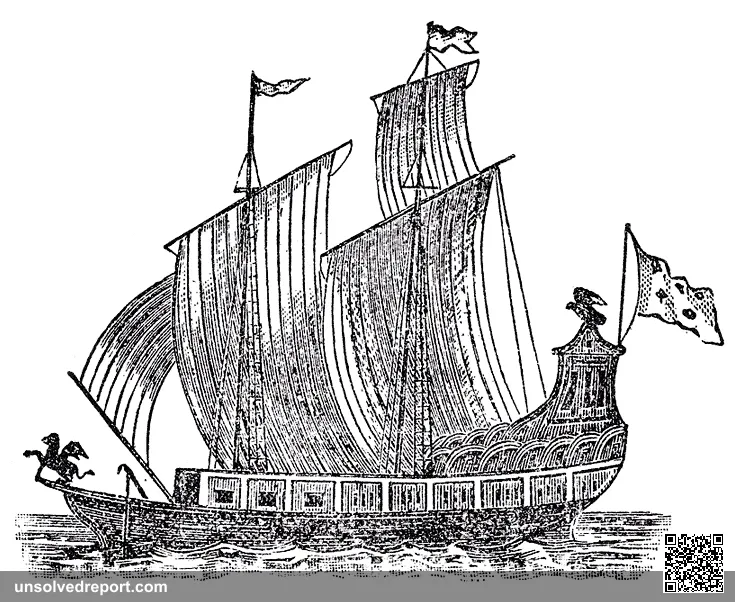
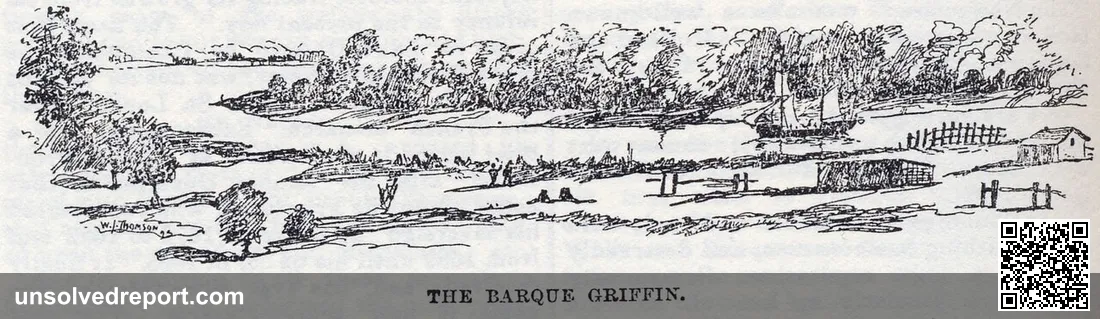
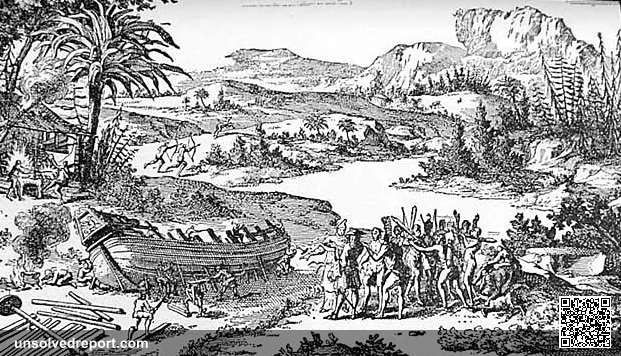
Start with the man who built it. The Griffon was the brainchild of René-Robert Cavelier, Sieur de La Salle—French explorer, fur trader, and a man perpetually one bad season from financial ruin. His shipwrights laid the keel above Niagara Falls near Cayuga Island in early 1679. The finished ship was a barque of roughly 45 tons, somewhere between 30 and 45 feet long, bristling with seven cannons (Wikipedia; Wisconsin Shipwrecks). Nothing that big had ever sailed the upper lakes. It was a floating marvel.
On August 7, 1679, La Salle pushed off on the maiden voyage—up Lake Erie, through Lake Huron, into Lake Michigan. Until that summer, Europeans had only ever crossed those waters by canoe. The Griffon reached an island near the mouth of Green Bay—today usually pegged as Washington Island, Wisconsin—where local tribes had stacked up furs to trade (Atlas Obscura; Washington Island Archives).
And that is exactly where the documented story stops and the mystery starts.
La Salle stayed behind to keep exploring overland. On September 18, 1679, he sent the Griffon back toward Niagara with a pilot named Luc, about six crewmen, and a fortune in furs—reportedly some 12,000 pounds of pelts, a cargo that would rank among the lost treasures the world has never found (Wikipedia). It sailed straight into a building storm. By late November, when it hadn't reached Fort Frontenac, everyone knew. It was gone.
Everything after that, we only know secondhand. Father Louis Hennepin, the Recollect missionary who'd ridden along on the outbound trip, later admitted it "was never known what Course they steer'd, nor how they perish'd," guessing only that "the Ship struck upon a Sand" (Wikipedia). La Salle, sinking under debt and suspicion, came to believe in a later letter that his own pilot had stolen or deliberately sunk the ship. And in 1681, La Salle's inquiries reportedly turned up an account from Indigenous observers—often named as Potawatomi—that the Griffon had been caught in violent weather and driven onto shoals near the islands of northern Lake Michigan (Discovery UK).
Three different sources. Three different hunches. They agree on exactly one thing: the ship and her crew were never coming home—vanishing as completely as the three lighthouse keepers of the Flannan Isles would over two centuries later.
The One Question Nobody Can Answer
So where is it?
That single question has stumped people for 345 years—and not because nobody bothered to look. Heaven knows they've looked.
The best scholarly guess drops the wreck somewhere in northern Lake Michigan, maybe inside a search box of about 100 square miles, in water only around 80 feet deep over a limestone floor (Discover Magazine). Eighty feet. Shallow enough to dive. That should make it a sitting duck.
Here's the cruel twist. The very thing that should keep the wreck within easy reach—shallow, hard-bottomed, hammered by waves—may be exactly what wiped it off the map.
"I would not expect any wooden remains from 1679 to remain," Brendon Baillod, president of the Wisconsin Underwater Archeology Association, told Discover Magazine. Picture it: 345 years of ice grinding, currents dragging, and that eerily clear zebra-mussel water scouring an exposed wooden hull in 80 feet of lake. What's left? Maybe a scatter of rusted iron fittings. And scattered iron is nearly impossible to tell apart from the wreckage of the hundreds of later ships that sank in the very same waters.
So you get a beautiful paradox—the one that keeps this story alive. The Griffon is at once the most-hunted and least-found shipwreck on the Great Lakes, earning it the same "ghost ship" title given to wrecks like the San Miguel of the 1715 fleet. Michigan's state maritime archaeologists have looked over candidate after candidate, decade after decade, and the verdict never changes. Baillod said it flat out: "No one has found the Griffon. Until you hear a reputable archeologist with the State of Michigan say it has been found, you can rest assured it hasn't been found" (Discover Magazine).
Which brings us to the parade of people who were sure they'd cracked it.
The Ships That Weren't
Read these as theories, not findings. Not one has been confirmed by maritime archaeologists.
The Poverty Island pole. Around 2001, Steve and Kathie Libert's Great Lakes Exploration Group locked onto something strange: a long timber jutting up out of the lakebed near Poverty Island, off Michigan's Garden Peninsula. Could it be the Griffon's bowsprit? The fight over digging it up dragged in the state of Michigan, the U.S. government, and even France—which still claims a sovereign stake in its lost ships. Finally, on June 16, 2013, with American and French archaeologists watching, the Libert team pulled the pole free. Within days the verdict landed: the roughly 19-foot timber wasn't attached to any ship at all (Michigan Public; Wikipedia). The Liberts haven't given up—they've since pointed to a different debris field near Manistique (Detroit News). Also unconfirmed.
The Mississagi Strait wreck. Cross to the Canadian side, where a wreck near the Mississagi Strait lighthouse on Manitoulin Island has been tied to the Griffon since the late 1800s. The legend got a chill down its spine in 1887, when human bones turned up nearby—sometimes counted as six, the exact number of the Griffon's lost crew (Wikipedia; Manitoulin Expositor). Spooky, right? But the metal tells a colder story. Researchers describe threaded iron bolts about 37 inches long in that wreck—and threaded rods simply weren't a thing on 17th-century ships. They point to a 19th-century vessel instead. Six skeletons is a haunting coincidence. It is not proof.
The 2014 "tugboat." In December 2014, treasure hunters Kevin Dykstra and Frederick Monroe held up a Lake Michigan wreck and announced it: the Griffon, found at last. It turned out to be a tugboat. Built centuries too late (Wikipedia).
See the pattern? Every generation coughs up a new claimant, a new sonar blip, a new beam hauled dripping into the daylight—and every time, the patient work of archaeologists sends the ship right back into myth. Somewhere down there, under the cold limestone shallows, the truth may still be lying in wait. But until a credentialed marine archaeologist signs the paper, the first ghost ship of the Great Lakes stays exactly what it has always been: lost, documented, and genuinely unsolved. Just like the storms that keep swallowing ships on those same waters to this day.
Sources & Further Reading
- Le Griffon — Wikipedia
- "No One Has Ever Found the Le Griffon Shipwreck, Despite the Many Claims" — Discover Magazine
- "The White Whale for Great Lakes Shipwreck Hunters" — Atlas Obscura
- Griffon (1679) — Wisconsin Shipwrecks
- "What Happened to the Lost Ship Le Griffon?" — Discovery UK
- "Diving into the search for lost 17th-century ship" — Michigan Public
- "Charlevoix couple offers theory on mysterious 1679 shipwreck" — Detroit News
- "Le Griffon" (The Griffin) — Washington Island Archives
The Lost Dutchman Mine: Arizona's Deadliest Gold Hunt
A dying prospector hid 48 pounds of gold and named no map. For 130 years, Arizona's Superstition Mountains have swallowed the people chasing the rest.
Knights Templar Treasure: The Gold That Vanished Overnight
In 1307 France raided the richest order in Europe and the vault came up empty. Was the Knights Templar treasure hidden, or did it never exist at all?
Saddle Ridge Hoard: $10M in Buried Gold Nobody Can Explain
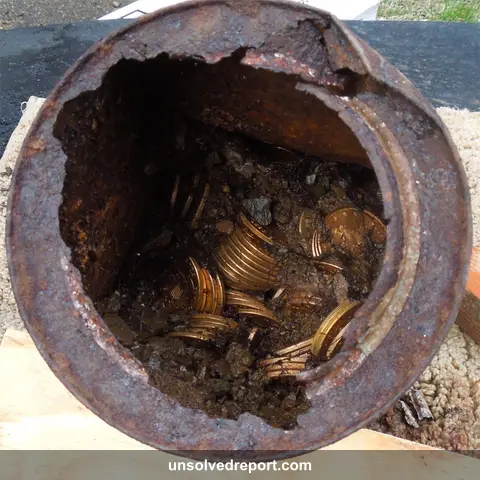
The Saddle Ridge Hoard: $10M in gold coins dug up under a California tree in 2013. We know everything about it — except who buried it, and why.