Padmanabhaswamy Temple Vault B: The $22B Door Nobody Dares Open
Padmanabhaswamy Temple Vault B has stayed sealed since the 1880s, right next to $22 billion in gold. Officials could open it. They won't. Here's why.
June 2011. A team of court-appointed officials climbs down into the dark beneath one of the oldest Hindu temples in India. They lift a granite slab. They unlock an iron grille. And out of the underground rooms of the Sree Padmanabhaswamy Temple in Kerala pours something almost too big to believe — a hoard of gold and gemstones that researchers would later call one of the largest ever documented in a single place on Earth.
Then they walk up to a door marked "B."
And they stop.
More than a decade has passed. That door is still shut. Over the years it has collected a reputation that sounds like something out of a movie: cobras carved into the stone, whispered curses, warnings of floods and divine wrath. But peel the folklore away and something stranger remains — something real. There genuinely is an unopened vault. There genuinely is an unresolved fight, in courts and in conscience, over what to do with it. And here's the part that gets under your skin: not one person alive today can tell you, for certain, what is on the other side.
Let's separate what the record proves from what the legend whispers.
What We Actually Know
Start with the temple itself. The Sree Padmanabhaswamy Temple stands in the heart of Thiruvananthapuram, dedicated to the god Vishnu, shown reclining in the great cosmic sleep called Anantha Shayanam. Its modern form traces back to the 18th-century Travancore ruler Marthanda Varma, who did something extraordinary in 1750: he handed his entire kingdom over to the deity and ruled the rest of his days not as king, but as the god's servant and regent. For centuries, dynasty after dynasty poured riches into this place, the same era of subcontinental excess that produced treasures like the Peacock Throne. The wealth grew so vast that even an ancient Tamil epic, the Silappatikaram — written somewhere between 100 and 300 CE — already spoke of it as the stuff of legend (Wikipedia, "Padmanabhaswamy Temple treasure").
So how did the modern world finally crack it open? With a lawsuit.
In 2007, a former police officer and lawyer named T. P. Sundararajan went to court. His demand was simple: tell us how the temple's assets are really being managed. The case climbed all the way to the Supreme Court of India, which in 2011 made a historic call — open the temple's sealed underground vaults, labeled A through F, and write down exactly what's inside (Wikipedia).
On June 27, 2011, the opening began. Three days later, on June 30, a committee entered Vault A. They unlocked an iron grille, swung open a wooden door, lifted a granite floor slab — and dropped into the chamber below.
What greeted them was staggering. A solid-gold idol of Mahavishnu, roughly four feet tall, studded with diamonds. A throne of pure gold. An 18-foot gold chain — the kind of single object that, elsewhere in Indian royal history, has a way of vanishing entirely, the way thousands of diamonds once walked out of a Patiala palace. Sacks of gold coins, including hoards of Roman-era and medieval currency. And in Vault A alone — just that one room — more than 100,000 groups of objects (Wikipedia). The numbers from international coverage at the time made jaws drop everywhere: around 1 trillion rupees, somewhere between 20 and 22 billion US dollars (Fox News/AP, 2011).
This wasn't a free-for-all. The whole inventory was overseen by Vinod Rai, the former Comptroller and Auditor General of India, working under the court's authority. One by one, the vaults gave up their secrets — A, C, D, E, and F were all opened and catalogued. Years later, in 2014, the committee even found more long-sealed cellars, sometimes called G and H (Wikipedia).
One vault, though, stayed shut.
Vault B. Known locally as Kallara B. According to the record, it had been sealed since at least the 1880s — untouched for over a century. And in the middle of 2011, just as the openings were underway, the Travancore royal family secured a court injunction to halt any attempt on it, citing religious sentiment and astrological concerns (Wikipedia).
Here's where the story takes a turn that fed every conspiracy theorist's imagination. The man who started it all never lived to see how it ended. T. P. Sundararajan died in Thiruvananthapuram on July 17, 2011 — less than a month after the vaults were opened — at age 70, after what his family described as a brief illness (BBC News, 2011). The timing was irresistible to the rumor mill. But the documented account is plain: he died of illness. Nothing more.
The legal battle, meanwhile, dragged on for years. Then, on July 13, 2020, the Supreme Court ruled — upholding the Travancore royal family's right to manage the temple and its assets, and overturning a Kerala High Court decision that had handed control to a state body (The Week, 2020).
The Real Mystery Has No Cobras in It
So if officials were already down there, cataloguing billions, why didn't they just finish the job and open Vault B?
This is where the actual mystery lives — and it's not supernatural. It's human, and it's unresolved.
During the proceedings, a senior advocate named Gopal Subramanium, serving as amicus curiae (think of it as an independent adviser the court trusts to speak the truth), did something you might not expect. He argued for opening it. At a 2017 hearing he laid it out: experts believed "Kallara B should be opened because it was closed on the apprehension that there is some mystical energy," and that "nothing but useless suspicion is generated about what is there in Kallara B" (The News Minute, 2017).
In other words: stop being afraid of a door.
The bench — then led by Chief Justice J. S. Khehar — said it would examine the question of opening Vault B later, while stepping back from monitoring the temple's day-to-day affairs (The News Minute, 2017). The matter was, in effect, parked. Left "in abeyance." And after the 2020 verdict put the royal family back in charge, no court-ordered opening ever came.
So here's the honest answer, and it's a collision of three forces. Religious sensitivity — the family and many devotees consider opening it nothing short of sacrilege. Legal caution — a court that didn't want to be the one to force the issue. And plain practical uncertainty — a vault so deep and so long-sealed that no living person has documented what's down there. Reporting even notes a long-held belief that whatever lies inside was set aside by the Travancore rulers as an emergency reserve, to be touched only in a grave crisis (Deccan Herald, 2025).
It's not a conspiracy. It's a standoff. The vault stays sealed because no one in power has been willing to be the person who breaks the seal.
Now for the Legends
Around that real, quiet stalemate, a far louder story has grown — a tangle of folklore that's a lot more fun and a lot less true. So let's be clear up front: everything that follows is legend and popular claim, not established fact.
The serpent door. Popular accounts say Vault B's outermost door is carved with two enormous cobras, coiled and waiting to strike down any intruder. It's a chilling image, and it's repeated everywhere in news features and treasure-hunting forums. But it lives in temple lore, not in any verified architectural survey.
The Naga Bandham. Legend says the vault was sealed long ago by siddha purushas — accomplished sages — using a Naga Bandham, or "serpent lock": a mystical seal made of sound itself. The tradition insists that only an enlightened ascetic, chanting the exact Garuda Mantra, could open it without disaster. There's no scientific evidence that any such mechanism exists. This is devotional storytelling, passed mouth to ear across generations.
The flood and the curse. Some versions warn that the chamber is somehow connected to the Arabian Sea, and that cracking it open could unleash a flood — an anxiety that echoes the way another Indian coastal temple, at Mahabalipuram, really was swallowed by the sea before a tsunami briefly gave it back. Astrologers, meanwhile, warned of divine wrath. These were cultural beliefs raised during the case — not engineering reports, not survey findings.
Strip all of it away, and what's left is quieter, but it'll stay with you longer: a real door. A real fortune lying right beside it. A court that paused. And a question that someone, somewhere, deliberately chose to leave unanswered.
Vault B isn't waiting behind us because it's cursed. It's waiting because no one has yet decided it's theirs to open. And until someone does, the most valuable thing about that door may be the not-knowing.
Sources & Further Reading
- Wikipedia, "Padmanabhaswamy Temple treasure"
- The News Minute, "Cannot continue to monitor Sree Padmanabhaswamy temple, to examine opening of vault B: SC" (2017)
- The Week, "SC upholds right of Travancore royal family in administration" (2020)
- BBC News, "India temple treasure petitioner Sundara Rajan dies" (2011)
- Fox News / Associated Press, "$20B Treasure Hunt at 16th-Century Hindu Temple Nears End" (2011)
- Deccan Herald, "Mystery over treasure trove of Padmanabhaswamy temple's B vault resurfaces" (2025)

Oak Island Money Pit: The 200-Year Mystery Nobody Can Solve
200 years, millions of dollars, six deaths — and still no treasure. So what's really down the Oak Island Money Pit? The evidence points somewhere stranger.
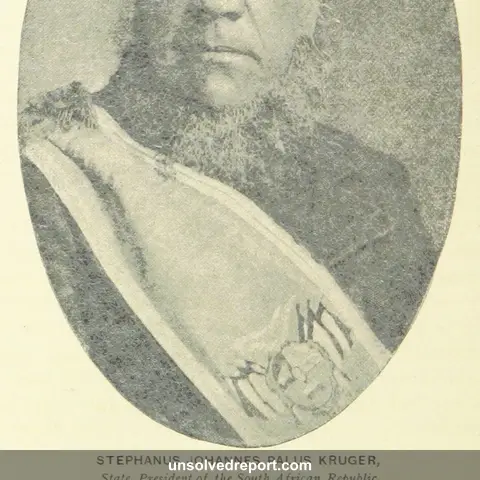
Kruger Millions: The Lost Gold Nobody Can Fully Account For
A republic loaded its gold onto a train and fled the British army. The treasure was real — but a quarter-million ounces still won't add up. Here's why.
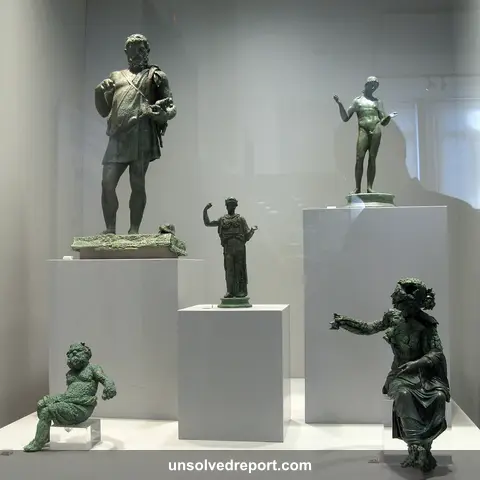
Antikythera Wreck: 9 Bronze Statues Still Buried Below
Antikythera wreck: a diver surfaced screaming about corpses on the seabed. It was bronze masterpieces — and up to 9 statues are still buried down there. Which ones?