Drake Equation Explained: 6,000 Planets In, Still Zero Signals
6,000+ exoplanets confirmed and counting, yet the Drake Equation's answer still swings from millions of civilizations to just us. Here's why the math won't settle it.
In November 1961, a young astronomer sat down to plan a meeting and accidentally wrote one of the most famous equations in science on a chalkboard. He was not trying to be profound. Frank Drake just needed an agenda. He wanted a way to organize a conversation about a wild question: are there other civilizations out there, right now, trying to talk to us?
So he broke the giant question into smaller pieces you could actually argue about. String the pieces together and you get a single number. That number — call it N — is the count of alien civilizations in our galaxy whose signals we might be able to detect. Sixty-five years later, the catalog of known planets has passed 6,000, and scientists still use Drake's equation to make sense of it. And here is the strange part: depending on what you believe, the answer still comes out as millions, or as just us. Let's walk through what we actually know.
> ### The 60-Second Brief
> - 1961 — Frank Drake writes the equation for a ~12-person conference at Green Bank, West Virginia; his own working guess is ~10,000 detectable civilizations in the Milky Way.
> - 1992 — First confirmed exoplanets: three worlds orbiting a pulsar.
> - March 21, 2022 — NASA's Exoplanet Archive passes 5,000 confirmed exoplanets.
> - September 17, 2025 — NASA's tally reaches 6,000 confirmed exoplanets, with over 8,000 more candidates awaiting confirmation.
> - 2018 — Oxford researchers recalculate the equation using full uncertainty ranges and get a 53%–99.6% chance we are alone in the galaxy.
> - Despite all that data, zero confirmed alien signals have ever been detected.
The Documented Facts
The Drake Equation is real, and it is taught in astronomy classes worldwide. It was devised by U.S. astrophysicist Frank Drake and first discussed in 1961 at a small conference on the search for extraterrestrial intelligence, held at the National Radio Astronomy Observatory in Green Bank, West Virginia (Britannica).
The full formula looks like this:
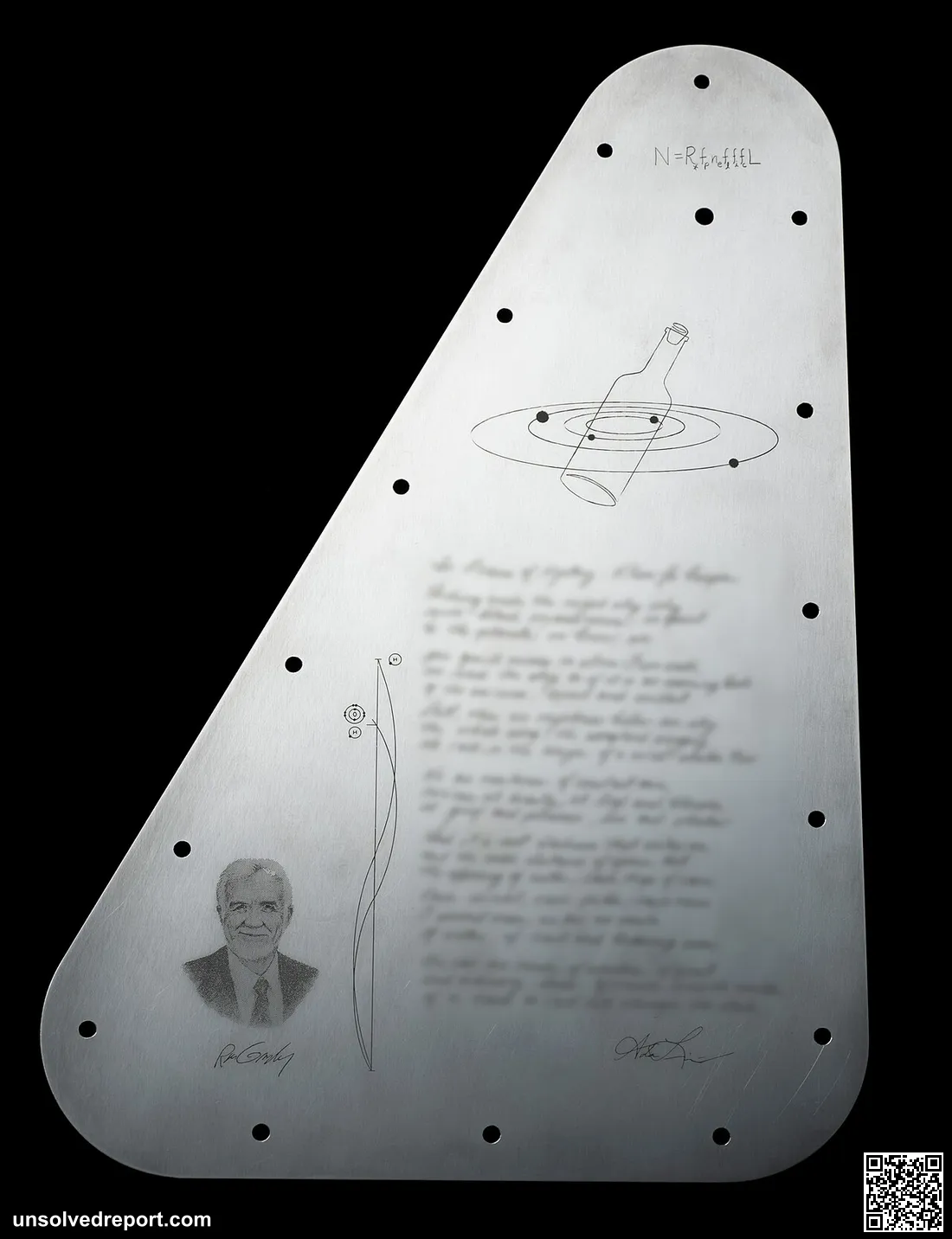
*N = R\ × f<sub>p</sub> × n<sub>e</sub> × f<sub>l</sub> × f<sub>i</sub> × f<sub>c</sub> × L**
Each letter is a step on the road from "a star is born" to "we hear a signal." According to the SETI Institute, the people who run actual alien-signal searches, the pieces are (SETI Institute):
- R\* — how many stars form in our galaxy each year
- f<sub>p</sub> — the fraction of those stars that have planets
- n<sub>e</sub> — how many of those planets could support life
- f<sub>l</sub> — the fraction where life actually starts
- f<sub>i</sub> — the fraction where life gets smart
- f<sub>c</sub> — the fraction that builds technology we could detect
- L — how long that civilization keeps broadcasting before it goes quiet
Multiply them all and you get N. Simple to write. Brutally hard to fill in.
The meeting itself was tiny — about a dozen people — but the room was stacked with brilliance. Among the attendees were planetary astronomer Carl Sagan, physicist Philip Morrison, biologist Joshua Lederberg, and radio engineer Barney Oliver. Biochemist Melvin Calvin was there too, and during the meeting he got a phone call telling him he had just won the Nobel Prize (EBSCO Research Starters).
What did they come up with? Drake's own best guess in 1961 was that a typical civilization might stay detectable for about 10,000 years — and so perhaps 10,000 technological civilizations were scattered across the Milky Way alongside us (Slate).
Here is the most important thing to understand: the first few terms have gotten much less mysterious since 1961. Back then, nobody knew if other stars even had planets. Now we do. NASA confirmed its 5,000th known exoplanet on March 21, 2022, and astronomers estimate the galaxy holds somewhere between 100 and 200 billion planets in total (NASA/JPL). Planets, it turns out, are everywhere.
The Genuine Open Question
So if planets are common, where is everybody?
That exact question was asked by physicist Enrico Fermi during a lunch at Los Alamos in 1950. The galaxy is old. It is huge. If even a sliver of those billions of planets grew civilizations, some should have spread far and wide by now — or at least left a signal we could catch. Yet decades of listening have turned up nothing confirmed. That gap between "the universe should be crowded" and "the sky is silent" is called the Fermi Paradox (The Planetary Society).
The Drake Equation makes the paradox sharp, because it exposes exactly where our ignorance lives. The early terms — stars, planets — are nailed down. But the later ones? They are almost pure guesswork.
We have exactly one example of a planet where life started: this one. We have exactly one example of intelligence: us. When your entire dataset is a single point, you cannot honestly say whether life is a near-miracle or a near-certainty. And the very last term, L — how long a civilization survives — may be the deepest unknown of all. Do technological species last a million years, or do they tend to wipe themselves out in a few centuries? We have no idea, because we are still living through our own L right now.
That is the honest answer. The front half of the equation is astronomy. The back half is a mirror.
Theories and Interpretations
Here the science hands off to speculation. Everything below is labeled speculation — competing interpretations, not settled facts.
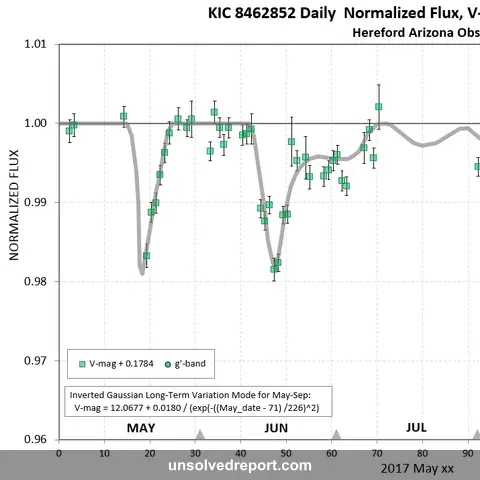
The optimistic read. If life starts easily and civilizations last a long time, N could be huge — thousands or even millions of chatty neighbors. We simply haven't pointed our instruments in the right place, at the right frequency, at the right moment — which is exactly why astronomers got so excited (then let down) by Tabby's Star and its inexplicable dimming. (Plausible, unproven.)
The Rare Earth interpretation. Maybe Earth is a fluke. The right star, a stabilizing big moon, a protective gas giant, plate tectonics — perhaps so many things had to line up that complex life is vanishingly rare. Under this view, planets are common but thriving worlds are not, and N collapses toward one. (A serious hypothesis, but not proven.)
The Great Filter. Economist Robin Hanson popularized a chilling idea in the late 1990s: somewhere on the road from dead rock to galaxy-spanning civilization sits a "filter" that almost nothing gets past (The Planetary Society). If the filter is behind us — say, the origin of life itself — then we got lucky and may be alone. If it lies ahead of us, that is the unsettling version: every civilization tends to destroy itself before reaching the stars. (A framework, not a finding.)
The "we did the math wrong" read. In 2018, researchers Anders Sandberg, Eric Drexler, and Toby Ord at Oxford argued the paradox might dissolve on its own. Instead of plugging single guesses into the equation, they fed in the full range of scientific uncertainty for each term. The result: a real chance we are alone in the galaxy (they put it at 53% to 99.6%) and even a substantial chance we are alone in the entire observable universe (39% to 85%) (arXiv: Sandberg, Drexler & Ord, 2018). Their point was not "aliens don't exist." It was that cosmic silence is exactly what you'd expect when the numbers are this uncertain — no spooky explanation required.
And then there are the claims you'll meet on late-night radio and across the internet: that aliens are here, hidden in UFO and UAP sightings, abductions, and government cover-ups. These remain unproven. No verified contact, no confirmed signal, no authenticated craft has ever survived scientific scrutiny. The Drake Equation says nothing about visitors in the night sky — it only estimates how many civilizations might exist, not whether any have ever knocked on our door.
The Seven Terms at a Glance: Measured, Guessed, or Mirror?
The equation's real value is diagnostic: it sorts our knowledge into what astronomy has actually measured and what still rests on a sample size of one. Here is where each term stands, using only what the sources above establish.
| Term | What it asks | Where our knowledge actually stands |
|---|---|---|
| R\* | How many stars form in the galaxy per year | Astronomy — among the terms that have grown far less mysterious since 1961 (SETI Institute) |
| f<sub>p</sub> | Fraction of stars with planets | Effectively answered: 6,000+ confirmed exoplanets as of September 17, 2025, plus over 8,000 unconfirmed candidates, with the galaxy likely holding hundreds of billions of planets (NASA) |
| n<sub>e</sub> | Planets per system that could support life | Exoplanet astronomy is closing in, but "could support life" is still judged against a single inhabited example |
| f<sub>l</sub> | Fraction where life starts | One data point: Earth. Could be near-miracle or near-certainty |
| f<sub>i</sub> | Fraction where intelligence emerges | One data point: us |
| f<sub>c</sub> | Fraction that becomes detectable | Decades of listening; no confirmed signal yet (The Planetary Society) |
| L | How long a civilization stays detectable | Drake's 1961 guess: ~10,000 years (Slate). We are still living through our own L |
Read down the right-hand column and the pattern is stark: the terms flip from telescope data to self-portrait roughly halfway through. That is exactly why plausible answers for N can range from millions to one.
From Chalkboard to Catalog: A Dated Timeline
- 1950 — Physicist Enrico Fermi, over lunch at Los Alamos, asks the question that becomes the Fermi Paradox: if civilizations are common, where is everybody? (The Planetary Society)
- November 1961 — Frank Drake writes the equation as a meeting agenda for a small conference at the National Radio Astronomy Observatory in Green Bank, West Virginia (Britannica). About a dozen attendees include Carl Sagan, Philip Morrison, Joshua Lederberg, and Barney Oliver; Melvin Calvin learns mid-meeting that he has won the Nobel Prize (EBSCO). Drake's own working estimate: roughly 10,000 detectable civilizations in the Milky Way (Slate)
- 1992 — The first confirmed exoplanets: three planets found orbiting a pulsar, finally putting real data behind f<sub>p</sub> (NASA/JPL)
- 1995 — The first planet detected around a Sun-like star: a hot Jupiter in a four-day orbit (NASA/JPL)
- Late 1990s — Robin Hanson popularizes the "Great Filter" framing of the silence (The Planetary Society)
- June 6, 2018 — Sandberg, Drexler & Ord submit "Dissolving the Fermi Paradox," arguing that once each term's full uncertainty is fed into the equation, there is a 53%–99.6% chance we are alone in the galaxy (arXiv)
- March 21, 2022 — NASA's Exoplanet Archive passes 5,000 confirmed exoplanets with a batch of 65 new entries (NASA/JPL)
- September 17, 2025 — NASA's exoplanet tally reaches 6,000 confirmed worlds, with more than 8,000 additional candidates still awaiting confirmation (NASA)
Six and a half decades separate the chalkboard from the catalog — and in that span, only the equation's front half moved from guess to measurement.
The Latest Development: 6,000 Planets, Same Silence
On September 17, 2025, NASA announced that its Exoplanet Archive had crossed 6,000 confirmed planets outside our solar system, tracked by the NASA Exoplanet Science Institute at Caltech's IPAC. Because confirmations roll in continuously from research teams worldwide, no single planet is officially "the 6,000th" — the number is simply a running tally that keeps climbing. Beyond the confirmed count, more than 8,000 additional candidate planets are sitting in the queue awaiting verification (NASA).
This directly moves the needle on R\* and f<sub>p</sub>, the two terms astronomy has now all but nailed down. It does nothing for f<sub>l</sub>, f<sub>i</sub>, f<sub>c</sub>, or L — the terms that stay mirrors, not measurements, no matter how many planets get added to the catalog. More candidates in the pipeline means the front half of the equation keeps sharpening while the back half stays exactly as uncertain as it was in 1961.
Frequently Asked Questions
Is the Drake Equation a real scientific formula or just speculation?
It's both, depending on which term you're looking at. The equation itself is a legitimate framework used in astrobiology and taught in university astronomy courses, and its first two terms (star formation rate and fraction of stars with planets) are now backed by hard data from over 6,000 confirmed exoplanets (NASA). Its last four terms remain estimates because we have only one confirmed example of life in the universe: Earth.
What did Frank Drake himself believe N was equal to?
At the original 1961 Green Bank meeting, Drake's own working estimate was that a typical civilization stays detectable for roughly 10,000 years, implying about 10,000 technological civilizations scattered across the Milky Way (Slate). This was a starting point for discussion, not a measured result.
Has any term of the Drake Equation actually been solved?
R\* (star formation rate) and f<sub>p</sub> (fraction of stars with planets) are effectively solved by modern exoplanet surveys — f<sub>p</sub> is close to 1, since planets appear to be the rule rather than the exception around stars. The remaining terms — n<sub>e</sub>, f<sub>l</sub>, f<sub>i</sub>, f<sub>c</sub>, and L — are still unresolved because they depend on how common life and intelligence are, and Earth remains the only confirmed data point for either.
How is the Drake Equation different from the Fermi Paradox?
The Drake Equation is a method for estimating N, the number of detectable civilizations. The Fermi Paradox is the separate observation that if N should be large, we would expect to have found evidence by now — yet we haven't (The Planetary Society). One is a calculation; the other is the uncomfortable gap between that calculation and the silence we actually observe.
Could the Fermi Paradox simply be a math error rather than a real mystery?
That's the argument Sandberg, Drexler, and Ord made in their 2018 Oxford paper. By plugging in full uncertainty ranges instead of single best guesses for each term, they calculated a 53%–99.6% chance we are alone in the galaxy — meaning the "paradox" may partly be an artifact of using overconfident point estimates rather than evidence of anything sinister (arXiv).
Does the growing exoplanet count make it more or less likely we're alone?
More confirmed planets narrows the uncertainty on f<sub>p</sub> and n<sub>e</sub>, but it doesn't touch f<sub>l</sub>, f<sub>i</sub>, f<sub>c</sub>, or L — the terms that actually determine whether N is large or small. A bigger planet catalog means better data feeding into the same unanswered question, not a verdict either way.
The Drake Equation tells us the galaxy should be full of voices. The Fermi Paradox tells us no one is talking. Somewhere between those two facts hides one of the biggest questions a person can ask — and the search is far from over. Because every so often, a radio telescope picks up a signal it cannot explain... and for a few electric hours, scientists wonder if this is finally the one.
Sources & Further Reading
- Drake equation — Encyclopaedia Britannica
- The Drake Equation — SETI Institute
- Drake equation — EBSCO Research Starters
- The Fermi Paradox and Drake Equation — The Planetary Society
- Green Bank conference and Frank Drake's estimate — Slate
- NASA Confirms 5,000 Exoplanets — NASA/JPL
- Dissolving the Fermi Paradox — Sandberg, Drexler & Ord (2018), arXiv
- NASA's Tally of Planets Outside Our Solar System Reaches 6,000 — NASA



Area 51's Real Secret: It Faked Half of America's UFO Sightings
Area 51 stayed "top secret" for 50 years — not because of aliens. The real reason fueled half of America's UFO sightings. What's still hidden there now?

Ghost Rockets of 1946: 2,000 Sightings Sweden Never Explained
A year before 'flying saucer' was even a word, Sweden tracked 200 ghost rockets on radar and one crashing into a lake. So what were they really?
Tabby's Star Mystery: The 22% Dimming Nobody Can Fully Explain
Tabby's Star dimmed by 22% with no warning, and top astronomers wondered if aliens were behind it. Here's what the data really shows — and what's still unexplained.