Hanging Coffins of Sagada: The 2,000-Year Claim No One Can Prove
Hanging coffins of Sagada: wooden boxes some victims carved for themselves, nailed to cliffs. Everyone repeats one age for them — so why has no one ever tested it?
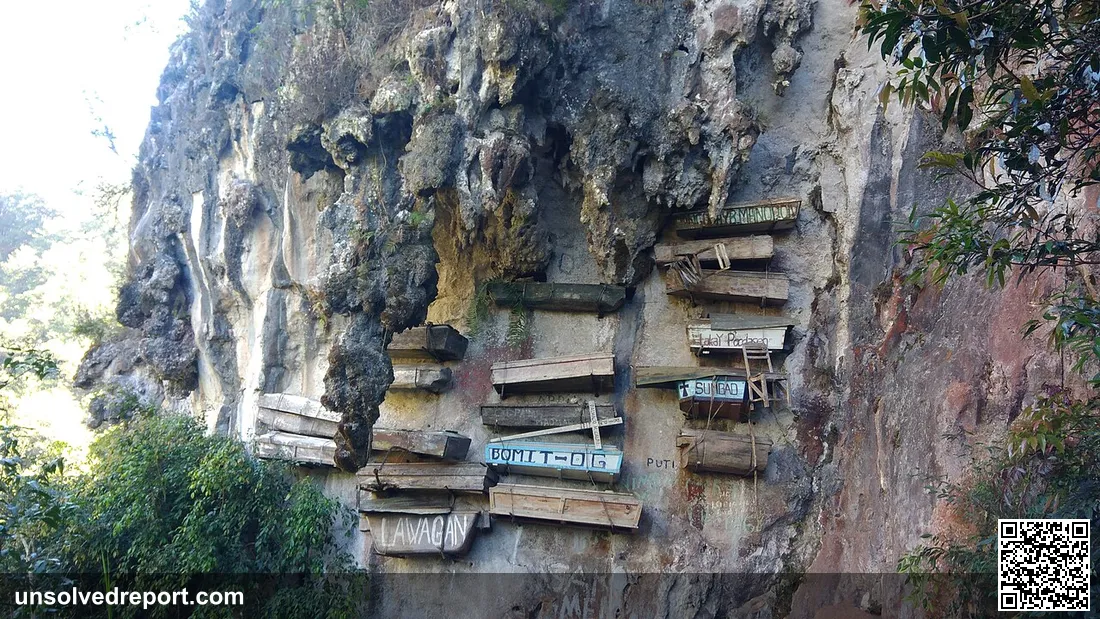
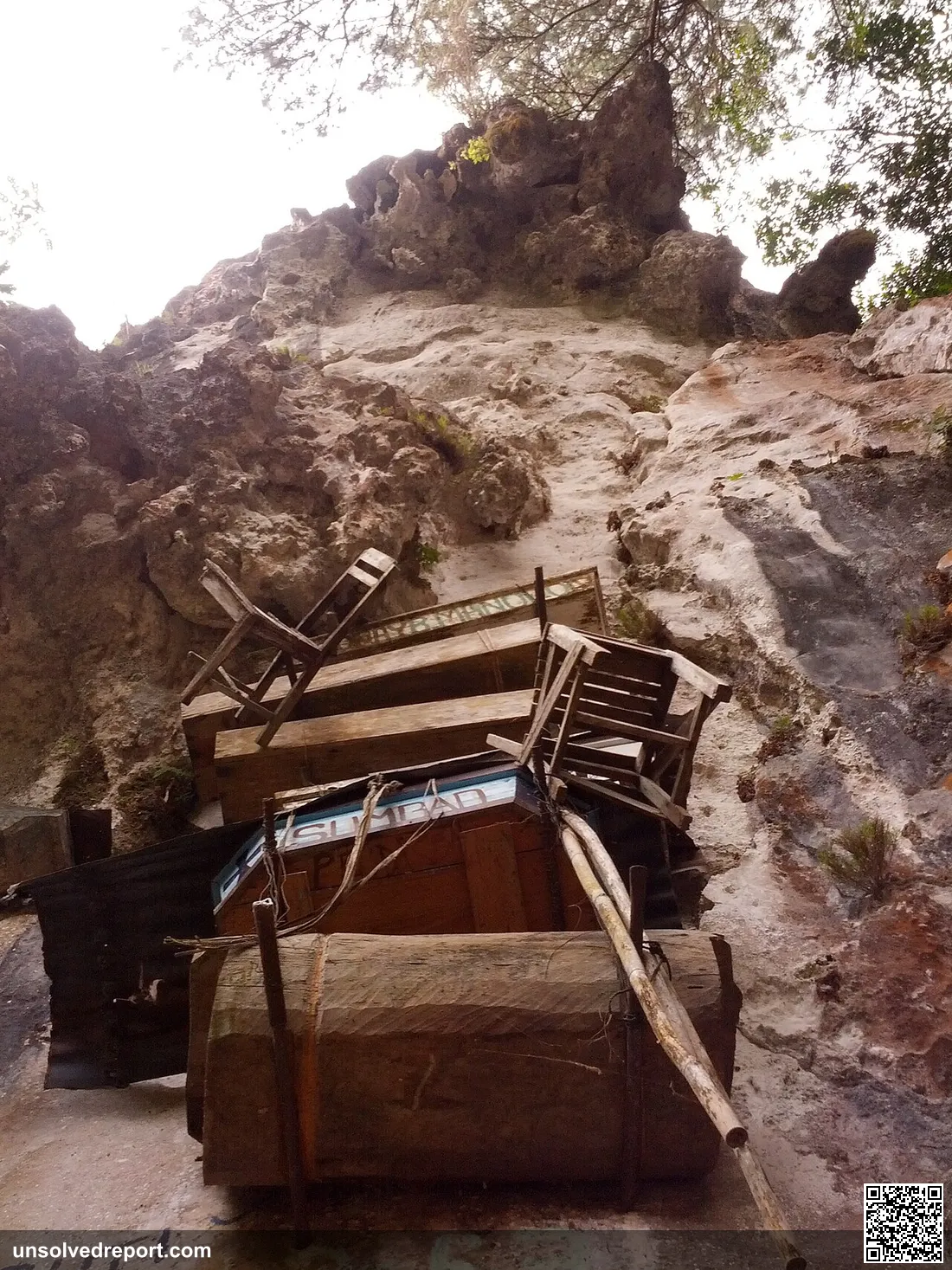
Look up. Way up the gray limestone wall above a green ravine in the northern Philippines, wooden boxes are nailed to bare rock. Some have rotted almost to splinters. Others are still sharp enough to read — carved with the names of people who died close enough to now that someone alive remembers their voice.
These are the hanging coffins of Sagada, in Mountain Province. Not a legend. Not a story made up to sell postcards. They are a real, documented way of burying the dead, practiced by the Igorot peoples of the Cordillera highlands — and it carried on into the twenty-first century.
But the longer you stand under them, the more one stubborn question starts to itch. How old is this, really? And who thought of it first? Hold that thought. The answer is stranger than the coffins.
What We Actually Know
The coffins belong to the indigenous Igorot communities of Sagada — to be exact, the Northern Kankanaey, the northernmost branch of that people (Facts and Details). The crowd-favorite cluster hangs over Echo Valley, perched on natural ledges and bolted straight to the cliff below St. Mary's Episcopal church. And just nearby, more than a hundred coffins are stacked at the mouth of Lumiang Burial Cave, piled up like firewood from another world (Lonely Planet; Rough Guides).
Now here's the part that gets under your skin. Many of these coffins were carved by the very people who would lie inside them. Traditionally an elder hollowed out a log into a coffin with their own hands — building their own final box, while still breathing. If they were too weak for the work, the family finished it (Rough Guides).
The funeral itself was a slow, deliberate thing. After death, the body was seated upright on a wooden chair called a sangadil, lashed in place with rattan and vines, draped with a blanket, and turned to face the home's main door — so the living could come and say goodbye to a body that almost seemed to be receiving guests (Facts and Details).
Then came the coffin, and a belief that hits hard once you picture it. The dead were folded into a fetal position — curled up the way a baby curls in the womb — because a person should leave the world in the same shape they came into it. The catch: older coffins ran only about a meter long. So to make the body fit, relatives sometimes broke its bones. That sounds brutal until you remember why they did it — gentleness, not cruelty, the wish to send someone off curled and complete. The practice faded as longer coffins, roughly two meters, came into use (Facts and Details).
On burial day, young men climbed the rock with the coffin and wedged it onto a ledge or strapped it to the cliff — aiming, when they could, to set it near the family's own ancestors (Rough Guides). Why so high? Two reasons, one for the soul and one for the body. The spiritual one: the higher you placed the dead, the closer they sat to the ancestral spirits and the sky — a better shot, people believed, at the soul rising to a higher state (Ancient Origins). The practical one is colder. Up on the cliff, the dead were safe from floods and scavenging animals — and back when headhunting raids were a real danger, safe from enemies who might come for them (Ancient Origins).
So why don't we see new coffins going up today? The story turned in the early twentieth century. American Episcopal missionaries arrived in Sagada, raised the church that still stands over Echo Valley, and brought a new idea: bury the dead in the ground, in a cemetery. Converts took it up, and for most of the 1900s the two customs lived side by side (Wikipedia: Sagada). Cliff burials slowly grew rare. The most recent traditional hanging-coffin burial in Sagada, sources widely agree, was in 2010 (Atlas Obscura).
The Number Everyone Repeats — and Can't Prove
Here's where we have to slam the brakes. Search "hanging coffins of Sagada" and you'll hit the same line over and over: the tradition is "more than 2,000 years old." Travel blogs say it. Tour pages say it. Even respectable outlets say it. Repeat anything enough times and it starts to sound like a fact.
It isn't.
The honest truth? No archaeologist has ever systematically dated these coffins. So the real age of the tradition is, flat out, unknown. And the strange thing is, even the sources that print the 2,000-year claim quietly flinch from it in the very next breath. Ancient Origins says the practice is supposedly over 2,000 years old — "although nobody seems to know whether there are any coffins that are actually that old." Facts and Details puts it bluntly: "the coffins have not been studied by archaeologists, so their exact age is unknown," adding only that they're "believed to be centuries old" (Ancient Origins; Facts and Details).
What firmer evidence we do have tells a humbler story. The oldest coffin at Lumiang Cave is locally reckoned at around 500 years. Surveys of the region's burial coffins tie the surviving ones to traditions going back to roughly the eighteenth and nineteenth centuries — maybe a bit earlier (Lonely Planet). Put plainly: the coffins you can see on Sagada's cliffs are ancient by the yardstick of a single human life. But the jump from "centuries" to "2,000 years" rides on tradition and guesswork — not on one dated coffin. The mystery was never whether this practice is old. It clearly is. The mystery is how far back it truly reaches, and why nobody has ever run the careful tests that would settle it.
And there's a second riddle waiting underneath the first. Cliff and hanging burials show up far beyond the Philippines — among peoples of southern China, and in Iron Age Thailand. That overlap has tempted writers for years to imagine one origin point, one idea that traveled south and took root on a hundred cliffs (Ancient Origins).
So Where Did It Come From? Three Ideas
Theory 1 — It spread from mainland Asia. The Bo people of Yunnan and Guangxi, and other groups, practiced cliff burial too. So some have argued the custom traveled into the Philippine highlands through contact with the mainland (Ancient Origins). Worth saying plainly: this is speculation, and it leans almost entirely on the fact that the burials simply look alike.
Theory 2 — Different peoples invented it on their own. Then the DNA showed up to complicate things. Recent ancient-DNA research on cliff-burial populations in China and log-coffin populations in Thailand — run by heavyweight institutions including the Kunming Institute of Zoology, Fudan University, and the Max Planck Institute for Evolutionary Anthropology — found no shared population tying the regions together. The hint: these traditions sprang up separately, not from one shared root (refractor.io summary). One honest caveat, though — that genetic work covered China and Thailand. No comparable DNA study of the Sagada coffins is described anywhere here, so what it means for the Philippines is an inference, not proof.
Theory 3 — The land just made it obvious. The simplest idea of all: a high, dry, hard-to-reach cliff is the natural place to keep your dead safe from water, animals, and raiders. Several mountain cultures faced the same problem and the same terrain — so they landed on the same answer. No mystery migration required.
What's not up for debate is the meaning the community itself gives these coffins: a way to keep the dead close to the ancestors, lifted high toward the sky. The rest — the true age, and the road this custom traveled to reach these cliffs — is something science hasn't cracked. Not yet. The coffins are still up there, weathering, holding their secret in plain sight, waiting for someone to finally ask the rock how long it's been keeping them.
Sources & Further Reading
- Facts and Details — Sagada: Hanging Coffins, Mummies, Caves
- Ancient Origins — The Hanging Coffins of Sagada
- Rough Guides — The Hanging Coffins of Sagada
- Lonely Planet — Lumiang Burial Cave
- Atlas Obscura — Hanging Coffins of Sagada
- Wikipedia — Sagada
- refractor.io — Ancient DNA and the Independent Origins of Hanging Coffins
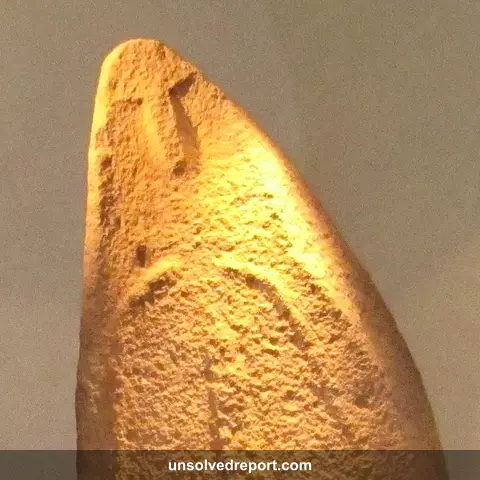
Giants of Mont'e Prama: The 3,000-Year Army Someone Smashed
A farmer's plow hit a stone head in Sardinia and uncovered a buried army of giants, all shattered. Nobody agrees who smashed them, or why. Here's what we know.
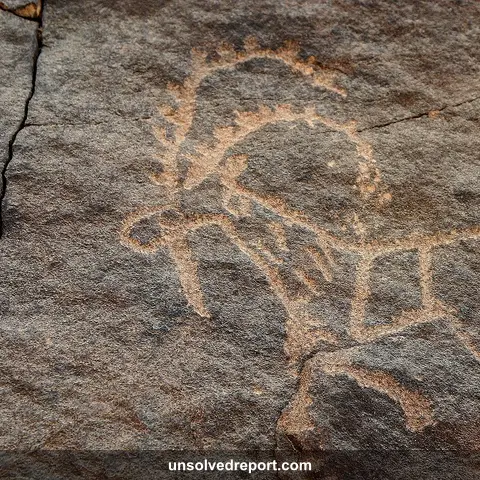
Bir Hima Petroglyphs: The 7,000-Year Wall Nobody Can Fully Date
Bir Hima's rock art spans 7,000 years - cattle, camels, a war dated to the month. So why can't experts agree how old the oldest carvings really are?
Hvalsey Church: 400 Years of Norse Vanished, No Note
Hvalsey Church still stands 600 years later — the people who built it don't. A 1408 wedding was Norse Greenland's last recorded word, then total silence. What happened to them?