Tarim Basin Mummies Mystery: The DNA Twist Nobody Predicted
Their faces looked distinctly European. Then a 2021 DNA study on the Tarim Basin mummies revealed a twist nobody predicted. So who were they?
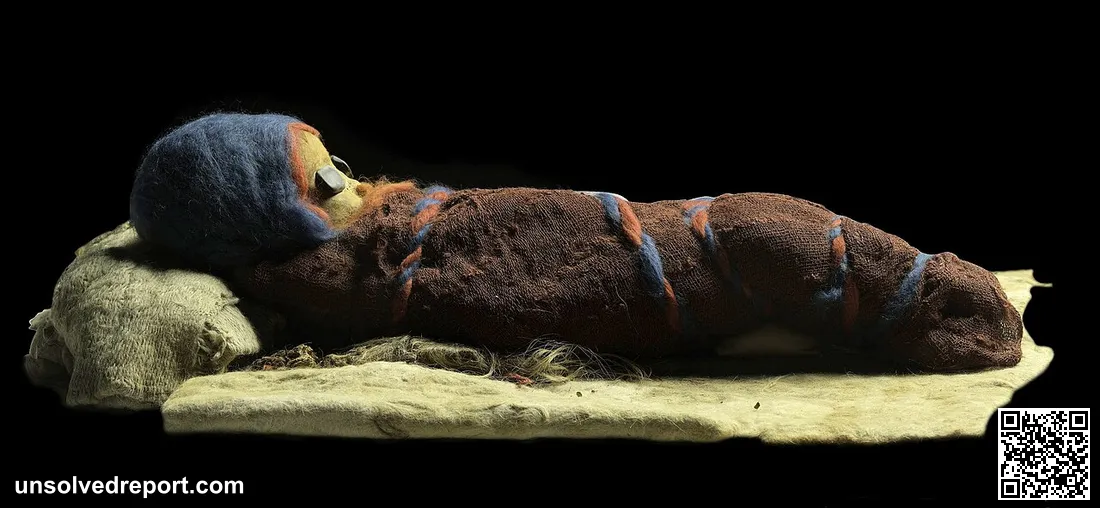
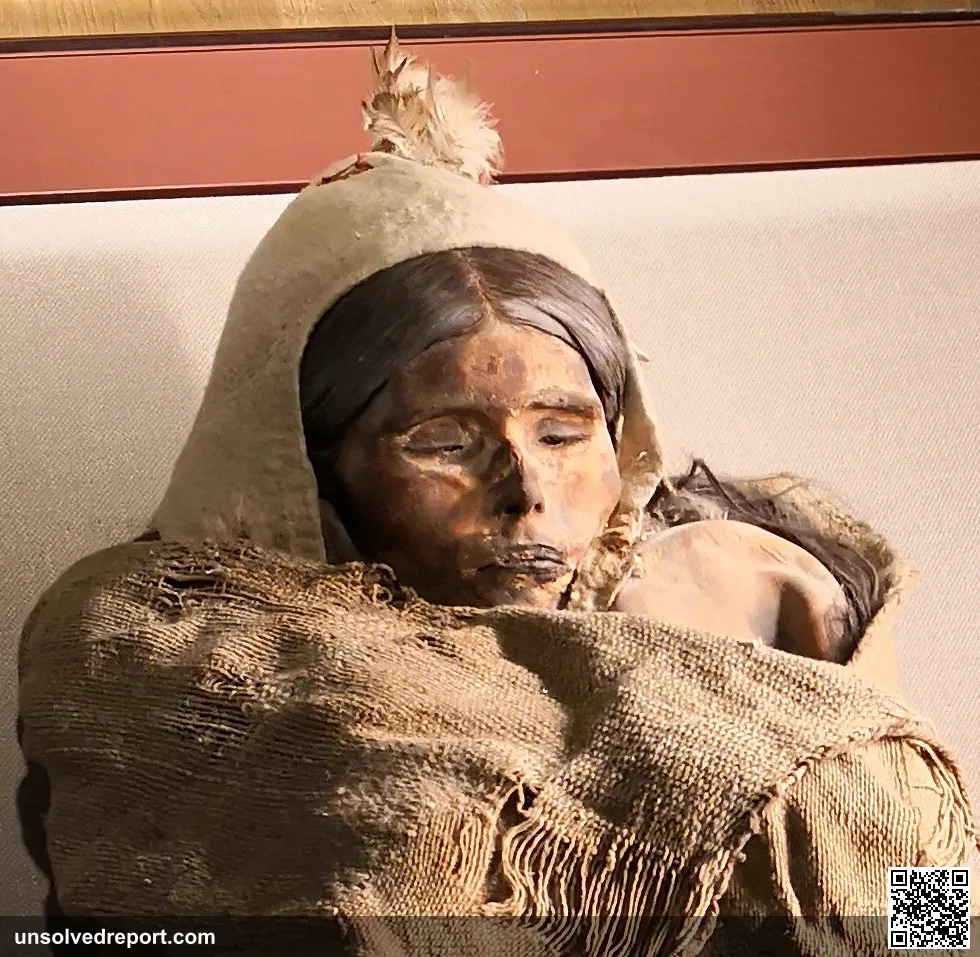
Walk into a museum in Ürümchi, deep in China's far-western Xinjiang region, and you'll meet faces that haven't decayed in nearly four thousand years. The skin is still there. The hair still falls in braids. Some of these people were buried in woven plaid wool, the kind of cloth you'd swear came off a loom in ancient Europe. And for decades, one thing about them drove scholars half-mad: many of these Bronze Age people looked, to modern eyes, distinctly "Western" — fair, long-nosed, almost out of place. How did they end up sleeping in a desert at the very heart of Asia, thousands of years before the Silk Road existed? Hold that question. The answer is stranger than the mystery.
What we actually know
First, the bodies are real, they're stunningly preserved, and nobody embalmed them. No oils, no wrapping, no ritual. The Penn Museum explains that the basin's "extreme aridity and saline soils," paired with brutal cold winters, simply dried these people out and froze decay in its tracks — no human hand involved (Penn Museum, Expedition Magazine). The desert did the work the embalmers usually do.
The wider world started paying attention in 1988, when Sinologist Victor H. Mair came face to face with the remains in the Ürümchi regional museum — then went back to launch his first Tarim Basin expedition in 1993 (Penn Museum). The features that stopped him in his tracks are the same ones that hooked everyone else: light hair, fair skin, long noses, deep-set eyes. There's the "Beauty of Loulan," who died around 1800 BCE. There's Chärchän (Cherchen) Man, from roughly 600 BCE, laid to rest in burgundy clothing. And there's the eeriest clue of all — plaid cloth from Hami, woven in a diagonal twill that looks unsettlingly like the Celtic European weaving of the same era, as the Penn Museum notes.
So put it together. Western faces. European-style plaid. A desert in China. You can see why the obvious story took hold: these had to be travelers, or the children of travelers, who came from far to the west. The most serious version of that idea went further and tied them to early Indo-European speakers — maybe even the ancestors of Tocharian, a real Indo-European language later written in this exact region.
It was a clean story. Then the DNA arrived and tore it up.
In October 2021, an international team published a genome study in Nature. They sequenced 13 of the earliest Tarim individuals — people dated to roughly 2100–1700 BCE, from the so-called Xiaohe horizon — plus five even older individuals from the neighboring Dzungarian Basin (Nature, via PubMed Central). Here's the twist. These weren't Western newcomers at all. They were a genetically isolated local population, descended largely from Ancient North Eurasians (ANE) — a once-sprawling Pleistocene group that had nearly disappeared by the end of the last Ice Age (Max Planck Society). The "Western migrants" were, in fact, the most rooted people in the room.
The numbers are blunt. The Tarim group drew about 72 percent of its ancestry from Ancient North Eurasians and roughly 28 percent from ancient Northeast Asians — and showed no mixing from other Holocene populations. The authors called them "a previously unknown genetic isolate" (Nature/PMC; ScienceDaily). And when researchers tried to plug western Eurasian steppe people or Central Asian groups in as the source? The genetic models, in the study's own words, "unanimously fail" (Nature/PMC). Every door to the West slammed shut.
But here's where it gets fun. These people were genetically sealed off — yet culturally, they were anything but. Scientists scraped the hardened plaque off the mummies' teeth and found ruminant-milk proteins: hard proof they were dairying, even though they lacked the lactase-persistence gene that lets dairying Europeans drink milk easily (Nature/PMC). Their menu was a world tour: wheat and dairy linked to West Asia, millet from East Asia, plants like Ephedra (Max Planck Society). As Harvard and Max Planck researcher Christina Warinner put it, "Despite being genetically isolated, the Bronze Age peoples of the Tarim Basin were remarkably culturally cosmopolitan" (ScienceDaily). Isolated bloodlines. Borrowed everything else.
The question the DNA didn't answer
So one mystery is solved — and a new one cracks open in its place. We now know the earliest Tarim people were long-resident locals, not arrivals who looked "Western" because they'd wandered in from the West. Their faces aren't a passport stamp from Europe. They're an echo of a deep, ancient Eurasian past.
What nobody's settled is the language. Genetics tells you who someone's ancestors were — it doesn't tell you what words came out of their mouths. And it certainly doesn't explain how Tocharian, a documented Indo-European language, ended up being written in this same region many centuries later. Here's the thing about languages: they travel light. They spread through trade, contact, and small trickles of people — without leaving much of a genetic fingerprint at all. Which is exactly the kind of quiet cultural traffic the diet evidence keeps hinting at. So the question has flipped. It's no longer "where did these bodies come from?" It's "how did the cultural and linguistic layers of the Tarim Basin pile up, over centuries, on top of this ancient local people?" Archaeologists and linguists are still digging through that one.
The theories, sorted
Read what follows as scholarly interpretation and live debate — not as settled fact.
Theory 1 — The steppe-migration / Proto-Tocharian idea (now contradicted for the earliest mummies). Before the genome work, the front-runner held that the Tarim people came down from Yamnaya-related or Afanasievo steppe herders, perhaps carrying an early Indo-European tongue ancestral to Tocharian (Max Planck Society). The 2021 study said no — the earliest Tarim individuals just don't fit that model genetically. The twist within the twist? Those nearby Dzungarian individuals did carry mostly Afanasievo-related ancestry. So steppe people really were roaming the wider region. They simply weren't the source of the Xiaohe-horizon Tarim population (Nature/PMC).
Theory 2 — The oasis-farmer (BMAC) and mountain-corridor routes. Other ideas traced the mummies back to the Bactria–Margiana Archaeological Complex of Central Asia, or to people moving along the Inner Asian Mountain Corridor. Tested. Rejected. Neither was the primary genetic source for the earliest Tarim people (Nature/PMC).
Theory 3 — Today's consensus: a "genetic island" at a cultural crossroads. The best-supported picture now is this: the harsh desert worked as a wall, locking in an ancient, ANE-rich population in near-total genetic isolation — while ideas, crops, and technologies poured in from every direction (Nature/PMC). Co-author Choongwon Jeong said archaeogeneticists "have long searched for Holocene ANE populations," and "found one in the most unexpected place" (ScienceDaily).
And that's the satisfying gut-punch of it. The "Western-looking bodies in a Chinese desert" were never lost travelers from Europe. They were among the most deeply rooted people in their entire landscape — a living echo of the Ice Age — dressed in borrowed fashions, eating borrowed food, in a place that mixed absolutely everything except, it seems, the people themselves. Which leaves you wondering how many other "obvious" origin stories are quietly waiting for the DNA to come along and flip them upside down.
Sources & further reading
- Zhang, F., et al. "The genomic origins of the Bronze Age Tarim Basin mummies." Nature (2021), open-access via PubMed Central.
- Max Planck Society — "The surprising origins of the Tarim Basin mummies"
- ScienceDaily — "The surprising origins of the Tarim Basin mummies"
- Penn Museum, Expedition Magazine — "Ancient Mummies of the Tarim Basin"
- Nature News — "Genomics unwraps mystery of the Tarim mummies"
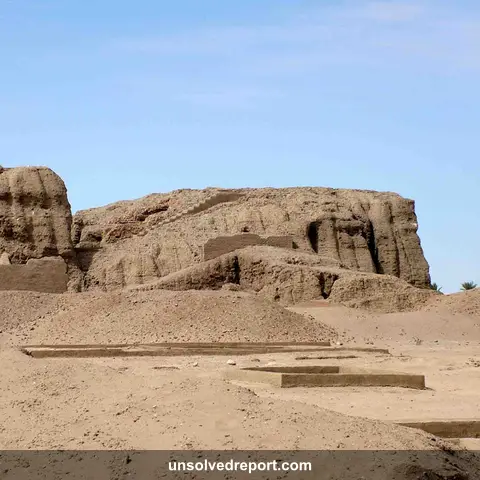
Western Deffufa: The 4,000-Year Giant That's Almost Solid Inside
The Western Deffufa is a 65-ft mud-brick giant in Sudan that's almost solid inside. So what happened in there? Even archaeologists disagree.
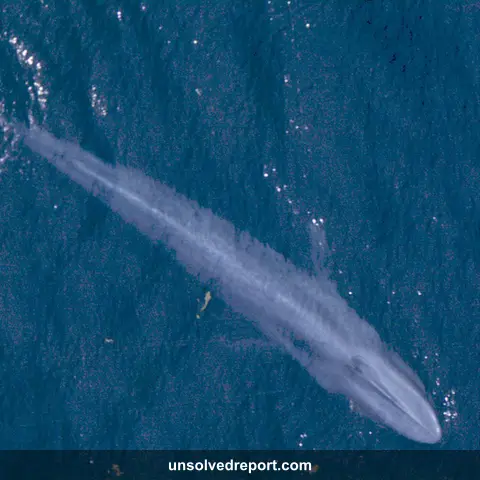
Deep Sea Mysteries: 10 Real Sounds and Sights No One Can Explain
A roar heard 3,000 miles away. A whale no one answers. A light that swallows the horizon whole. Ten real deep sea mysteries — so why can't anyone close the file?
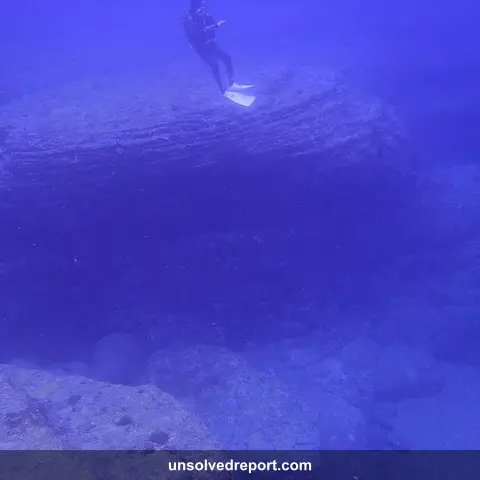
Yonaguni Monument: The Underwater 'Pyramid' Japan Won't Call Real
26 meters down off Japan sits a 'staircase' officials won't call a ruin. Is Yonaguni Monument a lost city, or does the rock hide a simpler answer?