Yamashita's Gold: The WWII Treasure Nobody Can Prove Exists
Yamashita's gold: a golden Buddha, a $22 billion verdict, and 70 years of digging with nothing to show. Was the WWII treasure ever real, or all legend?
Hillsides ripped open. Ponds drained dry. Tunnels bored deep under the Philippines by hands shaking with hope. For more than seventy years, people have wrecked the landscape chasing one dream: caverns stuffed with looted gold, hidden by a beaten Japanese army in the last desperate months of World War II.
It is one of the greatest lost-treasure stories on Earth, in the same league as the Nazi gold train that vanished into legend after World War II. And here's the strange part — it isn't all smoke. There's a real general. A real war. A real court case that ended with a multimillion-dollar verdict against a former dictator.
So where's the gold?
After generations of digging, nobody has pulled a single verified hoard out of the ground. That's the hook that keeps the legend breathing: a few hard facts, wrapped in a thick fog of "maybe."
What we actually know
Start with the man. He's no myth.
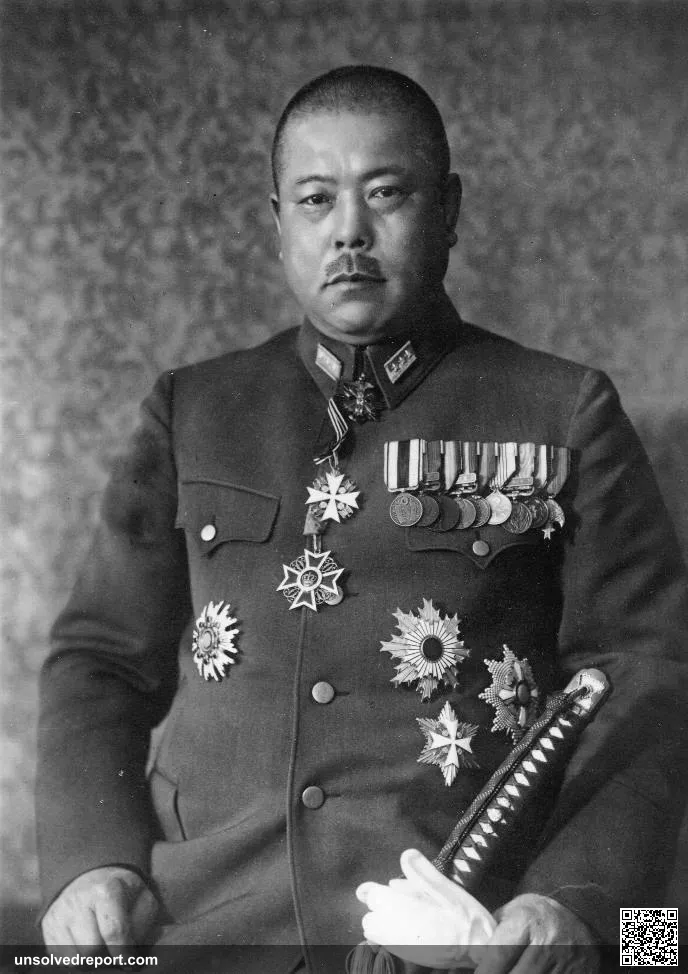
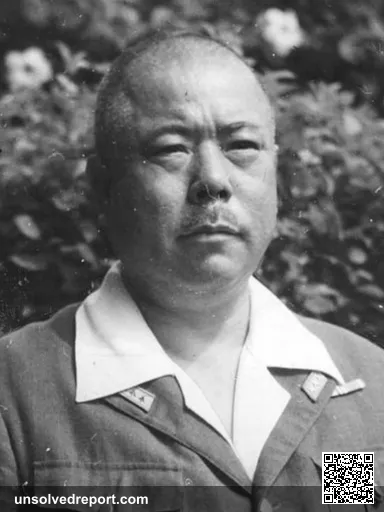
General Tomoyuki Yamashita earned the nickname "The Tiger of Malaya" by taking Malaya and Singapore in roughly seventy days, then took command of Japanese forces in the Philippines in 1944 (Wikipedia, "Yamashita's gold"). When Japan surrendered, a U.S. military commission in Manila put him on trial for atrocities his troops committed. The verdict was guilty. They executed him on February 23, 1946, in Los Baños, Laguna (Wikipedia).
His case changed the law. In In re Yamashita, 327 U.S. 1 (1946), the U.S. Supreme Court upheld the conviction and locked in the doctrine of "command responsibility" — a commander can be held to account for failing to control his own troops (Justia, In re Yamashita).
Now notice what's missing. Yamashita was never charged with hiding treasure. Not one word. The trial was about war crimes, not gold.
Here's another fact nobody disputes: Imperial Japan looted occupied Asia on a monstrous scale. Bank vaults emptied. Bullion, jewelry, cultural treasures — scooped up across every territory Japan held, some of it reportedly loaded onto ships like the ill-fated Awa Maru. That happened. What nobody has ever proven is the next leap: that all this loot got shipped to the Philippines and sealed into something like 170 engineered vaults.
One leap is history. The other is a story.
The locksmith who found something
If you want the part with a paper trail, it begins with a locksmith named Rogelio Roxas.
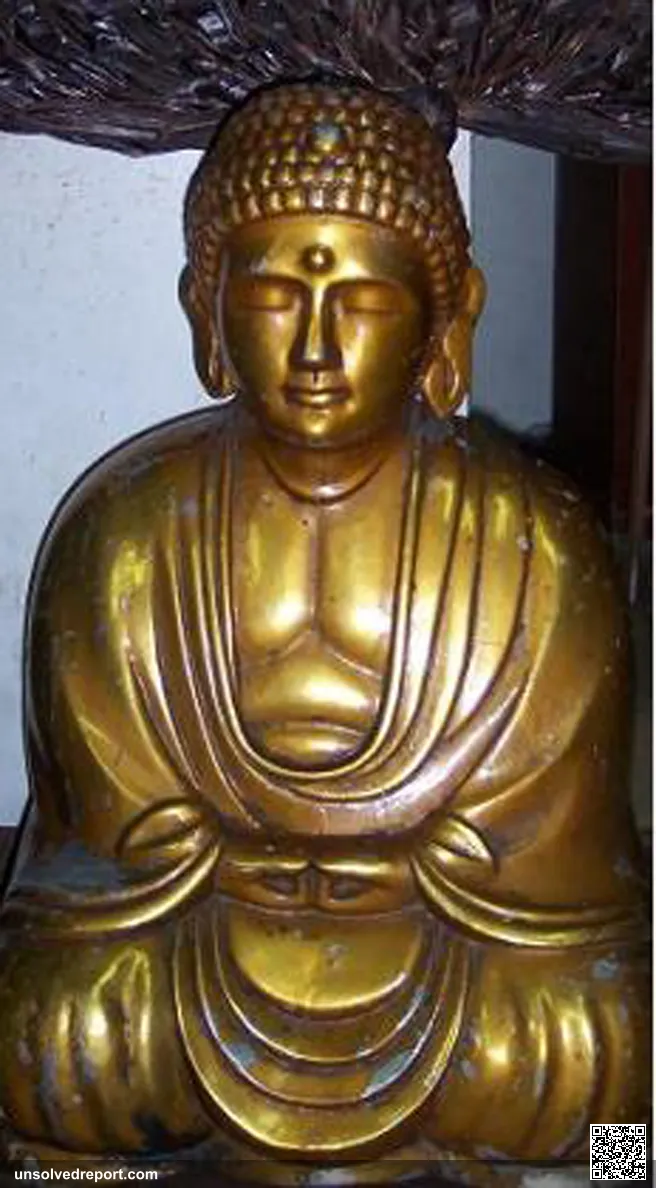
Roxas was a Filipino treasure hunter on the side. By his own account he landed an excavation permit in 1970 and started digging near Baguio General Hospital. Early in 1971, he said, his shovel broke into a tunnel — and inside were Japanese military artifacts, samurai swords, human skeletons, gold bars, and a golden Buddha statue weighing roughly a ton, with a head you could lift right off (HISTORY).
Picture that for a second. A one-ton Buddha of gold, sitting in a dirt tunnel.
Then it vanished. In April 1971, Roxas said, armed men showed up and took the Buddha and the gold. He claimed he was arrested and tortured afterward — and he pointed straight at one name: then-President Ferdinand Marcos.
In March 1988, Roxas sued Marcos in Hawaii. He didn't live to see the end of it; he died in 1993. But the case ground on, and in 1996 a Honolulu jury came back with a number that made the world blink: $22 billion (Wikipedia, "Rogelio Roxas").
Then the Hawaii Supreme Court stepped in and drew a hard line.
In 1998 it threw out the giant award, ruling there was "insufficient evidence to support an award of damages" for gold that Roxas described as sitting in unopened boxes but never actually counted — too vague to put a price on (Wikipedia). But the court kept the part it could stand behind: Marcos had wrongfully taken what Roxas genuinely held in his hands — the golden Buddha and seventeen gold bars. The final judgments against Imelda Marcos came to about $13.275 million for the stolen treasure and $6 million to Roxas's estate for human rights abuses (Wikipedia; HISTORY).
So a court agreed: there was gold, and it was stolen. But notice how small that finding really is.
The real mystery is narrower than the legend
Here's the catch. A court found that Roxas had some gold and a golden statue, and that it was taken from him. Full stop.
What no court, no archaeologist, no government has ever confirmed is the big claim — that a huge, deliberately buried Japanese war hoard is sitting somewhere in the Philippines. So the real question splits in two. Did Roxas trip over a chunk of a genuine wartime cache, or just something whose origin nobody can explain? And the legendary "Yamashita's gold" of campfire stories — was it ever buried at all?
Skeptics raise a problem that won't go away: the logistics make no sense. By 1943–1944, the Japanese navy had lost control of the seas around the Philippines. Historian Ricardo Trota Jose of the University of the Philippines said it flat out: "It doesn't make sense to bring in something that valuable here when you know it's going to be lost to the Americans anyway" (Wikipedia, "Yamashita's gold").
Then there's the silence that haunts the whole thing. Ambeth Ocampo, then chairman of the National Historical Institute, put his finger on it: "For the past 50 years, despite all the treasure hunters, their maps, oral testimony and sophisticated metal detectors, nobody has found a thing" (Wikipedia).
Fifty years. Every tool money can buy. Nothing.
So what's really going on? Three stories.
The "Golden Lily" version — the wild one. Authors Sterling and Peggy Seagrave went big in their book Gold Warriors. They argue a secret operation code-named Kin no yuri ("Golden Lily"), supposedly run by a member of the imperial family, funneled thousands of tonnes of stolen gold into Philippine vaults — and that the U.S. quietly dug much of it back up (Wikipedia). Thrilling stuff, the same brand of postwar gold lore that surrounds places like Lake Toplitz. But it leans on a tricky move: the claim that the evidence was deliberately buried, which conveniently makes it almost impossible to check (Publishers Weekly). Mainstream historians have kept their distance.
The "kernel of truth" version — the modest one. Just take the court at its word. Roxas really did have gold and a statue — maybe a real but lonely wartime stash — while the sprawling 170-vault network is later decoration stitched on top. This one explains both the verified verdict and why a second find has never turned up.
The "self-feeding legend" version — the cynical one. Maybe the treasure is mostly folklore now, kept alive by maps of shady origin, hopeful diggers, and, during the Marcos years, a handy excuse for wealth nobody could otherwise explain. The genius of it is that you can never fully kill it. Every empty hole just means the gold is in the next hill.
So pin down what's solid. Yamashita was real. The looting of Asia was real. The golden Buddha, and Marcos taking it, got proven in a U.S. court. Everything past that line — the tunnels, the tonnage, the imperial conspiracy — is still unproven.
The gold of the Tiger of Malaya remains a phantom: glimpsed once in a courtroom, never weighed in a vault — one more entry on the long list of lost treasures the world has never found. And somewhere out there, someone is loading a shovel right now, certain the next hill is the one.
Sources & Further Reading
- Wikipedia, "Yamashita's gold" — https://en.wikipedia.org/wiki/Yamashita's_gold
- Wikipedia, "Rogelio Roxas" — https://en.wikipedia.org/wiki/Rogelio_Roxas
- HISTORY, "How a Locksmith, a Dictator and a WWII General Are Connected to Lost Treasure" — https://www.history.com/articles/wwii-yamashita-treasure-roxas-marcos-gold-buddha
- U.S. Supreme Court, In re Yamashita, 327 U.S. 1 (1946), via Justia — https://supreme.justia.com/cases/federal/us/327/1
- Publishers Weekly review of Gold Warriors — https://www.publishersweekly.com/9781859845424
Salcombe Bronze Age Shipwreck: 3,000-Year-Old Cargo, No Ship
Divers off Devon keep hauling up 3,000-year-old copper, tin, and gold from a Bronze Age shipwreck cargo — so why has no one ever found the ship?
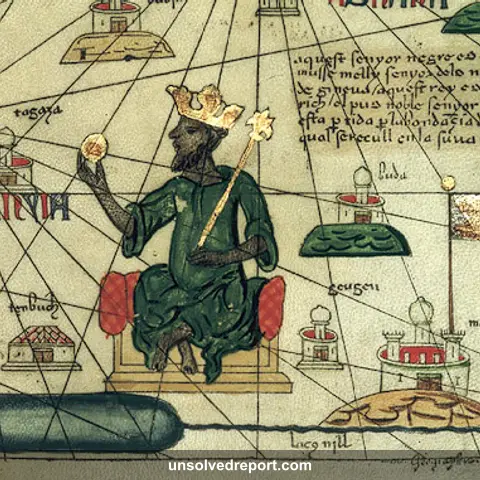
Mansa Musa: The King Who Broke Egypt With Gold
In 1324 one king gave away so much gold that Cairo's economy crashed for over a decade. So where did the richest man in history's fortune actually go? Nobody's sure.
Padmanabhaswamy Temple Vault B: The $22B Door Nobody Dares Open
Padmanabhaswamy Temple Vault B has stayed sealed since the 1880s, right next to $22 billion in gold. Officials could open it. They won't. Here's why.