Roanoke's Lost Colony: 115 Gone, One Carved Word
A governor sails home in 1590 to find his colony erased: no bodies, no graves, just CROATOAN carved in a post. So where did 115 people go?
August 1590. A small boat scrapes ashore on Roanoke Island, off the coast of what is now North Carolina, and John White's heart is slamming for the best reason a heart can. Up the path, somewhere, is his daughter. His granddaughter, who'd be three now. And about a hundred other people he kissed goodbye three long years ago.
He climbs the path. The houses are gone - not burned, taken apart. No daughter. No granddaughter. No hundred people. And here's the part that crawls under your skin: no bodies either. No graves. No broken weapons. No sign anyone fought anyone. Just silence, and the wind, and one word carved into a wooden post.
CROATOAN.
That's the whole scene. A governor walked home to a settlement that had quietly erased itself - the same kind of clean, bodiless vanishing that makes the Mary Celeste so unsettling: everything intact, everyone gone.
The "Lost Colony" of Roanoke is one of the oldest of America's mysterious disappearances, and here's the honest bit most retellings tiptoe past: the real paper trail is thin. That gap is exactly why the ghost stories came stampeding in. So let's do it the right way. Lean hard on White's own written account, on what the shovels have - and haven't - pulled out of the ground, and stay dead honest about how much nobody actually knows.
Why England was poking around Roanoke at all
Spain had a brutal head start in the Americas, and England couldn't stand it. By the 1580s the two were racing for a toehold in North America. Backed by a charter from Queen Elizabeth I, Sir Walter Raleigh poured his own money into voyage after voyage to the region the English called Virginia - a far bigger stretch of land than the modern state.
The first attempt, in 1585 to 1586, was basically a military outpost on Roanoke. It went badly. Relations with the local Indigenous nations curdled, and the colonists finally gave up and sailed off with Sir Francis Drake.
So in 1587, Raleigh tried something different. Not soldiers this time - families. A permanent civilian colony of men, women, and children, meant to feed itself and put down roots. He handed the job to John White, an artist and mapmaker who'd already sailed on the earlier voyages, and made him governor.
A baby named Virginia, and a plan that went sideways fast
White's group - roughly 115 colonists - stepped onto Roanoke Island in July 1587. The catch? Roanoke was never the plan. They'd meant to settle much farther north, on Chesapeake Bay. But the ship's pilot, Simon Fernandes, flatly refused to carry them any farther and dumped them on Roanoke. One man's stubbornness bent the whole future.
Then, within weeks, two things happened that the record nails down cold.
- Virginia Dare was born on August 18, 1587 - the first English child born in the Americas, and John White's own granddaughter.
- Relations with the surrounding Indigenous communities went sour fast. A colonist named George Howe was killed while out gathering crabs. The colonists hit back, the revenge went wrong, and the bad blood only thickened.
And supplies were running thin. The settlers leaned on White to sail back to England and bring help. He didn't want to leave - his family was right there - but he was the one with the clout to actually get a ship loaded. So in late 1587 he went, certain he'd be gone a few months.
He was gone three years. Here's why.
The war that trapped a man across an ocean
White's delay wasn't laziness, and it wasn't a broken promise. It was geopolitics with teeth.
He reached England to find the whole country bracing for the Spanish Armada - the gigantic invasion fleet Spain was assembling. The Crown started seizing ships for the war. The enormous naval clash of 1588 swallowed England's sailing power whole. White did try - a 1588 voyage actually set out, only to be diverted and forced to turn back. By the time he finally crossed the Atlantic again, three years had burned away.
Sit with what that does to the story. The colonists weren't ditched by a leader who stopped caring. They were stranded by a war an ocean away that froze every ship that could have reached them. Whatever happened next happened over three silent years - no letters, no supplies, no contact, nothing.
August 1590: walking into the silence
White finally set foot on Roanoke again on August 18, 1590. Read that date twice. It was Virginia Dare's third birthday. A cruel little coincidence, handed to him by the calendar.
By his own account, what he found was deserted but not slaughtered. No massacre scene. Instead, something stranger - a careful, deliberate tidiness. The things he saw:
- The houses had been taken down, and the spot was ringed by a palisade - the look of a planned, unhurried move-out, not people fleeing for their lives.
- The word CROATOAN was carved into a post of that palisade. On a nearby tree, just three letters: CRO.
- And here's what mattered most to White: no crosses. Not one, anywhere. Before he'd left, he and the colonists had set a secret signal. If danger or attack ever forced them out, they'd carve a Maltese cross. No cross meant nobody had left under threat.
To the man who invented the code, the carving wasn't a scream. White read "Croatoan" as Croatoan Island (today linked with Hatteras Island) and the Croatoan people, a nearby Indigenous nation generally friendly with the English. So the word on the post wasn't a cry for help.
It was a forwarding address.
All he had to do was sail over there and find them. Simple.
The storm that ruined everything
Here the story turns flat-out cruel.
Croatoan Island was close. White wanted to head straight for it. Then a violent storm slammed in. The expedition lost anchors. The weather only worsened. The battered, exhausted crews flatly refused to push on. White was dragged back out to open sea and, in the end, carried all the way home to England - without ever once reaching Croatoan.
He never saw his family again. He died years later still not knowing what became of them.
Let this be the most maddening fact in the whole Roanoke case. The colonists left what looks like a clear sign of exactly where they'd gone - and the one man on Earth desperate to follow it was physically blocked by the weather. The trail was right there. He just couldn't walk it.
So where did they actually go?
Strip away the ghost stories and most historians and archaeologists land somewhere pretty calm: the colonists relocated and blended in. Here are the leading possibilities, ranked by how much evidence actually backs them.
- They joined the Croatoan or other Indigenous nations. This is the plainest reading of the carving and the neat, unhurried departure. Later English settlers in the region passed along accounts of grey-eyed people and Europeans living among Indigenous communities - tantalizing stuff, but secondhand and a long way from proof.
- They moved to the mainland or the Chesapeake. Some scholars think the group may have split up, or pushed toward the Chesapeake, where they'd wanted to settle all along. Decades later, scraps of report tied to the Jamestown colony hinted that survivors lived inland before dying in conflict - but that evidence is disputed.
- The dirt is starting to talk. Excavations have turned up teasing clues. A site sometimes called "Site X," near the western end of Albemarle Sound, gave up English pottery fragments of exactly the right period - a hint that at least some colonists may have ended up there. Separate digging on Hatteras Island has surfaced European artifacts sitting in Indigenous contexts. None of it has produced a clean, everybody-agrees answer. Not yet.
When Jamestown went looking
The lost colonists didn't simply fade from memory after White's failed 1590 return. When England planted Jamestown in 1607 - about twenty years later, and not far north - the new colony's leaders knew about the missing settlers and started asking around.
Captain John Smith and others gathered secondhand reports from Indigenous informants. Some of those claims were chilling: that surviving English had lived among Indigenous communities before being killed in clashes involving the powerful Powhatan confederacy.
These reports are real history, and they're genuinely tantalizing - but hold them at arm's length. They're secondhand. Filtered through translation. Written down by men chasing their own agendas. And there's no physical evidence to check them against. What they keep alive is a strong possibility that at least some Roanoke colonists were still breathing years after 1587 - while falling well short of proving where they ended up, or how they died. The honest verdict: Jamestown-era testimony is suggestive, not conclusive.
The stuff you can safely throw out
A mystery this empty pulls in myths like a magnet - much like the vanished village at Lake Anjikuni, where an entire community's disappearance got padded out with legend long after the facts ran dry. So let's name the weak theories out loud, the better to wave them off.
- The "massacre" theory crumbles on the evidence: no bodies, no graves, and no agreed distress signal carved anywhere - the same absence of proof that keeps the Sodder children case open more than a century later.
- The supernatural and "zombie" folklore - the stuff fiction and TV adore - has zero footing in any primary record. It's entertainment, not history.
- The Dare Stones - a batch of inscribed rocks that surfaced in the 1930s claiming to spell out Eleanor Dare's tragic story - are widely treated as hoaxes, or at best unverifiable. Most historians toss them straight out.
What actually survives a hard look is far quieter than the legend. A small, under-supplied colony, stranded by a war on the far side of an ocean, most likely did the obvious, sensible thing: it broke apart and moved in with neighbors who could feed it - and left a note naming where it was headed.
What we can responsibly say
Documented fact:
- About 115 English colonists settled Roanoke Island in 1587 under governor John White.
- Virginia Dare was born there on August 18, 1587.
- White sailed back to England for supplies and got stuck for roughly three years, largely because of the Spanish Armada crisis.
- On his 1590 return he found the settlement orderly and abandoned, with CROATOAN carved on a post and no distress cross.
- A storm blocked him from reaching Croatoan Island, and the colonists' fate was never confirmed.
Unresolved or folkloric:
- The exact fate of the colonists (most likely assimilation or relocation - but not proven).
- The Dare Stones (regarded as hoaxes).
- Any massacre or supernatural explanation.
Roanoke endures not because the evidence is bizarre, but because it simply stops. We have a beginning written in John White's careful hand, a haunting middle carved into a post, and no ending at all. The likeliest truth - that a hundred desperate people walked off into a new life among the Croatoan and were quietly absorbed by history - is, in its own way, stranger and sadder than any ghost story. It just refuses to be proven. The trail ends at a single word. And somewhere just past it, a hundred people are still walking.
Sources & further reading
- John White's firsthand narrative survives and underlies all serious accounts; it is summarized and contextualized in the Wikipedia entry on the Roanoke Colony.
- The National Park Service maintains the Fort Raleigh National Historic Site history pages, which cover the 1587 colony and the CROATOAN carving.
- Recent archaeological work, including the Site X finds, has been reported by National Geographic.
- First Colony Foundation - Roanoke archaeological research - https://www.firstcolonyfoundation.org/

Eltanin Antenna: The 1964 'Alien Machine' That Was Alive
A 1964 Navy photo two miles deep showed what looked like a built antenna on the seafloor. It wasn't. Here's the 1971 identification — and what's been found since.
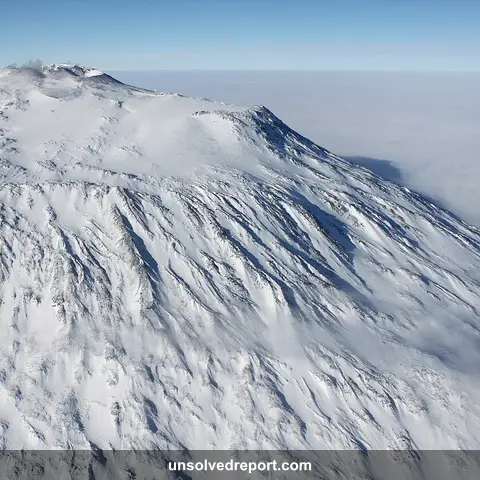
Lake Vostok: 2 Miles Under Ice, a DNA Result No One Can Explain
Sealed under 2 miles of Antarctic ice for millions of years, Lake Vostok gave up a DNA sample scientists still can't classify. What's really down there?
The Lost Ninth Legion: How 5,000 Men Vanished
Five thousand Roman soldiers marched into the 2nd century and never marched out. No battle. No bodies. No record. Here's what the stones actually say.