Mysterious Disappearances in History: 12 Unsolved Vanishings
12 mysterious disappearances history never solved — a vanished colony, a missing aviator, three lighthouse keepers gone overnight. A new expedition is about to test one of them.
Some people walk out of the historical record and never walk back in. Not killed in any way anyone can prove. Not confirmed dead. Not found. Just gone — leaving behind a name, a last sighting, and a question that outlives everyone who first asked it. In October 2026, one of these cases gets tested again: a Purdue-backed expedition sails 830 nautical miles to a Pacific lagoon to check whether a shape in the water is Amelia Earhart's lost plane.
What you're about to read are twelve of history's most stubborn vanishings, all of them straight from the public record: explorers, aviators, statesmen, even a whole colony. For each one, here's the deal — the part that's genuinely documented sits right next to the part nobody has ever settled. The wild, made-up theories are left out; what remains is what holds up, because the real stories are strange enough without help. They all share one eerie thread: at some point the trail goes cold, and history just never picks it back up.
> The 60-Second Brief
> - 12 cases, 1,800+ years apart — from Roman Britain (2nd century AD) to a 1945 house fire in West Virginia.
> - 100+ people vanished at Roanoke alone in 1590; the largest single disappearance on this list.
> - *10 people were aboard the Mary Celeste*** when it was found drifting, seaworthy and empty, on December 4, 1872.
> - 89 years on, Earhart's fate is still unresolved since her last radio transmission on July 2, 1937 — she was legally declared dead on January 5, 1939, 18 months later.
> - October 7, 2026: the Taraia Object Expedition departs for Nikumaroro, an 830-nautical-mile voyage to test a visual anomaly against the Nikumaroro Hypothesis.
> - 5 children lost, 0 remains identified in the 1945 Sodder fire, despite a full 1949 excavation.
1. The colony that wasn't there
1590. Governor John White finally steps back onto Roanoke Island, off what's now North Carolina, after a supply trip to England dragged on for years thanks to a war with Spain. Three years earlier he'd left more than a hundred English settlers building a life here. Now? Nothing. The houses are taken apart. There's no struggle, no bodies, no goodbye note. Just one word, carved into a post: "CROATOAN." Did the colonists join nearby Indigenous communities? Scatter? Die? Nobody has ever proven which. The fate of England's very first American colony is still wide open — a pattern of colonial vanishing repeated centuries later when the Norse disappeared from Greenland without a clear trace.
2. The most famous woman in the sky, gone
July 2, 1937. Amelia Earhart and her navigator, Fred Noonan, are trying to circle the entire globe by air. They're hunting for tiny Howland Island, a speck in the vast Pacific — and then the radio goes quiet. What followed was one of the largest search efforts in U.S. naval history up to that point. It found nothing. In the decades since, expeditions have argued she crashed and sank, or maybe washed up and survived as a castaway. But no wreckage has ever been confirmed for certain. One of the most famous women of the twentieth century simply never arrived, and where she came down is still up for debate — a debate a new expedition is about to test (see the Recency section below).
3. Three keepers, one empty island
December 1900. A passing steamer notices something wrong: the lighthouse on Eilean Mor, out in Scotland's lonely Flannan Isles, has gone dark. When a relief boat reaches the rock, all three keepers are gone. Here's the strange part — the place looks almost normal. The logbook describes a fierce storm. The kitchen is tidy. One keeper's coat is still hanging there. A meal sits unfinished. The official inquiry guessed that a freak giant wave swept the men away while they were securing equipment. Maybe. But the exact chain of events that emptied a sealed island of three experienced men has never been fully pinned down.
4. The explorer who walked into the Amazon for a lost city
Percy Fawcett was a hardened British surveyor who became convinced of one thing: an ancient city he simply called "Z" was hidden somewhere in the Brazilian Amazon. In 1925 he plunged in to find it, taking his son Jack and one companion. His last message said the group was crossing the Upper Xingu region. After that — silence. Rescue teams went in after him over the years. Several of those expeditions ended in their own disasters. Yet no reliable trace of Fawcett's party ever turned up, and his final camp has never been found.
5. A perfectly good ship, and no one aboard
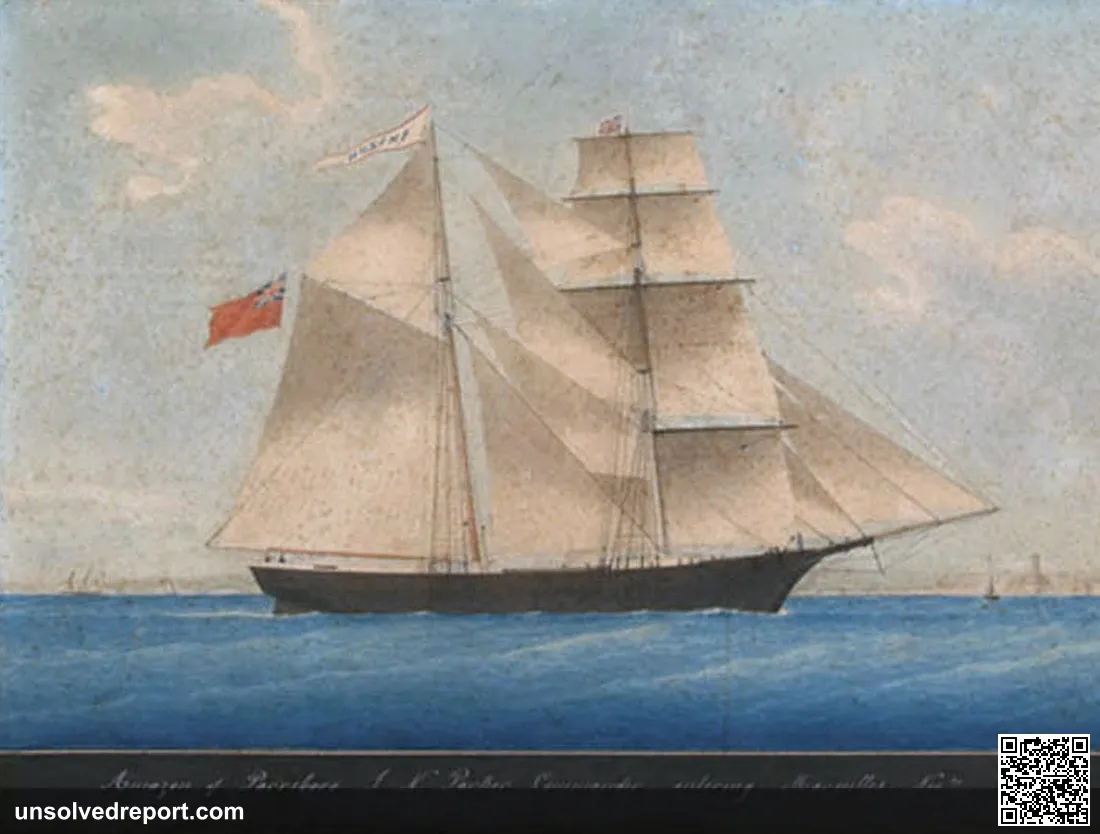
December 1872. Out in the Atlantic, sailors come across the American merchant ship Mary Celeste drifting alone. She's seaworthy. Her cargo is mostly intact. The crew's belongings are still aboard. But every single person is gone, and the one lifeboat is missing. No blood, no sign of a fight, no hint of pirates. Theories have swung from fumes leaking out of the ship's alcohol cargo to a sudden panic that she was sinking, sending everyone scrambling into the small boat to their deaths. The ship made it. The people didn't. Why ten people would abandon a sound vessel for an open boat has never been explained.
6. The war writer who walked into a war
Ambrose Bierce was an American writer with a razor tongue and a Civil War behind him. In late 1913 he crossed into Mexico to watch its revolution up close, reportedly meaning to ride along with Pancho Villa's forces. In a letter believed to be his last, dated that December, he wrote that he was heading somewhere uncertain. And then — nothing. He was famous, and his absence drew real attention, yet no confirmed account of how or where Bierce died has ever come to light. A man who spent his life chronicling war vanished straight into one.
7. Five children, and not a trace in the ashes
Christmas Eve, 1945. Fire tears through the Sodder family home in Fayetteville, West Virginia. The parents and several of the children make it out. Five children do not. But here's what gnaws at this one: when the ruins were searched, no identifiable remains of those five were ever recovered. The grieving parents refused to believe their children had burned. They spent the rest of their lives convinced the kids were somehow still alive, even putting up a roadside billboard begging for information. Did the children die in the blaze, or did something else happen that night? It was never settled to the family's satisfaction, and officially the case is still unexplained.
8. The vice president's daughter, lost at sea
Theodosia Burr Alston had everything going for her — accomplished, sharp, and the daughter of former U.S. Vice President Aaron Burr. In early 1813 she boarded the schooner Patriot off the coast of South Carolina. The ship sailed up the Atlantic coast. And it was never heard from again. The War of 1812 was raging, so the suspects pile up: storms, privateers, pirates. But no confirmed wreckage has ever been tied to the Patriot. The disappearance of a famous statesman's daughter, swallowed by the sea, has never been satisfactorily explained.
9. The legion that marched off the page
The Ninth Legion — Legio IX Hispana — was one of the storied units of the Roman army, on record in Britain in the early second century AD. Then its name mostly just... drops out of the surviving sources. No clear final battle. No formal disbanding. One popular idea is dramatic: it marched north and was wiped out. Many historians lean the other way, suspecting it was quietly transferred elsewhere and later lost in some regional war. Either way, the documented end of an entire legion has never been firmly nailed down.
10. The film pioneer who got on a train and never got off
Louis Le Prince was a French inventor who shot some of the earliest moving-picture footage ever made — years before more famous names got the credit. In September 1890, he boarded a train at Dijon, France, headed for Paris, planning to travel on and publicly show the world what he'd built. The train pulled in. He wasn't on it. Neither was his luggage. No body, no belongings, nothing was ever recovered. A pioneer on the very edge of unveiling his invention vanished between two stations, and no one has ever explained how.
11. Vanished in front of the witnesses: Benjamin Bathurst
Late 1809. British diplomat Benjamin Bathurst is hurrying home through Germany during the Napoleonic Wars, carrying out a sensitive mission. At a posting house in the town of Perleberg, he steps around to the horses of his waiting carriage — in full view of people standing right there. And he's never seen again. Some of his effects surfaced later, which fed talk of robbery or a political abduction, but no confirmed account of his fate was ever produced. A man disappearing in plain sight, mid-journey, remains one of the era's most maddening puzzles.
12. The man who couldn't walk away — but did
Owen Parfitt was an elderly former tailor, partly paralyzed, living in Shepton Mallet, England, in 1768. One evening he was helped outside and left sitting in a chair near his door while his caretaker stepped away for just a moment. Minutes later she came back. The chair held his folded clothes. Owen was gone. The thing is, he physically could not walk off on his own. Searchers combed the surrounding fields and found nothing. How a man who could barely move simply disappeared has never been accounted for.
---
The unsettling beauty of these cases is this: not one of them needs a ghost or a monster to stay unsolved. All it took was the ordinary stuff — a gap in the records, a storm with no witnesses left, a trail that went cold before anyone thought to follow it. History keeps careful notes right up until the moment that matters most. And then it goes quiet.
Want to go deeper? Pick any name above and follow it into its full case file — the last sightings, the searches, and the clues that still refuse to add up. Or step into the Bennington Triangle, a Vermont mountain that claimed five people in four years and still hasn't given up its answers, and D.B. Cooper, the skyjacker who walked off a plane and into thin air in 1971.
The twelve vanishings at a glance
Twelve cases spread across many centuries and three continents get hard to hold in your head at once. Here is the whole roster side by side — when the trail went cold, how many people it swallowed, and the explanation that currently leads (however weakly).
| # | Case | Last confirmed trace | Missing | Leading explanation |
|---|---|---|---|---|
| 1 | Roanoke colonists | Settlement found dismantled, 1590; "CROATOAN" carved on a post | 100+ settlers | Joined Indigenous communities, scattered, or died — none proven |
| 2 | Amelia Earhart & Fred Noonan | Radio contact lost near Howland Island, July 2, 1937 | 2 | Crashed and sank; castaway scenario unconfirmed |
| 3 | Flannan Isles keepers | Lighthouse on Eilean Mor seen dark, December 1900 | 3 | Freak wave while securing equipment (official inquiry's guess) |
| 4 | Percy Fawcett's party | Last message from the Upper Xingu region, 1925 | 3 | Unknown; no reliable trace or final camp ever found |
| 5 | Mary Celeste crew | Ship found drifting, seaworthy, in the Atlantic, December 1872 | 10 | Alcohol-cargo fumes or a sinking panic drove all aboard into the lifeboat |
| 6 | Ambrose Bierce | Letter believed to be his last, December 1913, after crossing into Mexico | 1 | Died somewhere in the Mexican Revolution; never confirmed |
| 7 | Sodder children | House fire, Christmas Eve 1945, Fayetteville, West Virginia | 5 | Died in the blaze — yet no identifiable remains were recovered |
| 8 | Theodosia Burr Alston | Boarded the schooner Patriot off South Carolina, early 1813 | 1 (with the ship) | Storm, privateers, or pirates; no wreckage ever tied to the Patriot |
| 9 | Legio IX Hispana | On record in Britain, early second century AD | An entire legion | Destroyed in the north, or quietly transferred and lost elsewhere |
| 10 | Louis Le Prince | Boarded a Dijon-to-Paris train, September 1890 | 1 | Unknown; no body or luggage ever recovered |
| 11 | Benjamin Bathurst | Seen beside his carriage at Perleberg, Germany, late 1809 | 1 | Robbery or political abduction; unconfirmed |
| 12 | Owen Parfitt | Left in a chair by his door, Shepton Mallet, 1768 | 1 | Unknown — he was partly paralyzed and could not walk off alone |
Where the leading explanations actually stand
Only four of these cases ever produced something like an official or dominant theory. It's worth being honest about how much weight each one can bear — using nothing beyond what's already on the record above.
Flannan Isles — the freak wave. What supports it: the keepers' own logbook describes a fierce storm, and the inquiry's scenario (men swept away while securing equipment) requires no intruder and no conspiracy. What it strains against: the near-normal state of the station — the tidy kitchen, the unfinished meal, and one keeper's coat still hanging indoors during supposed storm work. What would settle it: recovery of the men or their gear, which never happened; the inquiry's wave remains a guess, not a finding.
Mary Celeste — the panicked abandonment. What supports it: the missing lifeboat and the absence of blood or any sign of a fight point to a voluntary, hurried exit rather than an attack. What it strains against: the ship was seaworthy and the cargo mostly intact, so whatever frightened ten people off a sound vessel — leaking alcohol fumes, a false conviction she was sinking — left no damage behind to prove it. What would settle it: some trace of the boat or its occupants; none has ever been produced since 1872.
Earhart — crashed and sank. What supports it: the radio went silent during the approach to tiny Howland Island, and one of the largest U.S. naval searches to that point found nothing on any nearby land. What it strains against: the same absence cuts both ways — with no confirmed wreckage of the Lockheed Electra, the castaway alternative can't be formally excluded either. What would settle it: a single confirmed piece of the aircraft fixing where it came down. Decades of expeditions haven't produced one.
The Sodder children — death in the fire. What supports it: five children were inside a house that burned on Christmas Eve 1945 and were never seen afterward. What it strains against: the search of the ruins recovered no identifiable remains of any of the five — the one physical result the explanation most needs. What would settle it: identified remains or a verified later sighting; neither ever materialized, the parents kept a billboard appeal up for the rest of their lives, and the case is officially still unexplained.
Across all twelve, the honest scorecard is the same: the explanations that survive are the ones the evidence merely permits — not the ones it proves.
After the vanishing: the paper trail, dated
A disappearance doesn't end when the person goes — it ends when the paperwork does. For the four cases above that generated real official records (the same four weighed in the previous section), here is the documented sequence from last contact to legal closure, date by date. It's where the record is at its most concrete — and where a few famous "details" turn out not to be in the record at all.
Mary Celeste (1872–1873)
- November 5–7, 1872 — The ship leaves Pier 50 in New York bound for Genoa, waits out bad weather, and enters the Atlantic on November 7 with ten aboard: Captain Benjamin Briggs, his wife Sarah, their infant daughter Sophia Matilda, and seven crew (Wikipedia: "Mary Celeste").
- November 25, 1872, 8 a.m. — The final log entry places her off Santa Maria Island in the Azores (Wikipedia: "Mary Celeste").
- December 4, 1872, about 1 p.m. — The Canadian brigantine Dei Gratia finds her adrift off the Azores, deserted (Wikipedia: "Mary Celeste").
- December 17, 1872 – April 8, 1873 — Salvage hearings run at Gibraltar under Chief Justice James Cochrane; the court ends by awarding the salvors £1,700 — roughly one-fifth of the value of ship and cargo — without ever establishing what emptied the vessel (Wikipedia: "Mary Celeste").
Flannan Isles (1900)
- December 15, 1900 — The passing steamer Archtor notes the light is out (Wikipedia: "Flannan Isles Lighthouse").
- December 26, 1900, noon — The relief vessel Hesperus arrives; relief keeper Joseph Moore goes ashore and finds all three keepers gone (Wikipedia: "Flannan Isles Lighthouse").
- December 29, 1900 — Northern Lighthouse Board superintendent Robert Muirhead arrives to investigate, concluding that "an extra large sea had rushed up the face of the rock... and coming down with immense force, had swept them completely away" (Wikipedia: "Flannan Isles Lighthouse").
- Worth knowing: the oft-quoted final log entries — "Storm ended, sea calm. God is over all" — are later fictional additions to the story, exposed by researcher Mike Dash in Fortean Times, not part of the authentic record (Wikipedia: "Flannan Isles Lighthouse").
Amelia Earhart (1937–1939)
- July 2, 1937, 8:43 a.m. — Last confirmed radio transmission, received by the Coast Guard cutter Itasca stationed at Howland Island: "We are running north and south" (Wikipedia: "Amelia Earhart").
- January 5, 1939 — Earhart is declared dead in absentia, closing the legal file eighteen months after the radio went quiet (Wikipedia: "Amelia Earhart").
The Sodder children (1945–1989)
- Night of December 24–25, 1945 — Fire destroys the family home in Fayetteville, West Virginia; Maurice (14), Martha Lee (12), Louis (10), Jennie Irene (8), and Betty (5) are never seen again (Wikipedia: "Sodder children disappearance").
- December 26, 1945 — A coroner's inquest, convened the day after the fire, rules it an accident caused by faulty wiring (Wikipedia: "Sodder children disappearance").
- December 30, 1945 — West Virginia issues death certificates for the five children — five days after the fire, with no remains identified (Wikipedia: "Sodder children disappearance").
- August 1949 — A full excavation of the site, supervised by Washington, D.C. pathologist Oscar Hunter, recovers only small bone fragments and household artifacts (Wikipedia: "Sodder children disappearance").
- 1952 – c. 1989 — The family erects its billboard appeal, offering a $5,000 reward that was later doubled; it stands until shortly after Jennie Sodder's death in 1989 (Wikipedia: "Sodder children disappearance").
Lay the four timelines side by side and the same shape emerges: officialdom moves fast — a salvage court in thirteen days, a wiring verdict in one, death certificates in five — and then the file closes long before the question does.
What twelve vanishings, centuries apart, keep repeating
Line these cases up and they stop looking like twelve isolated freak events. The same structural features surface again and again, across 1,800 years and three continents — and those recurring features, not any single spooky detail, are what actually keep the cases open.
A missing body is the common thread — not a missing person. In nearly every case the vanishing survives precisely because no remains ever closed the question. The Flannan Isles inquiry could only guess at a wave because the three keepers and their gear were never recovered. The Sodder ruins yielded no identifiable remains of the five children, which is exactly why their parents never accepted the fire verdict. No confirmed wreckage was ever tied to Earhart's Electra, the schooner Patriot, or Mary Celeste's missing lifeboat and its ten occupants. Le Prince left behind neither body nor luggage. Where a corpse would normally end the story, its absence is what lets the story run forever.
The paperwork closes long before the question does. As the dated timelines above show, officialdom is fast and confident: a Gibraltar salvage court settled Mary Celeste's fate in thirteen days without ever explaining it, a coroner blamed the Sodder fire on wiring in a single day, West Virginia issued five death certificates within five days with no remains identified, and Earhart was declared dead in absentia eighteen months on. In each case a file was formally closed while the actual event stayed unexplained — the record ends, the mystery doesn't.
Chaos erases witnesses. A striking share of these people vanished into some larger disorder that swept away the very observers who might have explained them. Bierce walked into the Mexican Revolution; Theodosia Burr Alston sailed during the War of 1812; Bathurst was crossing Germany mid-Napoleonic-War; the Ninth Legion drops from the record in a frontier province; Roanoke's supply lifeline was severed by war with Spain. When the surrounding world is already violent and undocumented, a single disappearance leaves no ripple anyone thought to record.
The "impossible" detail is usually a later embellishment, not a fact. The cases that feel most supernatural lean on specifics the record doesn't actually support. The famous Flannan Isles log lines — "Storm ended, sea calm. God is over all" — are fictional additions exposed by researcher Mike Dash, not authentic entries. Owen Parfitt's "a man too paralyzed to walk simply vanished" hinges on an untestable claim about his mobility. As the introduction to this roundup insists, strip out the invented flourishes and what remains is mundane: a gap in the records, an unwitnessed storm, a trail that went cold. That is the real shared signature of every case here — not a monster, but a missing page.
Recency: a new expedition sails for Nikumaroro in October 2026
The Earhart case above is about to get its next real test. The Archaeological Legacy Institute (ALI), the Purdue Research Foundation, and Purdue University announced the Taraia Object Expedition, departing Purdue on October 3, 2026, assembling the team in Tarawa on October 6, and setting sail on October 7 for an 830-nautical-mile voyage to Nikumaroro, an island in the Phoenix Islands Protected Area (Purdue Newsroom). The target is the Taraia Object — a visual anomaly spotted in the island's lagoon — examined under the long-standing Nikumaroro Hypothesis, which holds that Earhart and Noonan landed and were marooned on the island after missing Howland Island (Purdue Newsroom). The trip was first announced in 2025 but delayed while the Kiribati government finalized approvals, which its cabinet granted on July 24, 2026 (WLFI). Purdue Research Foundation has a direct link to the case: it financed the original purchase of Earhart's Lockheed Electra in 1935 (Purdue Newsroom). Whether the Taraia Object turns out to be wreckage or, as some researchers have suggested, a coconut tree or a natural rock formation, remains unresolved until the team's on-site findings are published (PetaPixel).
Separately, the Roanoke case above has also seen new movement: in May 2025 archaeologists recovered hammerscale — iron-forging waste not part of Indigenous technological culture at the time — from a Native American habitation site on Hatteras Island (historically Croatoan Island), evidence researchers Mark Horton and Scott Dawson cite in support of the assimilation theory (Colombia One). This finding concerns the Roanoke case directly, not a thematically adjacent one — it bears on where the colonists went, not just whether they vanished.
Frequently Asked Questions
Is there new evidence that could finally solve the Amelia Earhart mystery?
Not yet — as of August 2026, no confirmed wreckage exists. The Taraia Object Expedition, backed by Purdue and the Archaeological Legacy Institute, departs October 7, 2026 to examine a visual anomaly in the Nikumaroro lagoon, but until the team returns and publishes findings, the object's identity — aircraft debris, coconut tree, or rock — is unconfirmed (Purdue Newsroom).
Did the Roanoke colonists really just assimilate with Native American tribes?
It's the leading theory, not a proven fact. Hammerscale recovered on Hatteras Island in May 2025 shows English-style iron-working at a site of Native American habitation, which researchers Mark Horton and Scott Dawson argue supports assimilation with the Croatoan (Colombia One). No document or remains confirm it outright.
Why was Amelia Earhart declared dead so long before any wreckage was found?
U.S. law allowed a person missing under life-threatening circumstances to be declared dead in absentia after enough time had passed without contact. Earhart's last radio transmission was received July 2, 1937; she was declared dead on January 5, 1939, eighteen months later — a legal closing of the file that never required physical proof (Wikipedia: "Amelia Earhart").
What's the most physically bizarre detail among these twelve cases?
The Flannan Isles lighthouse in December 1900: the station looked nearly untouched — a tidy kitchen, one keeper's coat still hanging, a meal left unfinished — while all three keepers were simply gone. The official inquiry could only guess at a freak wave, since neither the men nor their gear were ever recovered (Wikipedia: "Flannan Isles Lighthouse").
Were any of these disappearances ever legally or officially "solved"?
No — none of the twelve carries a confirmed, evidence-backed resolution. Several got fast administrative closures instead: a Gibraltar salvage court ruled on the Mary Celeste within thirteen days without explaining the crew's absence, and a coroner blamed the Sodder fire on wiring the day after it happened. Administrative closure is not the same as an answer, as the dated timelines above show.
Are the Sodder children case and the Roanoke Colony connected in any way?
No — they are separate cases three and a half centuries apart, grouped here only because both involve people who vanished without recovered remains. Nothing in the record links the 1590 Roanoke settlement to the 1945 Sodder fire in West Virginia.
Sources & further reading
- Wikipedia: "Mary Celeste"
- Wikipedia: "Flannan Isles Lighthouse"
- Wikipedia: "Amelia Earhart"
- Wikipedia: "Sodder children disappearance"
- Purdue Newsroom: "ALI, Purdue expedition to search for Amelia Earhart's plane will depart in October"
- WLFI: "Purdue Researchers Announce Major Expedition To Find Amelia Earhart's Lost Plane"
- PetaPixel: "Amelia Earhart's Airplane or a Coconut Tree? New Expedition Seeks the Truth"
- Colombia One: "Lost City of Roanoke Settlers Assimilated with Native American Tribes, Study Says"

Tarim Basin Mummies Mystery: The DNA Twist Nobody Predicted
Their faces looked distinctly European. Then a 2021 DNA study on the Tarim Basin mummies revealed a twist nobody predicted. So who were they?

Western Deffufa: The 4,000-Year Giant That's Almost Solid Inside
The Western Deffufa is a 65-ft mud-brick giant in Sudan that's almost solid inside. So what happened in there? Even archaeologists disagree.
Deep Sea Mysteries: 10 Real Sounds and Sights No One Can Explain
A roar heard 3,000 miles away. A whale no one answers. A light that swallows the horizon whole. Ten real deep sea mysteries — so why can't anyone close the file?