1952 Washington DC UFO Incident: 3 Radars, 1 Lost Tape, 74 Years
3 radars tracked it, jets chased it, and in 2026 a lawmaker says MIT has a tape of the Air Force briefing that followed. What the 1952 DC UFO case still can't explain.
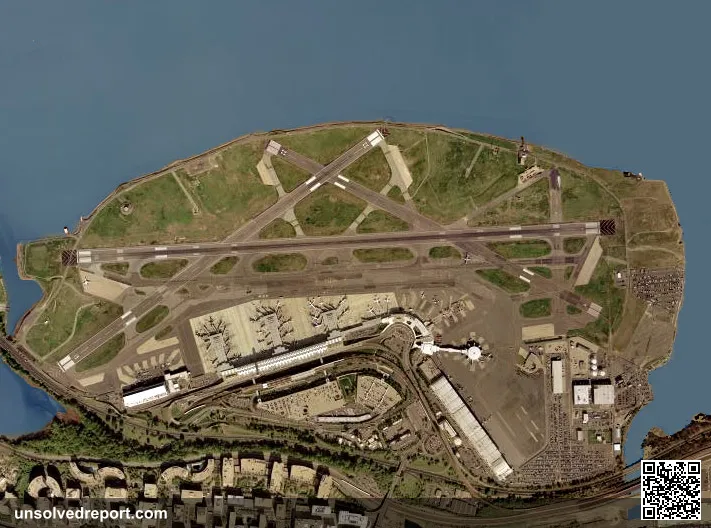
Seven blips popped onto the radar screen out of nowhere. Twenty minutes to midnight, a warm Saturday in July 1952, and the air traffic controller at Washington National Airport stared. Fifteen miles south of the Capitol. No flight plans. No radio calls. And they moved like nothing he had ever tracked.
Then it got worse. The skies over the White House filled up with objects nobody could explain. Fighter jets screamed up to chase them, and the United States government got shoved into its biggest press conference since World War II — a conference the Air Force's own lead UFO investigator later couldn't fully back up. More than seventy years on, a member of Congress says a recording of what officials actually told scientists that summer still exists, and might finally surface. Here's the full timeline, the case against the official answer, and what that 2026 tape could change.
> The 60-Second Brief
> - 3 radar sets — two at Washington National Airport, one at Andrews Air Force Base — tracked the same unidentified targets simultaneously on the night of July 19–20, 1952 (Wikipedia).
> - A Capital Airlines pilot watched 6 white, tailless lights for about 14 minutes, each one matching a radar blip in real time (Wikipedia).
> - On July 26, unknowns were tracked "in every sector," with some speeds calculated up to ~7,000 mph (Wikipedia).
> - July 29, 1952: Maj. Gen. John Samford held the largest Pentagon press conference since WWII, blaming a temperature inversion (HISTORY).
> - Blue Book's own Capt. Edward Ruppelt later objected that Washington summers sit under a mild inversion almost every night — yet the solid targets showed up on only a handful of them (CNN).
> - June 2026: Rep. Eric Burlison said MIT Lincoln Laboratory has agreed to release a roughly 74-year-old recording of the Air Force briefing tied to the case (IBTimes UK).
Original Data: How the Official Explanation Shifted, Stage by Stage
No single official explanation for the Washington flap has stayed fixed since 1952. Pulling every public and documented statement into one table — from the first weekend's silence through the 2024 federal historical review — shows a Pentagon story that changed shape as each version ran into the next set of facts. The table below was compiled specifically for this article from the sources cited in each row; no figure in it is estimated.
| Stage | Date | Who spoke | Explanation given | What it did not account for |
|---|---|---|---|---|
| Weekend 1 | Jul 19–20, 1952 | No public statement; internal Air Force/CAA investigation only | None issued — the event was still unfolding | N/A (pre-explanation): three independent radar sets, a pilot's matching visual, and jets that arrived to find the targets gone were already on record before anyone spoke publicly (Wikipedia) |
| Weekend 2 | Jul 26–27, 1952 | No public statement; still under internal review | None issued | The second weekend added faster tracked speeds (~7,000 mph) and Lt. Patterson being boxed in by four objects he could not outrun — still unaddressed publicly (Wikipedia) |
| Pentagon press conference | Jul 29, 1952 | Maj. Gen. John Samford, Director of Air Force Intelligence | Radar returns most likely a temperature inversion; visual sightings likely stars, meteors, or other mundane lights | Why solid, maneuvering targets appeared on only a handful of nights if a nightly-occurring inversion caused them; why three separate radars and a pilot's real-time visual count matched simultaneously (HISTORY) |
| Blue Book / Condon era | 1952–1969 | Capt. Edward Ruppelt (Project Blue Book head, contemporaneous) objects; Condon Report (Univ. of Colorado, released 1969) revisits the case | Ruppelt: inversion explanation doesn't hold because Washington summers sit under a mild inversion almost every night, yet the targets showed up on only a few. Condon Report (1969): re-interviewed two of the original air-traffic controllers in Dec. 1966, found their accounts consistent with 1952, but reached no independent resolution of what caused the returns | Ruppelt's own objection was never resolved by the Air Force; the Condon Report explicitly did not provide a definitive explanation and used the case mainly to illustrate investigative limits, not to settle it (CNN; Condon Report, Section II) |
| Modern assessment | Mar 2024 | AARO (All-domain Anomaly Resolution Office) Historical Record Report, Vol. 1 | Addressed only a separate, later claim — that a UFO fragment was recovered near Washington in summer 1952 — and found it "unlikely to be true," citing no USAF/USN weapons-engagement report and a source who had already retired | AARO's report relied on the Condon Committee's decades-old work rather than re-examining the original radar/visual case itself, and did not revisit Ruppelt's inversion-frequency objection (The Debrief) |
How We Compiled This
- Sources used: the Wikipedia incident record and its cited primary reporting, contemporaneous 1952 Pentagon press-conference coverage (HISTORY), Capt. Edward Ruppelt's later objection as reported by CNN, the University of Colorado's 1969 Condon Report (Section II, read directly at ncas.org), the Air Force's own Project Blue Book case-count summary (via Wikipedia's Project Blue Book article), and The Debrief's reporting on AARO's March 2024 Historical Record Report, Volume 1.
- Period covered: July 1952 (the two flap weekends) through March 2024 (AARO's most recent historical review discussing 1952-era UFO claims).
- Computed figures: the 72-year gap is 2024 minus 1952, calculated directly from the two documented dates above. The 5.6% figure is 701 divided by 12,618 — both numbers are the Air Force's own published Project Blue Book totals, not this article's estimate.
- Limitations: no complete, dated public statement exists for either individual flap weekend before July 29 — the table marks that gap "none issued" rather than guessing at informal remarks. The Condon Report's 1966 re-interviews are the only documented follow-up with original witnesses found during this research; no later re-interview of surviving witnesses appears to exist in the public record. AARO's 2024 report addressed a different, narrower claim (a recovered fragment) rather than re-adjudicating the original radar-visual case, so it cannot be read as a modern resolution of Samford's 1952 explanation.
📌 Data status: verified 2026-08-03.
What Actually Happened
This is not campfire stuff. The paper trail is thick. The sightings — people call it the "Washington flap" — hit on two weekends in a row: July 19–20 and July 26–27, 1952 (Wikipedia).
It started at 11:40 p.m. on July 19. Air traffic controller Edward Nugent saw seven objects on his radar at Washington National Airport, about 15 miles south-southwest of the city, nowhere near any normal flight path. His senior controller, Harry Barnes, walked over to look. What he saw stuck with him. Their movements, Barnes wrote later, "were completely radical compared to those of ordinary aircraft" (Wikipedia).
Now, one sleepy guy misreading a smudge? That happens. This wasn't that. The objects showed up on the radar at National Airport. Then on a second radar set at the same airport. Then on the radar at nearby Andrews Air Force Base. All at once. At one point all three centers watched a single object hover over a radio beacon — and it blinked off all three screens at the exact same instant (HISTORY).
Maybe the machines were glitching, you might think. Except a pilot saw them too. Capital Airlines captain S.C. Pierman was sitting in his DC-4, waiting to take off, when he watched six white, tailless, fast-moving lights for about fourteen minutes. He called each one out to Barnes over the radio. And Barnes said every single light Pierman named lined up with a blip near his plane on the scope (Wikipedia).
Eyes and radar, agreeing. So they sent up the jets.
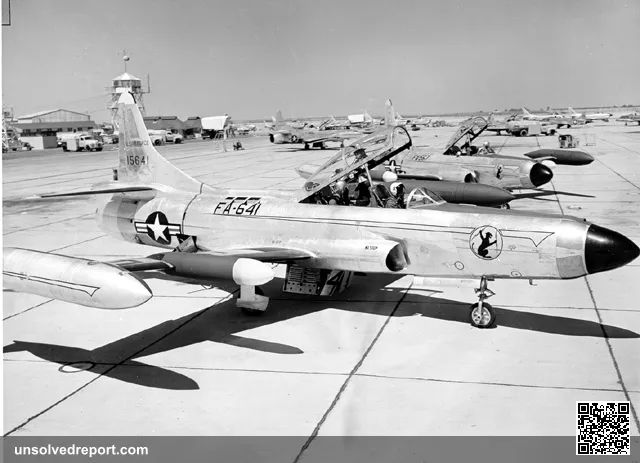
F-94 Starfire fighters scrambled from New Castle Air Force Base in Delaware. And here's the part that gives people chills: the objects seemed to know. Every time the jets reached Washington, the blips vanished. The moment the low-on-fuel fighters turned for home, the blips came back (HISTORY). The next weekend, pilot Lieutenant William Patterson suddenly found himself boxed in by four glowing white objects. He radioed for instructions. He was flat-out at maximum speed, and he later admitted he "saw no chance of overtaking them" (CNN) — a far luckier outcome than the pilot who chased an unidentified object over Kentucky in 1948 and never came home.
The newspapers lost their minds. "SAUCERS SWARM OVER CAPITAL," screamed one famous front page. By July 29 the heat was so brutal the Air Force called its biggest Pentagon press conference since the Second World War — bigger, even, than the scramble to explain away the Roswell incident five years earlier. Major General John Samford, the Director of Air Force Intelligence, stepped up and let the air out of the room. The radar returns, he said, were almost certainly a temperature inversion — a layer of warm, humid air sitting on top of cooler air that can bend radar beams and fake an echo — and the lights? Just misidentified stars, meteors, ordinary stuff (HISTORY). The whole thing got investigated under Project Blue Book, the Air Force's official UFO study, then run by Captain Edward J. Ruppelt (CNN).
Case closed. Officially.
But pull on one thread and the tidy answer starts to come apart.
The Thread That Won't Stop Pulling
The doubt doesn't come from some basement conspiracy guy. It comes from the government's own investigator.
The temperature-inversion answer sounds neat until you ask one simple thing: if warm air did it, why only a handful of nights? Captain Ruppelt — the man who literally ran Blue Book — chased that exact question. And he found that during a normal Washington summer, the city sat under a mild temperature inversion almost every night. Yet the slow, solid-looking targets showed up on only a few of them (CNN). If inversions made the blips, the blips should have been there every night. They weren't.
There's a second crack. A temperature inversion is a fair guess for a smeary, ghosty radar return. It's a much tougher sell when seasoned controllers, military pilots, and regular folks on the ground all describe lights in the same spots the radar showed objects, moving in ways no 1952 aircraft could match (HISTORY). And get this — the official weather explanation was reportedly out the door before investigators had even finished talking to the witnesses (We Are The Mighty).
So the real mystery is narrow and stubborn. What made solid, maneuvering radar targets — lined up with what people saw — over the most defended airspace in America, on those exact nights in July 1952? Nobody has answered that to everyone's satisfaction. That's why the case keeps clawing its way back.
So What Was It?
A few explanations are still fighting it out. Some lean on real physics. One is pure guesswork. Here's the honest spread — and everything below is interpretation, not settled fact.
Weather playing tricks (the official, partial answer). This is still the mainstream pick. Under the right conditions, warm-air layers bend radar and conjure "angels" — ghost targets that aren't planes. And yes, 1952 radar was cruder than today's; weather and ground clutter could fool it. The hole, the one Ruppelt himself pointed at, is timing: inversions were everywhere that summer, the targets almost nowhere (CNN). So treat it as a decent explanation for some of the blips — not a clean wrap-up of all of them.
Stars, meteors, and city lights (official). For the things people saw with their eyes, the Air Force pointed at ordinary sky objects and lights (HISTORY). Fine — a tired pilot mistaking a bright star low on the horizon, sure. Harder to swallow when several trained observers report coordinated, fast objects that match the radar.
Secret experimental aircraft (speculation, unverified). The popular hunch: classified prototypes getting tested over Washington. Problem is, there's no paper anywhere showing such a craft existed in 1952, and no aircraft from that era is known to fly the way these things did. File it under educated guessing, not fact.
Aliens (unproven). This is the one that made the headlines, and it's the one to be straightest about: there is no verified physical evidence — no recovered object, no confirmed photo, no government admission — that the 1952 objects were alien craft. The moves were genuinely hard to explain with 1952 tech, which is exactly why the idea caught fire. But "hard to explain" is not "proven to be from space." This one stays in the guessing column.
Here's what survives all the arguing, the part nobody disputes: multiple radar systems, trained operators, scrambled jets, and a Pentagon scrambling to keep up. The U.S. government still has no fully accepted answer for those July nights. And the modern push to study UAP (unidentified anomalous phenomena) means old cases like this one are being dragged back into the light and looked at again.
Hour by Hour: The Two Washington Weekends
The story is easier to judge when you lay the clock times side by side. Every entry below is drawn from the incident record (Wikipedia) and the Air Force press conference reporting (HISTORY).
| Date & time | Event | Source |
|---|---|---|
| Sat 19 Jul 1952, 11:40 p.m. | Controller Edward Nugent spots seven objects on radar at Washington National, 15 mi south-southwest of the city | Wikipedia |
| 19 Jul, shortly after | Senior controller Harry Barnes looks at the scope: "We knew immediately that a very strange situation existed" | Wikipedia |
| Night of 19 Jul | Capital Airlines pilot S.C. Pierman watches six white, tailless lights over ~14 minutes; each matches a radar pip near his plane | Wikipedia |
| Sun 20 Jul, ~3:00 a.m. | Two F-94 Starfires from New Castle AFB (Delaware) reach Washington; the objects vanish from radar | Wikipedia |
| 20 Jul, 5:30 a.m. | Objects last detected by radar | Wikipedia |
| Sat 26 Jul, 9:30 p.m. | Unknowns tracked "in every sector"; some speeds calculated up to ~7,000 mph | Wikipedia |
| 26 Jul, ~11:30 p.m. | F-94s scramble again; Lt. William Patterson is boxed in by four white glows and cannot overtake them | Wikipedia |
| Tue 29 Jul 1952 | Maj. Gen. John Samford holds the largest Pentagon press conference since WWII; attributes returns to temperature inversion | HISTORY |
Weighing the Explanations
Stripped of the drama, four explanations are on the table. Here is how each one actually holds up against the record above — this is analysis of the cited facts, not new evidence.
| Explanation | What supports it | Where it strains | What would settle it |
|---|---|---|---|
| Temperature inversion (official) | A recognized cause of false "angel" radar echoes; 1952 radar was crude; inversions were present on the incident nights | Ruppelt's own objection: inversions occurred on nearly every Washington summer night, yet the slow solid targets appeared on only a few (CNN) | Contemporaneous propagation data showing an inversion strong enough to fake maneuvering targets specifically on those nights |
| Stars / meteors / lights (official) | Plausible for a single tired observer misreading a bright object low on the horizon | Multiple trained observers reported fast, coordinated lights that lined up with radar pips (HISTORY) | Reconciling the visual reports with the simultaneous radar returns on three sets |
| Secret experimental aircraft | An intuitive guess given the defended airspace | No documentation of such a craft in 1952, and no aircraft of the era is known to fly as described (interpretation) | A declassified program record placing a matching prototype over Washington |
| Extraterrestrial craft | The maneuvers were genuinely hard to explain with 1952 technology | No verified physical evidence — no recovered object, confirmed photo, or government admission (interpretation) | Any recovered artifact or authenticated instrumented record |
2026 Update: The Missing Tape
In June 2026, at a forum on UAP transparency, Rep. Eric Burlison (R-Mo.) said MIT Lincoln Laboratory — a federally funded defense research center — has agreed to make public a recording of an Air Force briefing given to scientists roughly 74 years earlier, which Burlison said relates directly to the 1952 Washington incidents. "That would be important historical information to have," he said. No release date has been set, and what the recording actually contains has not been confirmed — so its contents should be treated as unverified until it surfaces (IBTimes UK). If the tape does emerge, it would be the first primary-source record of what officials privately told scientists about the case, as opposed to what Samford told the press.
Frequently Asked Questions
What actually showed up on radar in the 1952 Washington DC UFO incident?
On the night of July 19–20, 1952, air traffic controller Edward Nugent tracked seven unidentified objects on radar at Washington National Airport, about 15 miles south-southwest of the city. The same targets were then confirmed on a second radar at the same airport and on radar at Andrews Air Force Base — three separate systems reporting the same unknowns at once (Wikipedia; HISTORY).
Did a pilot actually see anything, or was it just radar error?
Yes. Capital Airlines captain S.C. Pierman watched six white, tailless, fast-moving lights for about 14 minutes while waiting to take off, and radioed each sighting to senior controller Harry Barnes — who confirmed that every light Pierman called out matched a radar blip near his aircraft (Wikipedia).
What was the Air Force's official explanation?
On July 29, 1952, Maj. Gen. John Samford told the largest Pentagon press conference since World War II that the radar returns were most likely caused by a temperature inversion — warm air over cooler air bending radar beams — and that the visual sightings were probably stars, meteors, or other mundane lights (HISTORY).
Why don't investigators fully accept the temperature-inversion explanation?
Capt. Edward Ruppelt, who ran Project Blue Book at the time, later pointed out that Washington summer nights sit under a mild temperature inversion almost constantly — yet the solid, maneuvering radar targets appeared on only a few of those nights, which undercuts inversion as a complete explanation (CNN).
Is there any new evidence about the case?
In June 2026, Rep. Eric Burlison said MIT Lincoln Laboratory has agreed to release a roughly 74-year-old recording of an Air Force briefing tied to the incident, though it has not yet been made public and its contents are unconfirmed (IBTimes UK).
Was the 1952 Washington case ever officially solved?
No. Project Blue Book, then run by Capt. Edward J. Ruppelt, investigated the case and it remains catalogued as one of Blue Book's unresolved "unknowns" — no single explanation accounts for the coordinated radar, visual, and pilot reports across both weekends (CNN).
Behind the scenes, the panic over Washington spooked the CIA so badly that within months a secret panel of scientists was quietly pulled together to decide what the public should be allowed to believe about flying saucers. What they recommended is its own unsolved story — and it changed how every sighting since has been handled.
Sources & Further Reading
- 1952 Washington, D.C. UFO incident — Wikipedia
- When UFOs Buzzed the White House and the Air Force Blamed the Weather — HISTORY
- In 1952, DC's skies were littered with US fighter jets chasing UFOs — CNN
- The 1952 UFO Washington sighting that upended decades of denial — We Are The Mighty
- The Report on Unidentified Flying Objects by Edward J. Ruppelt (full text) — Project Gutenberg
- 'Invasion of Washington' UFO tape may surface as lawmakers push release — IBTimes UK
- Condon Report, Section II: Summary of the Study (1969, full text) — University of Colorado / ncas.org
- Project Blue Book — Wikipedia (case totals)
- Fragmented Facts: AARO Report Unearths Odd Claims Involving U.S. Recovery of Material From 1952 UFO Incident — The Debrief
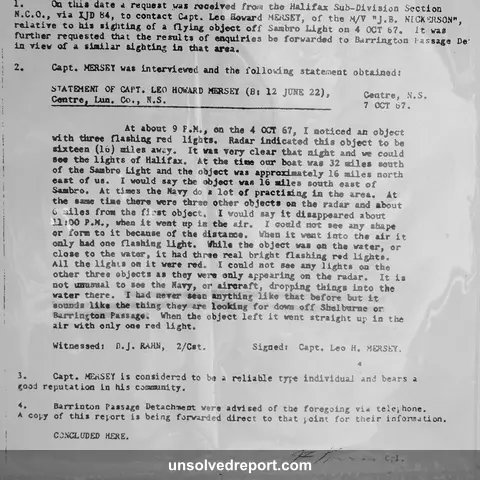
Shag Harbour UFO 1967: The Object the Navy Never Found
In 1967 at Shag Harbour, three police officers watched a UFO sink into the Atlantic. Navy divers searched for days. So where did it go?
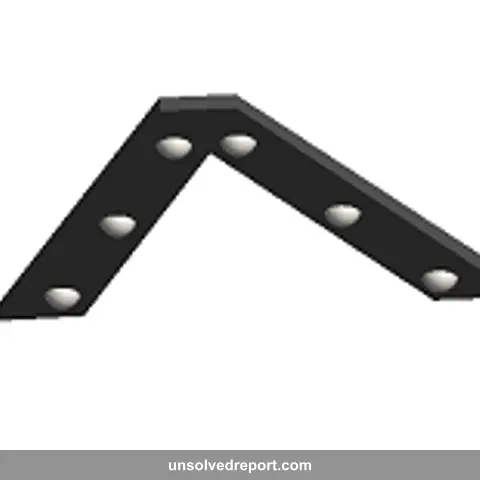
The Phoenix Lights of 1997: 10,000 Witnesses, One Giant V, No Answer
Phoenix Lights 1997: thousands watched a silent V glide over Phoenix. The Air Force blamed flares. So why did the governor call it real?
Fermi Paradox Explained: Why the Universe's Silence Is Terrifying
300 million habitable planets, billions of years, and total silence. So where is everybody? The Fermi paradox explained — and why the answer may be worse than you think.