Naga Fireballs: The Glowing Orbs That Rise From a River
Every October, silent red orbs climb out of the Mekong River and vanish. Decades of science still can't agree on what they are. Here's the real mystery.
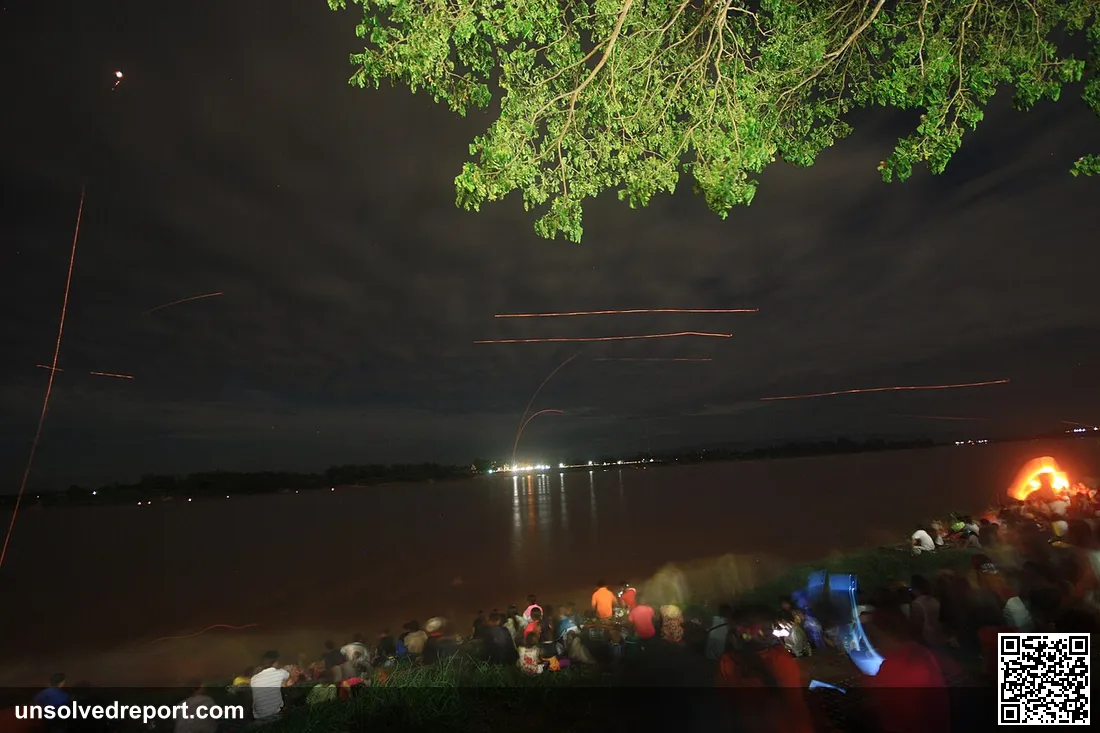
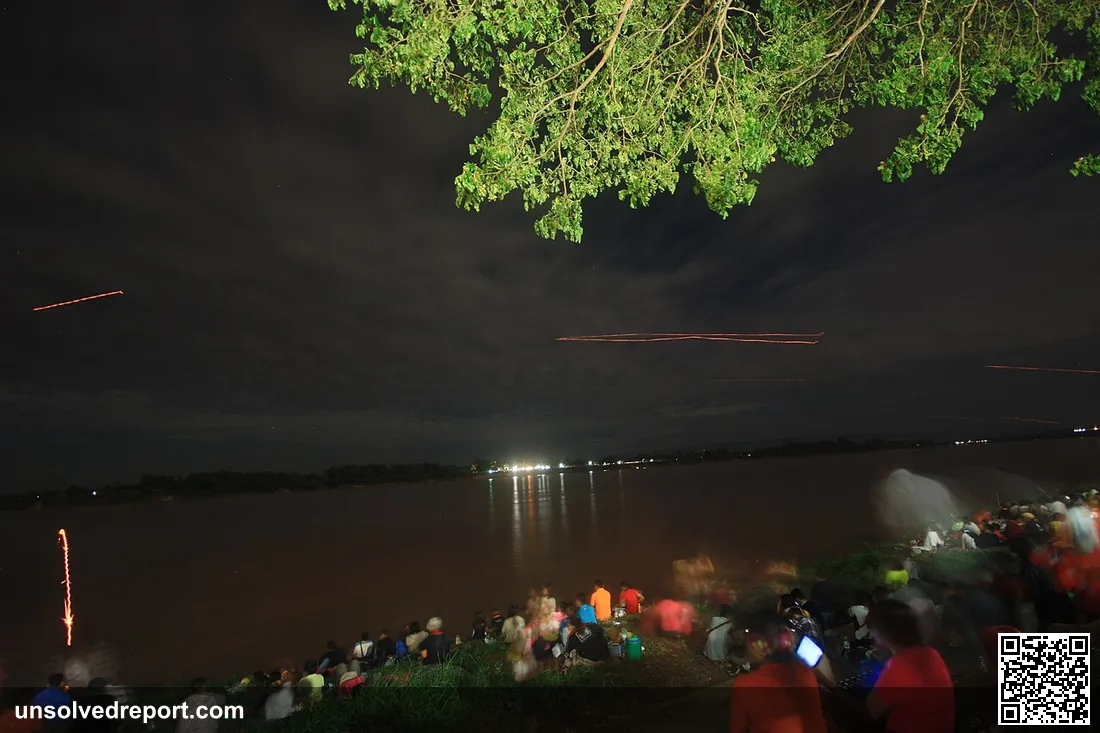
The October full moon climbs over the Mekong River, and tens of thousands of people are already standing on the banks near Nong Khai, Thailand, not talking, just watching the water. Then it happens. A reddish orb lifts straight out of the river. No splash. No sound. It climbs hundreds of feet into the black sky and simply blinks out — no smoke, no trail, nothing. Another follows. Then another. The crowd has a name for them: the Naga fireballs. And here's the part that should make the hair on your arms stand up — science has been staring at this for decades, and it still can't tell you what they are.
This is the rarest kind of mystery. Not a blurry photo or a one-time sighting you can wave away. This thing happens every year, on schedule, in front of enormous crowds, filmed from a dozen angles — and the cause is still genuinely up for grabs. So let's do this carefully. Let's pull apart what we actually know from what people simply believe.
What we know for sure
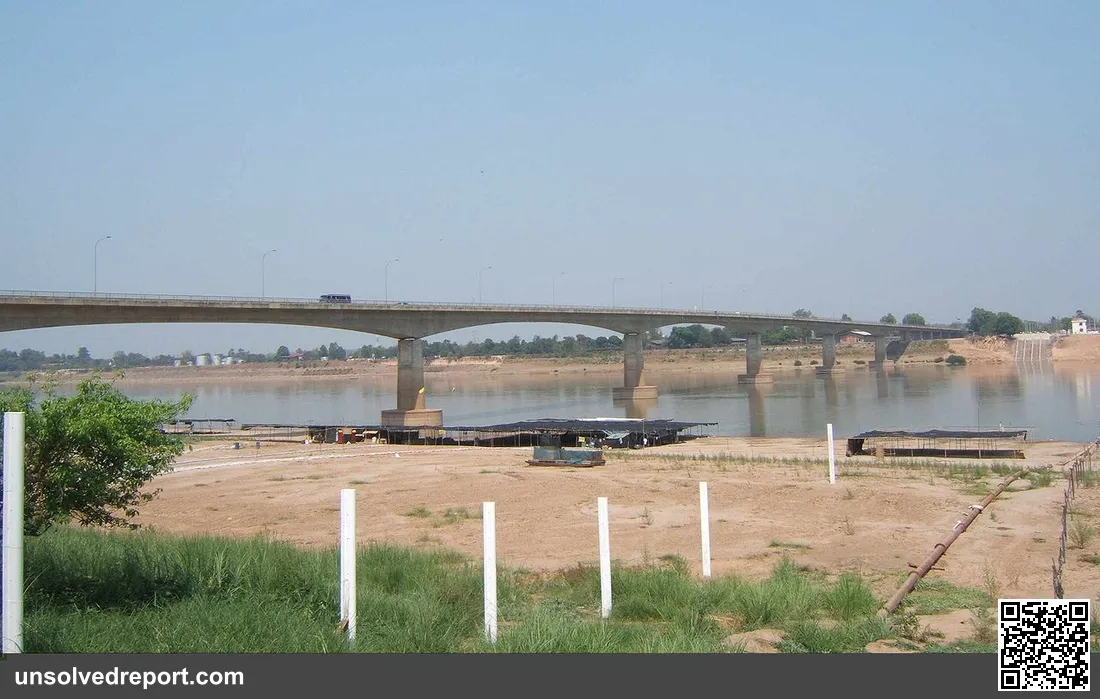
Start with the where. The orbs show up along a roughly 250-kilometer stretch of the Mekong in northeastern Thailand, and the most famous spot to catch them is Phon Phisai District in Nong Khai Province, right on the border with Laos — the same stretch of Southeast Asia that hides the Plain of Jars further upriver (Wikipedia; Nation Thailand). Witnesses describe them the same way over and over: reddish or reddish-orange, anywhere from a tiny sparkle to about the size of a basketball. They rise in total silence — a few hundred feet up, sometimes more — and then they're gone. No arc. No smoke. No bang. Just up, and out.
Now the strange part, and it's the single most important fact in the whole puzzle: the timing. The fireballs come around the full moon of the 11th lunar month, the night of Wan Ok Phansa, the end of Buddhist Lent — usually mid-to-late October (Skeptoid; Wikipedia). How many appear is anyone's guess from night to night. Reports swing wildly, "between tens and thousands per night" (Wikipedia). But the date? The date barely moves.
Today it's a huge festival called Bang Fai Phaya Nak — "the fireballs of the Naga." And here's a twist most people miss: the legend you'll hear is partly a modern invention. Locals reportedly just called them "ghost lights" until officials rebranded them "phaya nak lights" in the mid-1980s, tying them to the Naga — a giant serpent from Southeast Asian Buddhist and Hindu tradition, said to live in the river (Wikipedia). In the old telling, the Naga breathes out the glowing orbs to welcome the Buddha home from preaching in the heavens, as Lent ends (Nation Thailand).
One last fact, and it's a beauty. After a TV program went on air publicly questioning whether the lights were even real, the crowds didn't shrink — they exploded. Attendance reportedly leapt from around 150,000 in 2001 to roughly 400,000 the very next year (Skeptoid). Tell people something might be fake, and apparently they'll travel hundreds of miles to see it for themselves.
The question nobody can answer
So here's the honest heart of it. No scientific study has ever pinned down a single mechanism that explains every feature of the Naga fireballs. And the reason is that the phenomenon is caught in a vice. Any purely natural answer has to explain that maddening calendar — why would orbs appear on the exact same lunar date, year after year, in the same bend of the same river? And any purely human answer has to explain something else: sincere, multi-generational eyewitnesses who swear they watched these lights long before tourism ever showed up.
Take Lamduan Senanikorn, a 50-year-old local, who told reporters she's watched "pink and red fireballs rise from the Mekong River every year" since she was a child — though she's noticed the numbers thinning out lately (Nation Thailand). That's not nothing. Testimony like that is data too, even when it refuses to fit neatly into the skeptics' boxes. So the mystery isn't that we have no explanations. It's that the best ones we've got each have a hole in them you can drive a truck through. What comes next is theory and interpretation — speculation, plainly. Treat it that way.
Three theories, three problems
Theory 1: gas burning out of the riverbed. This is the natural favorite. The idea: rotting organic gunk on the riverbed gives off methane and phosphine, the gases pool, drift up, and ignite as they hit the air (Science Times; Wikipedia). A Nong Khai physician, Dr. Manas (Manos) Kanoksin, spent years championing a version of this, arguing that conditions around the Buddhist Lent full moon crank up oxygen volatility enough to set escaping methane alight on its own (TIME archive coverage).
The catch. Science writer Brian Dunning calls out what he considers fatal flaws. For methane and phosphine to spontaneously ignite, you need very precise concentrations that almost never occur in the wild — and when you burn these gases in a lab, you get bluish-green flames and black smoke, not slow, silent red orbs floating skyward (Skeptoid). Worse, other researchers point out the Mekong's bed is rocky and holds little sediment, and the river churns hard enough to shred any gas bubble long before it reaches the surface.
Theory 2: plasma orbs. A more exotic natural idea — that the lights are free-floating plasma, cousins of the ball lightning you can spark in a lab, or the glowing orbs pilots once blamed on foo fighters over WWII skies. The catch. You'd need enormous voltages to make that happen, and there's no known natural source of that kind of charge sitting in the river. Skeptics rate spontaneous plasma ignition as unlikely (Wikipedia).
Theory 3: gunfire from the far bank. Now the human explanation, and it's a doozy. In 2002, an ITV documentary filmed Laotian soldiers firing tracer rounds across the Mekong and argued the "fireballs" were really gunfire or flares, glimpsed from the Thai side (Skeptoid). Thai biologist Jessada Denduangboripant studied footage and concluded flare-gun fire could pull off the effect. Dunning piles on with a clever timing trick: the river runs about 700 meters wide, so a gunshot's sound takes roughly 2.5 seconds to cross — and by then the cheering crowd would have buried it (Skeptoid).
The catch. The documentary set off a firestorm in Thailand, and the theory isn't bulletproof. In 2021, Lao authorities — who had a COVID-19 curfew running with heavy police on the ground — flatly said it was "extremely unlikely that anyone could have fired weapons or flare ammunition without our knowledge" (Nation Thailand). And long-time Thai villagers have insisted the tracer-fire footage "looks nothing like" what they actually saw with their own eyes (Nation Thailand).
So where does all that leave you? With something undeniably real — lights that get seen and photographed like clockwork. A calendar that shrugs off every tidy natural answer. And a stack of theories, chemical and human, that each grab a corner of the truth and miss the rest. The Naga fireballs are a gentle kind of riddle — part river, part chemistry, part faith, and after all these years, still part question mark. Keep your eyes open. The Mekong isn't the only place that glows in the dark with no good explanation — ask anyone who's seen the Hessdalen Lights flicker over a Norwegian valley.
Sources & further reading
- Naga fireball — Wikipedia: https://en.wikipedia.org/wiki/Naga_fireball
- The Naga Fireballs — Skeptoid (Brian Dunning), Episode 183: https://skeptoid.com/episodes/183
- Nong Khai braces for one of nature's weirdest wonders: Naga fireballs — Nation Thailand: https://www.nationthailand.com/thailand/tourism/40032245
- The Naga fireballs – a natural phenomenon or a man-made trick? — Nation Thailand: https://www.nationthailand.com/in-focus/40008001
- Naga Fireballs Explained — Science Times: https://www.sciencetimes.com/articles/47637/20231213/naga-fireballs-explained-understanding-thailand-s-mysterious-blobs-rising-mekong.htm
- Behind the Secret of the Naga's Fire — TIME archive: https://time.com/archive/6893606/behind-the-secret-of-the-nagas-fire/
Patiala Necklace Mystery: 2,930 Diamonds, Almost None Found
Cartier built the Patiala Necklace with 2,930 diamonds in 1928. By 1948 it vanished from a locked treasury — so where did nearly 3,000 stones go?
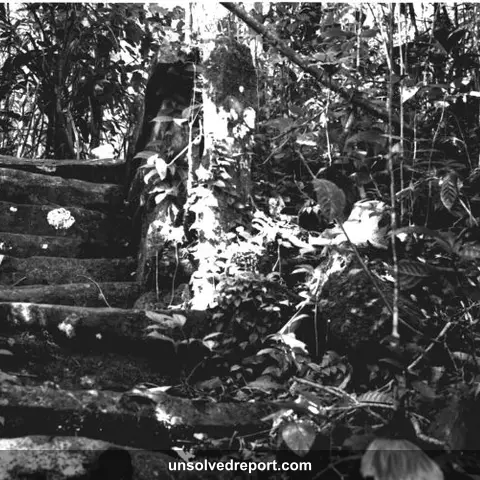
Gunung Padang Dating Controversy: The Pyramid Claim That Got Retracted
27,000 years old, or 2,000? A retracted paper, a buried hill in West Java, and a number that split archaeology in two. Here's what the evidence actually shows.
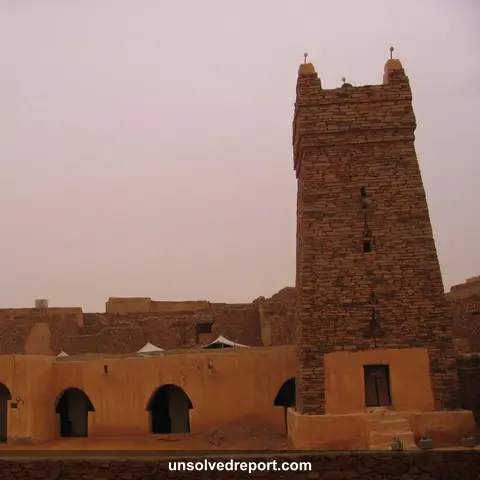
Oualata, Mauritania: The Ksour Mystery No One Can Date
Oualata's painted walls are repainted by hand every year, erasing the evidence — so how old is this Mauritania ksour really? Even UNESCO won't say.