Salcombe Bronze Age Shipwreck: 3,000-Year-Old Cargo, No Ship
Divers off Devon keep hauling up 3,000-year-old copper, tin, and gold from a Bronze Age shipwreck cargo — so why has no one ever found the ship?
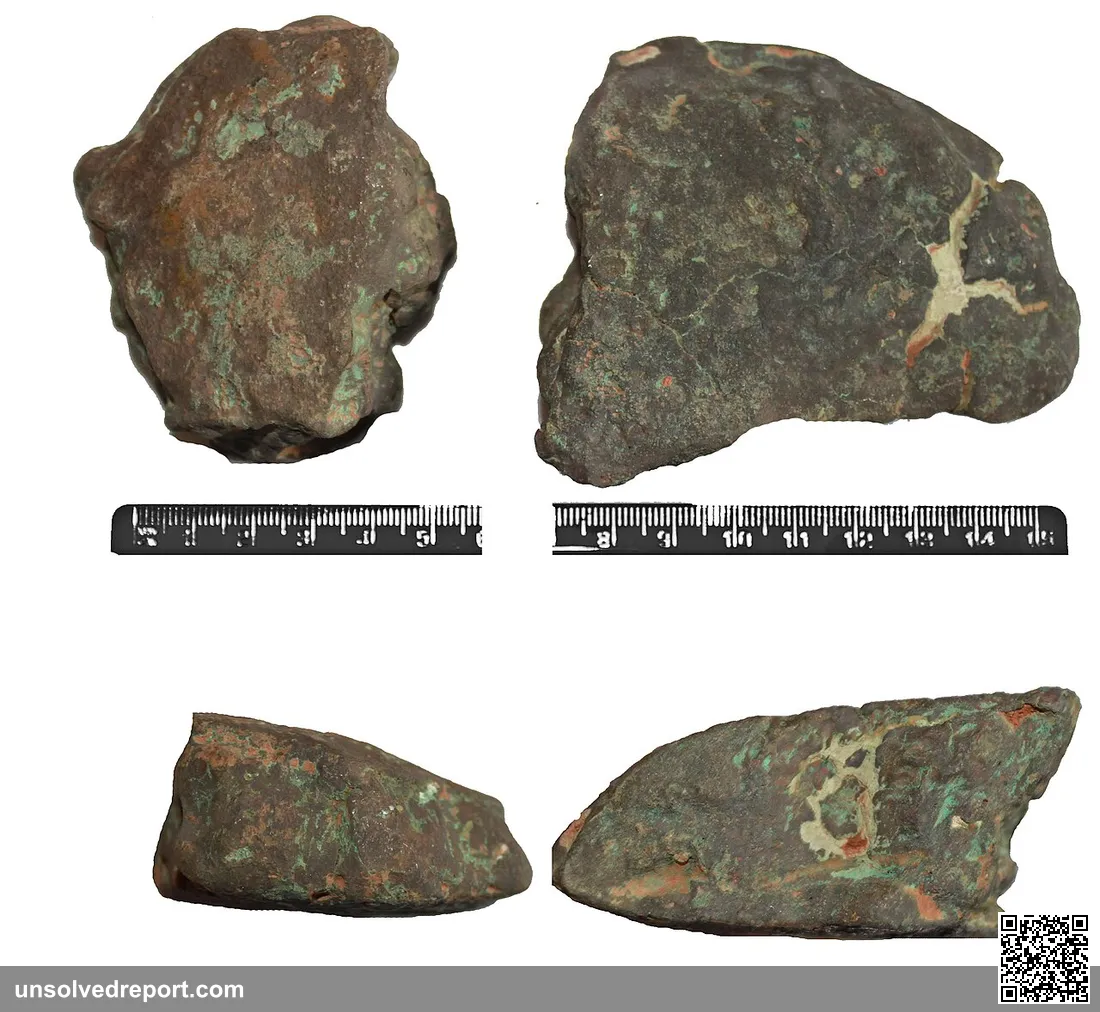
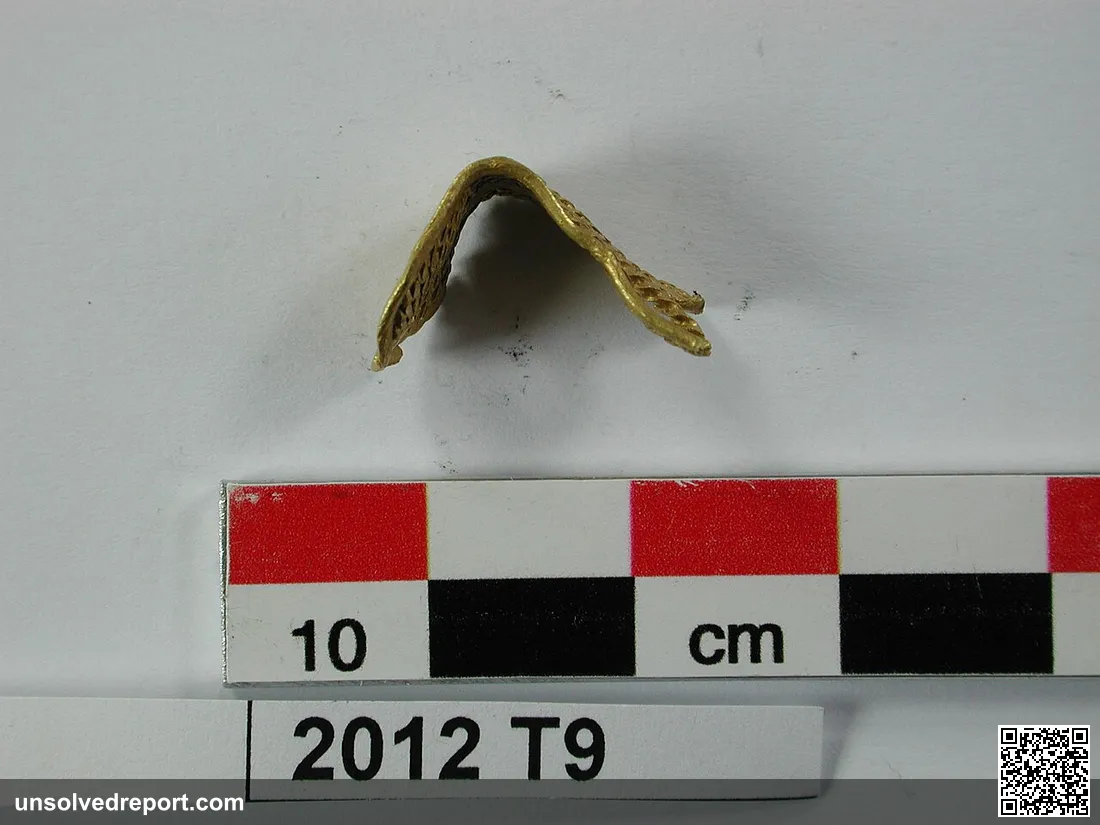
Copper ingots. Bun-shaped lumps of tin. Bronze swords. And delicate little twists of gold, bright as the day they were made. For decades now, divers off the south Devon coast have been pulling all of this up from the seabed, piece by piece, out of a calm bay near the mouth of the Salcombe estuary. Add it together and you get one of the richest Bronze Age finds ever made in northwestern Europe.
There's just one thing missing. The most obvious thing. Nobody has ever found the ship.
Here's what the evidence actually shows, the one question that still won't go away, and the stories researchers have told to make sense of it.
What We Know For Certain
It started in 1977. Divers working off Moor Sand, near Gammon Head in Devon's South Hams, brought up a complete bronze sword from about 8 meters of water. The same day, a piece of a rapier blade surfaced too. Keep looking, and the seabed kept giving: more rapier fragments, plus palstaves — a kind of bronze axe. The weapons traced back to the Penard metalwork phase, roughly 1300 to 1150 BC (The Past). And the strange thing was how they lay — scattered across the seabed with no clear way they could have washed off the land. So people read it the only way that made sense: a wreck. That single conclusion turned Moor Sand into the first prehistoric shipwreck site ever identified in Britain. It was formally protected under the Protection of Wrecks Act on 14 February 1978, and Historic England looks after it today (Wikipedia: Moor Sand site).
Then the trail went cold. The early work, tied to the pioneering maritime archaeologist Keith Muckelroy, turned up only a little, and the project quietly fizzled out in the early 1980s. For about twenty years, that was the end of it. Until the 2000s, when the South West Maritime Archaeological Group (SWMAG), led by licensee Neville Oldham, spotted a fresh cluster of Bronze Age metal a short swim away. They called this patch Salcombe B, and from around 2004 they dug into it — pulling out palstaves, rapier blades, gold ornaments, and braided jewelry, all of it pointing back to the Penard phase again (The Past).
But the showstopper came in 2009. SWMAG divers hit a thick, packed cargo of metal. When you add up everything from Salcombe, the published counts land at around 280 copper and copper-alloy ingots and ingot fragments, plus roughly 40 of those bun-shaped tin ingots, all sitting alongside bronze weapons and gold (Berger et al. 2022, Journal of Archaeological Science). The copper alone tips the scales at more than 62 kilograms. By weight and by count, it's the biggest haul of Bronze Age copper ingots known anywhere in northwestern Europe. The tin is just as big a deal, in its own quiet way: it's the first direct proof of the Bronze Age tin trade ever found in Britain (Art Fund).
The gold is the part that feels human. Among the finds are finely worked twisted-wire gold bracelets — and according to the Art Fund, they're the first of their kind to land in an English collection, with their only cousins coming from hoards in north Wales and northwest France. In 2010 the British Museum took on the Salcombe material — more than 300 items in all — with a grant from the Art Fund helping cover the cost (Art Fund).
Ben Roberts, then the British Museum's curator of European Bronze Age collections, called it "an incredibly exciting find – the first evidence of a proper bulk trade with Europe" (The Past). And that line is the whole point. This wasn't a few showy treasures. This was raw industrial metal, moving by the boatload, across open sea, more than three thousand years ago.
One catch, though. Salcombe might not be the record of a single bad day. A carp's-tongue sword and a leaf-shaped sword belong to the later Ewart Park phase — roughly 800 to 700 BC, centuries after the Penard-era bracelets and rapiers (The Past). So researchers talk about the seabed holding two suspected wreck events, not one neat disaster. Hold that thought — it matters in a minute.
The Question That Won't Die
Here's the part that should bother you. After decades of diving, there is no ship. No hull. No keel. No preserved timbers. Not a single recognizable fastening. Everything we call the Salcombe "shipwreck" is just its cargo, lying loose on a seabed of sand and rock — and nothing of the vessel itself (The Past).
That's a bigger problem than it sounds. With no timbers, archaeologists can't say how the boat was built. Or how big it was. Or whether it was a sewn-plank vessel like the ones we know from Bronze Age Britain. They can't even say, for absolute certain, that all of this went down in one wreck rather than getting lost piece by piece over hundreds of years. Remember those split dates — Penard at one end, Ewart Park at the other? That gap keeps the door wide open.
Then there's the cargo itself, full of its own loose ends. Why was the metal here at all? Where was it heading, or where had it come from? The bay sits close to Bronze Age roundhouses and field systems up on the land, which has tempted some to picture a boat trying to come ashore when it went down — though that's a guess drawn from a map, not a story we can prove happened.
The Stories People Tell
A bulk metal highway across the Channel. The leading read on Salcombe is simple and stunning: it's hard proof that Late Bronze Age Britain was wired into a long-distance sea-trade network, hauling raw metal in and out in serious quantity. The peer-reviewed provenance study by Berger and colleagues leaned on lead isotopes and trace-element chemistry to make the case. Their conclusion? Much of the copper fits best with ores from the western Mediterranean — pointing toward Sardinian and/or southern Spanish sources — while the tin most likely came from British ground, presumably the tin country of Cornwall and Devon (Berger et al. 2022). Picture that for a second: Mediterranean copper and British tin, riding the same boats. One honest caveat — lead-isotope provenance deals in probabilities, not certainties. It points to the most compatible ore fields, not one proven mine, and the authors are careful to talk in terms of likelihood.
British tin, feeding the world. A bigger version of that idea says British tin was a prize export — the stuff that helped fire up bronze-making far beyond Britain's shores. The Salcombe tin ingots, being the first ever found in the country, keep getting pointed to as evidence that the southwest peninsula was pumping tin into European and even Mediterranean networks (Art Fund). This one's still an open argument among researchers, not a settled fact.
Old metal, melted down again. Here's a quieter twist. The Berger study also found that the chemistry of the finished bronzes points toward mixing or recycling of existing copper-tin alloys, rather than just blending fresh copper with fresh tin (Berger et al. 2022). If that holds, then Bronze Age metalworkers were running a circulating, partly recycled stock of metal — a surprisingly sophisticated economy, hiding inside a heap of corroded lumps.
And here's what no one disputes. Three thousand years ago, somebody loaded a boat with metal worth a fortune in its day — and gold bracelets light enough to slide onto a wrist — and pushed off into cold water. The cargo made it to the Devon seabed. The crew, and their ship, did not leave a single trace we've managed to find. They're still out there somewhere, or they're gone. And the sea isn't telling.
Sources and Further Reading
- The Past / Current Archaeology, "Moor Sand: a Bronze Age shipwreck revealed" — https://the-past.com/feature/moor-sand-a-new-bronze-age-shipwreck-revealed/
- Berger, D., et al. (2022), "The Salcombe metal cargoes: New light on the provenance and circulation of tin and copper in Later Bronze Age Europe," Journal of Archaeological Science — https://www.researchgate.net/publication/357811879_The_Salcombe_metal_cargoes_New_light_on_the_provenance_and_circulation_of_tin_and_copper_in_Later_Bronze_Age_Europe_provided_by_trace_elements_and_isotopes
- Art Fund, "Salcombe Hoard" (British Museum acquisition) — https://www.artfund.org/our-purpose/art-funded-by-you/salcombe-hoard
- Wikipedia, "Moor Sand site" (Protection of Wrecks Act designation) — https://en.wikipedia.org/wiki/Moor_Sand_site
- Historic England, Salcombe Cannon Site listing — https://historicengland.org.uk/listing/the-list/list-entry/1000074
Mansa Musa: The King Who Broke Egypt With Gold
In 1324 one king gave away so much gold that Cairo's economy crashed for over a decade. So where did the richest man in history's fortune actually go? Nobody's sure.
Padmanabhaswamy Temple Vault B: The $22B Door Nobody Dares Open
Padmanabhaswamy Temple Vault B has stayed sealed since the 1880s, right next to $22 billion in gold. Officials could open it. They won't. Here's why.
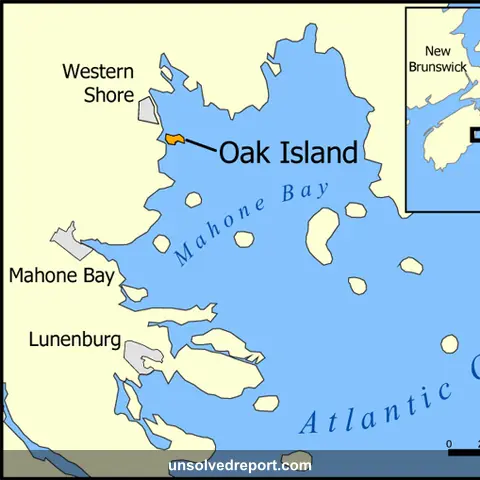
Oak Island Money Pit: The 200-Year Mystery Nobody Can Solve
200 years, millions of dollars, six deaths — and still no treasure. So what's really down the Oak Island Money Pit? The evidence points somewhere stranger.