Percy Fawcett Disappearance: The Explorer the Jungle Swallowed
In 1925 Percy Fawcett disappeared into the Amazon chasing a lost city — and nearly 100 people who went looking for him vanished too. Why?
Three men walked into the Brazilian rainforest in April 1925 and walked off the edge of every map ever made. One was a 57-year-old British explorer. One was his 21-year-old son. One was the son's best friend. They were chasing a ruined city the old man swore was buried somewhere in the green — and then, all three of them simply stopped existing. A hundred years later, no confirmed trace of Percy Fawcett, his son Jack, or young Raleigh Rimell has ever been found. Here's the part that should make the hair stand up on your arms: the people who went looking for them kept dying too. This is one of history's truly unsolved disappearances — and at its center sits a hunch that everyone laughed at, until it turned out to be partly right.
What We Actually Know
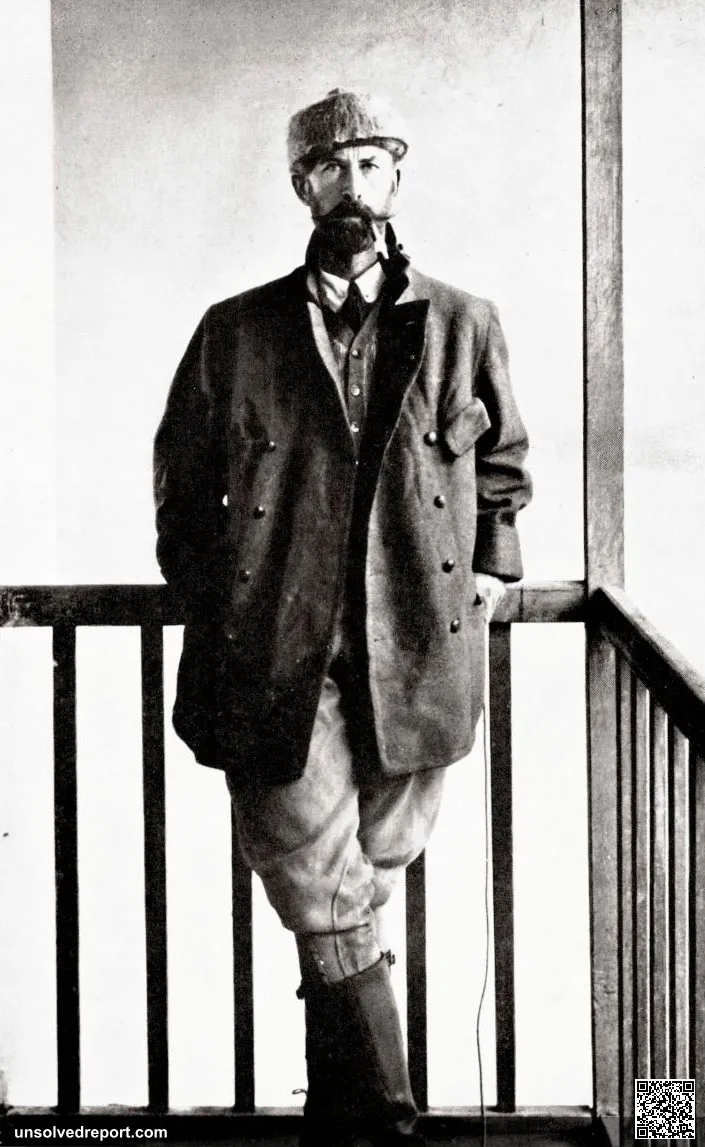
Start with the man. Percival Harrison Fawcett was born in 1867 in Torquay, Devon, England, and he didn't begin as a jungle obsessive — he trained as a Royal Artillery officer first (National Geographic). Then the wild got hold of him. He joined the Royal Geographical Society in 1901, worked as a surveyor gathering intelligence in Africa, and from 1906 onward led expedition after expedition into the Amazon Basin. Seven journeys between 1906 and 1924. Time and again he charted rivers, hills, and waterfalls no European had ever put on paper (National Geographic).
Somewhere in all that mapping, an idea got into him and never let go: an advanced ancient civilization, lost and buried in the wild, central-western state of Mato Grosso. He gave it a name — just one letter. "Z." Where did the belief come from? Partly from a Portuguese document called Manuscript 512, kept in Brazil's National Library, which claimed a Portuguese party had stumbled onto a ruined stone city back in 1753. Scholars have argued about that paper for ages, and some flat-out call it a forgery (National Geographic). And there was a stranger layer to it. The Penn Museum, which dug into the case, notes that Fawcett was a Spiritualist who suspected his lost city might be tied to the legends of Atlantis (Penn Museum, Expedition Magazine). An old soldier, a missing manuscript, and a dream of Atlantis. That's the mix he carried into the trees.
The last expedition left in 1925. This time he brought family: his eldest son, 21-year-old Jack, and Jack's friend Raleigh Rimell. The three of them set out from Cuiabá, the capital of Mato Grosso, on April 20, 1925, and pushed into the bush (History.com). On May 29, 1925, they reached a place Fawcett himself had named "Dead Horse Camp," because a horse of his had died there on an earlier trip. There he sent his guides back out — and with them, his final words to the world. In a letter to his wife, Nina, he wrote that Jack was "well and fit and getting stronger every day," and told her not to worry: "You need have no fear of any failure" (History.com). Then the three of them walked into uncharted territory. Nobody ever reliably heard from them again.
The searches started in 1928, three years on, when George Miller Dyott led the first official mission in. He came back with no bodies and nothing conclusive (History.com). Others followed — including a search by the writer Peter Fleming, brother of James Bond creator Ian Fleming (National Geographic). And here's where the story turns dark in a way you don't expect. The rescues became a body count of their own. According to History.com, an estimated 100 would-be rescuers died over the years trying to find out what happened to Fawcett — and as late as 1996, a search team led by James Lynch was captured and let go only after handing over some $30,000 in gear (History.com). The mystery, it seemed, had teeth.
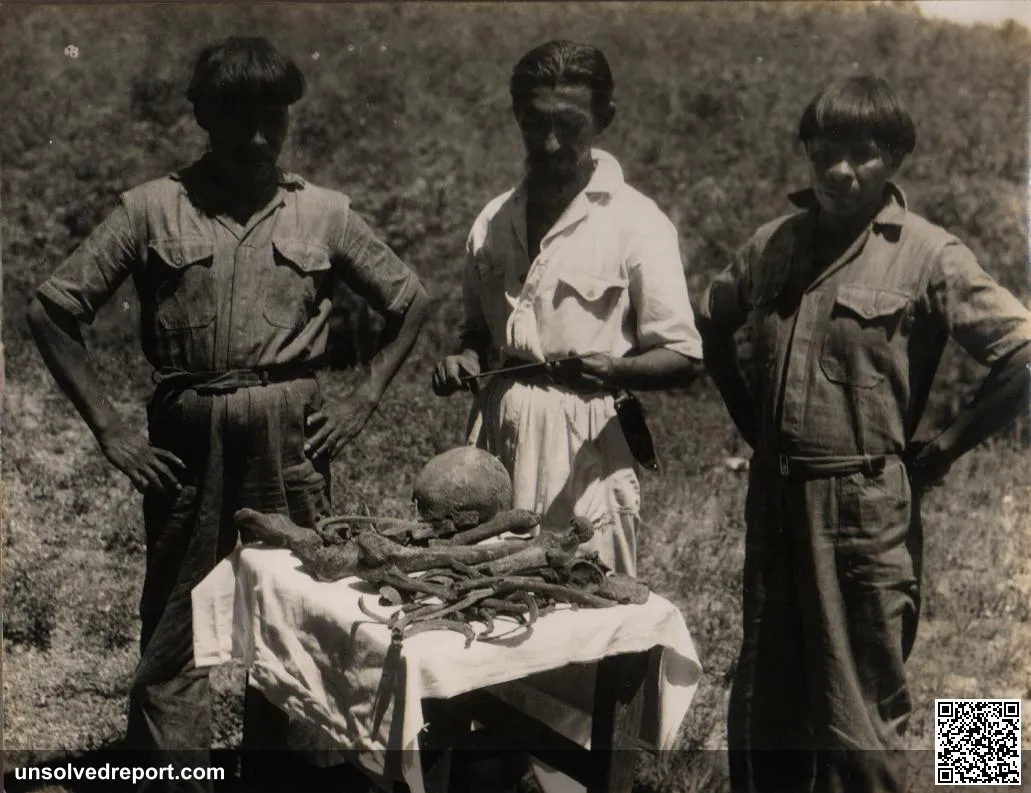
One real, physical lead did surface. In 1951, Orlando Villas-Bôas, a Brazilian champion of Indigenous peoples, came forward with bones — remains he said the Kalapalo people had identified as Fawcett's. For a moment it looked like an answer. Then forensic analysis killed it: the remains weren't his. The skeleton, among other problems, was simply too short to fit Fawcett's tall frame (National Geographic). Another dead end.
Where the Trail Goes Cold
So here's what nobody can tell you, even now: how, where, or exactly when Percy Fawcett, Jack Fawcett, and Raleigh Rimell died. No confirmed grave. No verified remains. No eyewitness account that anyone has ever been able to independently back up. The trail doesn't end at a body. It ends at the smoke of a campfire.
And that detail is the eerie one — because it shows up twice, in two separate investigations, decades apart, from people who never compared notes. In 1931, Penn Museum ethnologist Vincenzo Petrullo gathered accounts from Kalapalo people who said the white men had stayed in their village, were given food, then crossed the Kuluene River. After that, their campfire smoke hung visible for five days. Then it stopped (Penn Museum). Generations later, journalist David Grann recorded an almost identical Kalapalo oral history while researching his 2009 book The Lost City of Z: the party headed east despite warnings, and the villagers watched their fires for five nights — until they vanished (CNN). Two tellings, decades apart, and they match. The smoke for five days, and then nothing. But "the smoke stopped" isn't an answer. It's the edge of the map.
So What Happened to Them?
They were killed by hostile peoples — the leading account. The Kalapalo tradition says Fawcett ignored the warnings, walked into the territory of peoples they called "fierce Indians," and was most likely ambushed (History.com). It's the most consistent oral record we have. But hold on — the Kalapalo themselves always denied harming the explorers, and the 1951 bones blamed on them were disproven. So even the strongest theory comes with an asterisk: unconfirmed.
The jungle just took them. A lot of researchers go with the quietest, grimmest explanation — no villains at all. Starvation. Thirst. Disease like malaria. Drowning. An animal. Petrullo concluded back in the 1930s that Fawcett probably "died of thirst, or hunger, or disease" in the eastern forests (Penn Museum). Think about it: an aging man and two young companions who'd never done this, alone in terrain no one had mapped. The odds were merciless.
He vanished on purpose. Here's the wild one, and it's catnip for the imagination — the idea that Fawcett, the Spiritualist, disappeared deliberately to found some secret commune deep in the jungle (History.com). It spreads easily and it's fun to think about. It's also pure folklore. There's no credible evidence behind it — just a story that grew, the way stories do, around a mystery too good to leave alone.
Now the twist — and this one belongs to the facts, not the legends. Fawcett was mocked, in his day, for believing a great civilization could ever have risen in the Amazon. The smart money said the rainforest could never have held one. The smart money was wrong. Modern archaeology has revealed that the Upper Xingu region once held a dense network of pre-Columbian settlements. University of Florida anthropologist Michael Heckenberger, working with the Kuikuro people, has documented sites like Kuhikugu — circular plazas, broad roads, defensive ditches, even bridges — settlements radiocarbon-dated to around 1250 CE that may have housed tens of thousands of people before Europeans ever arrived (Mongabay). Fawcett never found his city. He was wrong about Atlantis. But the one instinct that pulled him to his death — that the jungle was hiding a lost world — held a true thing at its core.
A hundred years on, what happened to three men on the far side of the Kuluene River is still, genuinely, unknown. The smoke rose for five days. Then it didn't. And the green closed over the rest.
Sources & further reading
- National Geographic — "The man who died searching for the Lost City of Z": https://www.nationalgeographic.com/history/article/percy-fawcett-search-lost-city-of-z
- HISTORY — "The Enduring Mystery Behind Percy Fawcett's Disappearance": https://www.history.com/articles/explorer-percy-fawcett-disappears-in-the-amazon
- Penn Museum, Expedition Magazine — "The Lost Explorer": https://www.penn.museum/sites/expedition/the-lost-explorer/
- Mongabay — "The Amazon's archaeology of hope: Q&A with anthropologist Michael Heckenberger": https://news.mongabay.com/2023/10/the-amazons-archaeology-of-hope-qa-with-anthropologist-michael-heckenberger/
- CNN Travel — "The Lost City of Z: An explorer's doomed quest for a lost civilization": https://www.cnn.com/travel/article/the-lost-city-of-z-percy-fawcett-james-gray-david-grann
- David Grann, The Lost City of Z: A Tale of Deadly Obsession in the Amazon (2009): https://www.davidgrann.com/book/the-lost-city-of-z/
Naga Fireballs: The Glowing Orbs That Rise From a River
Every October, silent red orbs climb out of the Mekong River and vanish. Decades of science still can't agree on what they are. Here's the real mystery.
Patiala Necklace Mystery: 2,930 Diamonds, Almost None Found
Cartier built the Patiala Necklace with 2,930 diamonds in 1928. By 1948 it vanished from a locked treasury — so where did nearly 3,000 stones go?
Gunung Padang Dating Controversy: The Pyramid Claim That Got Retracted
27,000 years old, or 2,000? A retracted paper, a buried hill in West Java, and a number that split archaeology in two. Here's what the evidence actually shows.