Pulsar Glitch Mystery: The Clock Nobody Can Explain
Pulsar glitch mystery: the universe's steadiest clocks suddenly speed up, no warning. One glitch was caught live — so why can no one predict the next?
The most reliable clock in the universe is a dead star. Picture a city-sized ball of crushed matter, spinning dozens or even hundreds of times every second, firing a beam of radiation past Earth like a lighthouse gone hyperactive. The ticks are so steady that some of these stars keep pace with atomic clocks. Astronomers can tell you, months ahead of time, when the next pulse will arrive — down to the millionth of a second.
And then, every so often, the clock skips a beat. No warning. The star suddenly spins faster — a tiny, violent jump in rotation rate that scientists call a glitch. We have been catching these hiccups for more than half a century. We still cannot say what flips the switch.
What We Know For Sure
It started in early 1969. Astronomers were timing the Vela pulsar — patiently logging its ticks — when the star's spin rate jumped, then began a slow, strange recovery. The event was so striking that two teams rushed it into Nature back-to-back on April 19, 1969: Radhakrishnan and Manchester at the Parkes telescope in Australia, and Reichley and Downs working NASA's Goldstone antenna in California, who pinned the jump to somewhere between February 24 and March 3 (Jodrell Bank Centre for Astrophysics; Antonopoulou et al. 2022, MNRAS). Vela was the first pulsar ever caught glitching. It remains one of the busiest.
The jumps are absurdly small, yet impossible to mistake. Vela's big glitches nudge its spin frequency up by about one part in a million (Δν/ν ≈ 10⁻⁶) — and here's the eerie part: they come back like clockwork, roughly every two to three years (Dunn et al. 2021, Astronomy & Astrophysics). The Crab pulsar plays the same game, usually with smaller jumps. As recently as July 17 and August 6, 2025, NASA's IXPE observatory watched two fresh Crab glitches happen (Bucciantini et al. 2025, The Astrophysical Journal). The running tally, the Jodrell Bank Glitch Catalogue, now logs hundreds of these events across nearly 180 pulsars (Antonopoulou et al. 2022, MNRAS).
Then there's the one nobody saw coming — except, by sheer luck, they did. December 12, 2016, 11:36 UT. A team led by Jim Palfreyman had the Mount Pleasant telescope in Tasmania trained on Vela, recording individual pulses one by one, when the star glitched right in front of them. Their Nature paper described something nobody had ever witnessed: in the heartbeats around the glitch, one pulse came out unusually broad, the very next pulse vanished entirely — a null, dead air — and the two pulses after that came back oddly faint, with low polarization (Palfreyman et al. 2018, Nature 556, 219–222). Later analysis squeezed the spin-up itself down to under about 13 seconds, and found something stranger still: a brief "overshoot," where the star sped up slightly past its new rate before easing back, like a sprinter who can't stop on the line (Ashton et al. 2019, Nature Astronomy).
And one last oddity, the mirror image of everything above. In 2013, Robert Archibald and colleagues reported a glitch running backwards. The magnetar 1E 2259+586 didn't speed up — it suddenly slowed down, an "anti-glitch," right around the time it threw off an X-ray flare (Archibald et al. 2013, Nature).
The Part Nobody Can Explain
Here's the honest score. Astronomers know glitches happen. They can measure them with jaw-dropping precision. They even have a widely accepted story for where the extra spin comes from. What they cannot tell you is the one thing you'd most want to know: what triggers any single glitch, and when it will strike.
The leading idea says a neutron star is not the simple solid ball it looks like. Beneath its hard outer crust sits a superfluid — matter so strange it flows with zero friction, forever. As the crust slowly drags to a halt under magnetic braking, that inner superfluid keeps spinning fast, hoarding rotation like a flywheel that refuses to wind down. A glitch is the instant that hidden reservoir suddenly slams some of its spin into the crust (Haskell & Melatos 2015, review on arXiv; Jodrell Bank). In fact, the simple existence of these regular hiccups is one of our best clues that neutron stars hide a superfluid inside at all (Physics World).
But notice what that story explains — and what it doesn't. It tells you the bank account is full. It says nothing about why the withdrawal happens at 11:36 on a Tuesday. As one sweeping review states flatly, the trigger mechanism for glitches is still unknown (Antonopoulou, Haskell & Espinoza 2022, "Pulsar Glitches: A Review," arXiv). Why does Vela fire like a metronome every few years, while other pulsars glitch at random — or hardly ever? What set the exact moment of the December 2016 event? The 2021 Vela study turned up a baffling shortage of small glitches, and couldn't even decide whether glitches and ordinary timing wobbles spring from the same source (Dunn et al. 2021). And that missing pulse — the dead air Palfreyman's team caught just before the 2016 glitch — hints at something downright spooky: the star's outer magnetosphere, its faraway envelope, somehow "knew" a glitch was coming. A whisper between the buried core and the outer skin that no current model can fully account for.
Theories, Not Verdicts
Everything below is a competing scientific guess, not a settled fact.
The vortex avalanche (the favorite). Imagine the superfluid's spin carried by countless microscopic whirlpools — quantized vortices — that get "pinned" to the crystal lattice of the crust like burrs caught on cloth. The gap in speed between crust and superfluid keeps growing, stress keeps building, until the vortices tear loose all at once in a cascade. An avalanche. Spin floods into the crust in a single burst (Haskell & Melatos 2015, arXiv). It's a beautiful explanation for the spin-up. The trouble is matching the real-world statistics and timing of actual glitches, which is still very much a work in progress. This is the front-runner — but a front-runner is not a winner.
Starquakes. An older idea blames the crust itself. A fast-spinning neutron star bulges slightly at its waist; as it slows, the crust has to settle into a rounder shape, and the resulting fracture could jolt the spin rate (review discussion, arXiv 2022). Quakes probably can't muster enough energy to power Vela's frequent big glitches, but they might play a role in some events — and a 2020 study even raised the wild possibility of a quake quenching a Vela glitch mid-act (arXiv 2001.08658).
The anti-glitch headache. That 2013 magnetar slowdown is the loose thread. In any model where a barely-attached interior can only speed the star up, a sudden slowdown should be impossible. The proposed escape routes range from a violent twist in the magnetosphere to material flung out in the flare — but Archibald's team admitted it sits awkwardly against the standard magnetar picture, and the debate is still open (Archibald et al. 2013, Nature).
So for now, the cosmic clocks keep their secret. Every glitch is a half-second window into matter packed tighter than the heart of an atom — physics no lab on Earth could ever build. The skipped beat isn't a flaw in the clock. It may be the clearest message we'll ever get from inside one of the strangest things in all of nature. We just haven't learned to read it yet.
Sources & further reading
- Palfreyman et al., "Alteration of the magnetosphere of the Vela pulsar during a glitch," Nature 556, 219–222 (2018) — https://www.nature.com/articles/s41586-018-0001-x
- Ashton et al., "Rotational evolution of the Vela pulsar during the 2016 glitch," Nature Astronomy (2019) — https://www.nature.com/articles/s41550-019-0844-6
- Antonopoulou, Haskell & Espinoza, "Pulsar Glitches: A Review" (2022), arXiv — https://arxiv.org/abs/2211.13885
- Basu et al., "The Jodrell Bank Glitch Catalogue," MNRAS (2022) — https://academic.oup.com/mnras/article/510/3/4049/6440177
- Dunn et al., "Small glitches and other rotational irregularities of the Vela pulsar," A&A (2021) — https://www.aanda.org/articles/aa/full_html/2021/03/aa39044-20/aa39044-20.html
- Bucciantini et al., "IXPE View of the Crab Pulsar Following the 2025 July 17 and August 6 Glitches," ApJ (2025) — https://iopscience.iop.org/article/10.3847/1538-4357/ae57aa
- Archibald et al., "An anti-glitch in a magnetar," Nature (2013) — https://www.nature.com/articles/nature12159
- Jodrell Bank Centre for Astrophysics, "Pulsar Glitches" — https://www.jb.man.ac.uk/pulsar/glitches.html
- Physics World, "Pulsar glitch suggests superfluid layers lie within neutron star" — https://physicsworld.com/a/pulsar-glitch-suggests-superfluid-layers-lie-within-neutron-star/
- Haskell & Melatos, "Models for the evolution of pulsar glitches" review (2015), arXiv — https://arxiv.org/abs/1502.07062
CMB Cold Spot: The Patch of Sky Colder Than Physics Allows
One patch of the Big Bang's afterglow is colder than it has any right to be. A giant void sits right there — but it can't explain the whole gap. So what does?
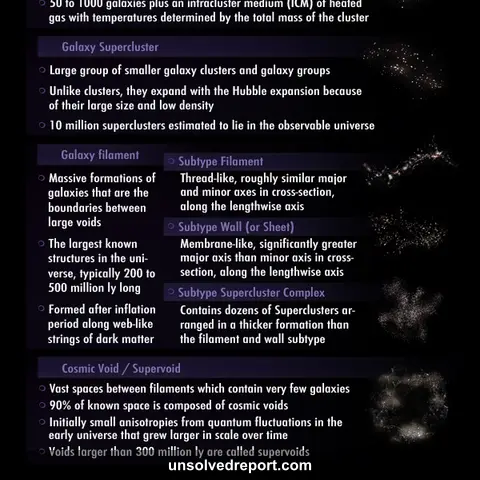
Bootes Void: 330 Million Light-Years of Almost Nothing
The Bootes Void holds ~60 galaxies where 2,000 should be. DESI's finished 3D map is now testing whether a void this size fits the standard model.
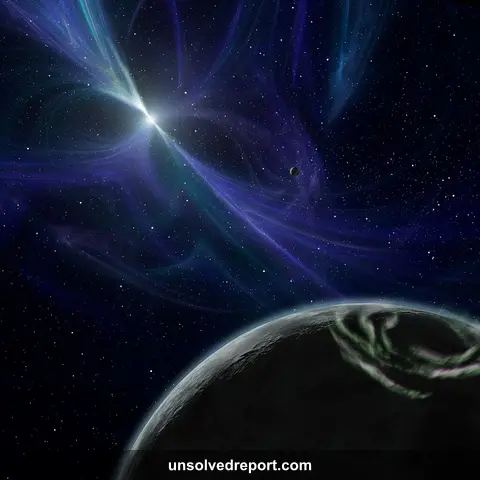
PSR B1257+12: The Pulsar Planets Mystery Nobody Can Explain
PSR B1257+12: the first exoplanets ever confirmed orbit a corpse star, not a sun. So how did they survive the blast that made it? Nobody fully knows.