10 Deep-Space Signals Science Still Can't Explain
A 72-second blast nobody could repeat. A rock that sped up with no tail. Ten deep-space signals our telescopes recorded and still cannot explain.
Space is the quietest place we know. And then, every so often, a telescope catches something that simply refuses to behave. A blast of radio energy that flares once and never comes back. A star that flickers in a pattern no model can draw. A rock from another sun that speeds up like a comet but trails no tail. These aren't campfire stories. Every case below was caught by professional instruments, written up in peer-reviewed work, and is still wide open today, not because someone buried the answer, but because the data we have just isn't enough to close the file.
Here's what makes them so hard to look away from. The mystery doesn't live in the dark, it lives in the gap between a perfect measurement and a missing explanation. We know exactly what the detector saw. We just can't say, hand on heart, why. So here are ten of the strangest signals and objects ever pulled from deep space, each one a hard fact wrapped around an honest unknown.
1. The Word an Astronomer Scrawled in the Margin
August 15, 1977. Ohio State University's Big Ear radio telescope is sweeping the sky, spitting out numbers on a printout, when one column lights up like a struck match. A 72-second burst, so strong that astronomer Jerry Ehman circled it by hand and scribbled a single word beside it: "Wow!" The Wow! signal came from the direction of the constellation Sagittarius, sitting near a frequency long thought to matter for interstellar communication. Then it vanished. Decades of searching, and it has never shown up again. Comet outgassing and other natural sources have been floated, none confirmed, which is why the most famous one-time signal in radio astronomy is still sitting there, unanswered, with that exclamation mark frozen in the margin.
2. The Scout That Sped Up and Left No Trace
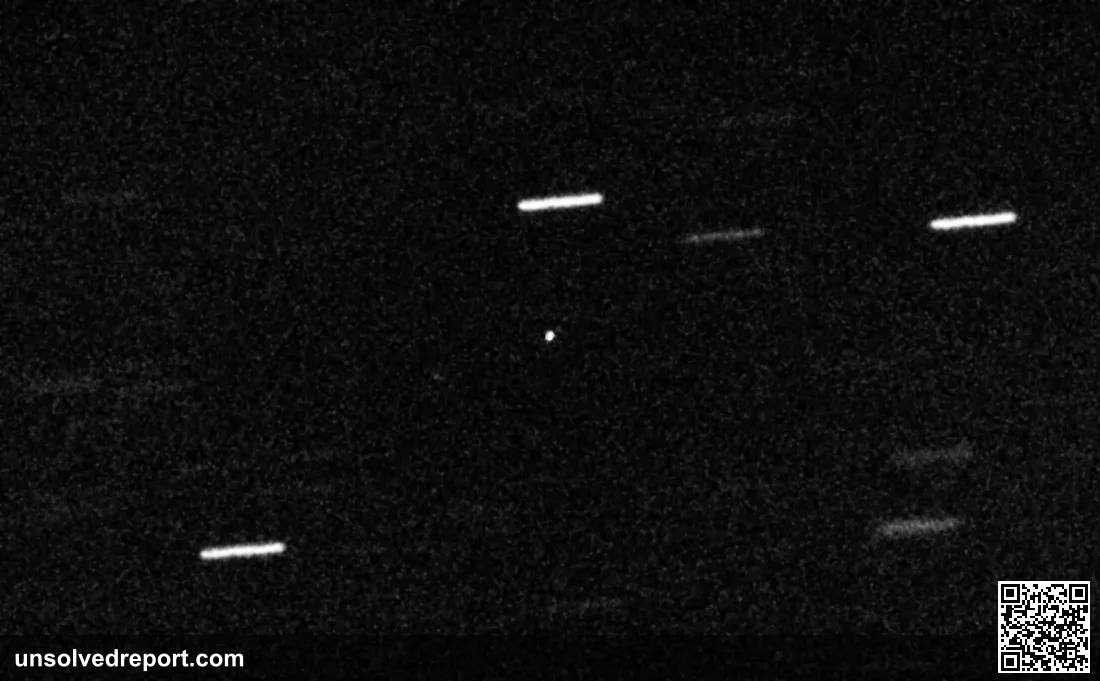
October 2017. The Pan-STARRS telescope in Hawaii catches the first object ever confirmed to fall into our solar system from interstellar space. They named it 'Oumuamua, Hawaiian for "scout." And it was deeply weird. Strangely stretched out, tumbling end over end as it flew, and then, as it swung away from the Sun, it sped up. Comets do that, pushed along by venting gas, except this one showed no gas. No dust. No tail at all. Researchers have reached for everything from a hydrogen iceberg to a shard of frozen nitrogen chipped off a faraway world. But it's gone now, too far to study. Whatever it really was, that answer may have left with it, forever.
3. Millisecond Flashes From the Edge of Everything
Imagine a flash of radio energy so brief it lasts a thousandth of a second, yet in that blink it dumps as much energy as the Sun pours out over days. Now imagine it came from billions of light-years away. These are fast radio bursts, first dug out of archived data in 2007, and astronomers have now catalogued hundreds of them, some repeating, some firing exactly once and never again. In 2020 they finally traced one back to a magnetar inside our own galaxy, a corpse of a star with a savage magnetic field. A breakthrough, sure. But that one nearby culprit can't account for the whole crowd, and what actually powers most of these dazzling, fleeting flashes is still anybody's guess.
4. The Star That Dims Like Nothing Else
In 2015, the Kepler space telescope and a team of citizen scientists noticed a star doing something it had no business doing. Tabby's Star (KIC 8462852) was dipping in brightness, hard, sometimes losing more than 20 percent of its light, and there was no rhythm to it. A planet crossing in front would give you a clean, repeating pattern. This was chaos. The leading explanation points to ragged clouds of dust circling the star, backed up by the way different colors of light fade by different amounts. And yet the exact source and shape of that dust, plus the nagging hint that the star has also been slowly fading over much longer stretches of time, are still debated and still not fully explained.
5. The Cold Patch That Shouldn't Be There
When astronomers mapped the faint afterglow of the Big Bang, the oldest light in existence, almost everything looked smooth. Almost. One region, the CMB Cold Spot, came out noticeably colder and larger than the standard model is comfortable with. One tempting idea: a "supervoid," a colossal, oddly empty stretch of space that drains a little warmth from any light passing through it. The catch? Surveys of that exact area haven't turned up a void big enough to do the job. So is the Cold Spot just a fluke of the numbers, or a fingerprint of something far stranger? Nobody can say yet.
6. The Visitor Made of the Wrong Ice
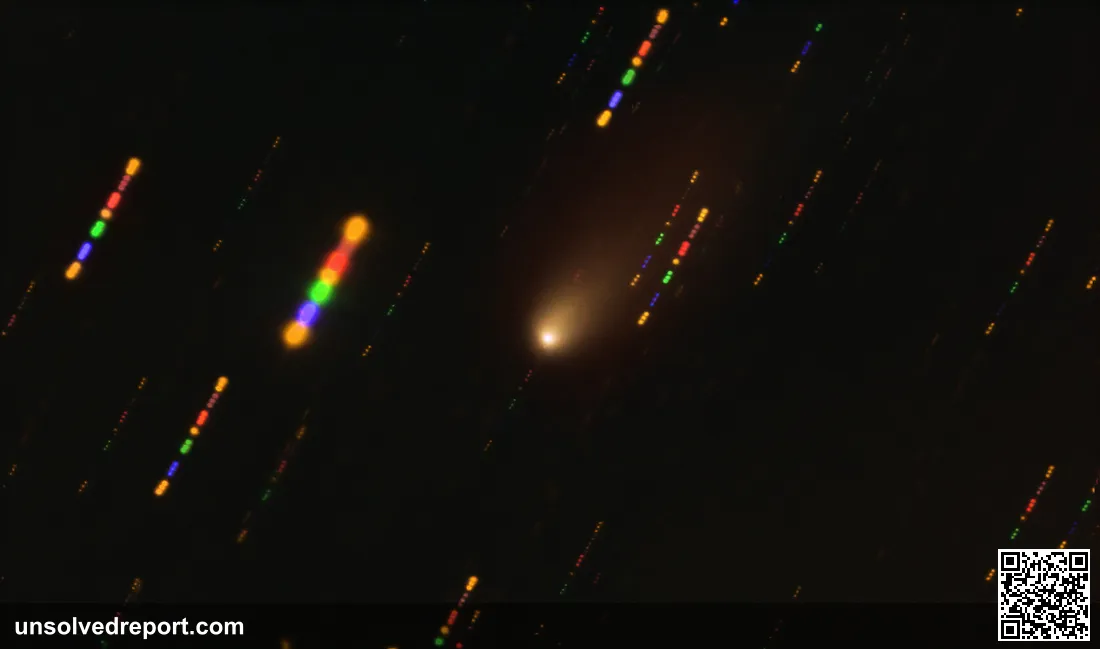
In 2019, amateur astronomer Gennadiy Borisov, working from his own telescope, spotted the second interstellar visitor ever found. And unlike 'Oumuamua, there was no debate about what it was, it had a tail, plain as day. A real comet from another star. What stopped researchers cold was its recipe. It was loaded with carbon monoxide, far more than most comets born in our own solar system carry. That points to a birthplace brutally cold, somewhere out among other stars. But what kind of distant, frigid world cooks up an iceball like this? That's the part still hanging, and it's a wonderful thing to wonder about.
7. The First Burst Nobody Believed
The very first fast radio burst ever recognized came from Duncan Lorimer and his colleagues in 2007, who found it while combing through old Parkes telescope data taken back in 2001. It was so brief and so blindingly bright that some scientists flat-out doubted it was real. For years it stood almost alone. To make matters worse, a separate batch of look-alike signals at the same observatory turned out to be, of all things, a microwave oven opened mid-cycle. But the genuine Lorimer Burst was never explained away. Where it truly came from, out of the long list of suspects, is still unfinished business.
8. The "Alien Megastructure" That Faded for a Century
We're back to Tabby's Star, also called Boyajian's Star after astronomer Tabetha Boyajian, because the short, jagged dips aren't even the strangest part. Dig into old archival photographic plates and you find something eerier: a hint that this star slowly, steadily faded across the whole twentieth century. A century-long dimming is brutally hard to pull off with simple dust clouds, and harder still to even confirm, because century-old photographic measurements come with messy uncertainties of their own. The long-term behavior of this one star remains one of the most stubborn loose threads in all of stellar astronomy, with no answer everyone agrees on.
9. The Thing Dragging Our Galaxy
Right now, as you read this, our galaxy and thousands of others are racing toward the same spot, a region of space tens of millions of light-years off, hauled in by a monstrous concentration of mass astronomers call the Great Attractor. Here's the maddening part. It sits hidden behind the crowded, dusty plane of the Milky Way, a stretch so impenetrable it's earned the name the "Zone of Avoidance." Try to look straight at it, and our own galaxy blocks the view. Distant superclusters seem to explain a lot of the pull. But the full tally of mass driving this enormous cosmic stampede still doesn't add up.
10. The Mystery That Finally Cracked
For decades, NASA's Pioneer 10 and 11 probes did something quietly unnerving. As they sailed past the planets and out into the dark, they drifted ever so slightly off course, decelerating by a tiny amount no one could explain. The Pioneer Anomaly, they called it, and it was tempting enough that serious people started whispering about new physics. Then, in 2012, a careful analysis spoiled the fun in the best possible way: uneven heat radiating off the spacecraft could account for most of the slowdown. Case closed. And that's the point. Some deep-space mysteries really do get solved, but only after teaching us how easily a faint, real signal can hide a perfectly ordinary cause. That same hard-won caution is exactly what keeps every other entry on this list honestly open.
Real Mysteries, Not Ghost Stories
What ties these ten together isn't that they break science. It's that they sit right on its edge. Every one started as a clean, careful measurement and only became a mystery because our models, our instruments, or our vantage point couldn't yet close the gap. A few, like the Pioneer Anomaly, eventually gave way to patient work. Others, like the Wow! signal and 'Oumuamua, may stay open simply because the one chance to gather more data has already slipped past. That's the quiet thrill of looking up. The universe keeps handing us puzzles that are real, recorded, and still waiting for someone to solve them.
Want to go deeper? Each of these signals and objects has its own case file, the full evidence, the leading theories, and the questions still left wide open, ready for you to dig into.
The Ten Side by Side: Question, Best Answer, and How Close It Is
Line these cases up and a pattern jumps out that no single entry shows on its own. Every one is a hard measurement wrapped around a missing "why," but they are not all equally stuck. Some have a leading explanation that fits most of the data and just needs confirming; others are missing the one thing that could ever close them, the chance to look again. The table sorts each case by its core unsolved question, the best-supported answer on the table today, and how near that answer is to final.
| Case | The core unsolved question | Best-supported answer / status | How close to closed |
|---|---|---|---|
| Wow! signal | Why did a 72-second Sagittarius burst appear once and never repeat? | Comet outgassing and other natural sources floated, none confirmed | Likely never — the signal never returned to study |
| ‘Oumuamua | How did it accelerate leaving the Sun with no visible tail? | Non-gravitational push from an unseen volatile (hydrogen/nitrogen ice) proposed | Likely never — object has left, too far to observe |
| Fast radio bursts | What powers millisecond flashes as bright as days of sunlight? | A galactic magnetar was tied to one burst in 2020; can't explain all | Partly solved — one source found, most still open |
| Tabby's Star | Why the deep, irregular dips (over 20%) with no clean period? | Uneven circumstellar dust clouds, backed by color-dependent dimming | Close — dust favored; exact dust and long-term fade debated |
| CMB Cold Spot | Why is one patch of the Big Bang's afterglow so cold and large? | A "supervoid" was proposed but surveys found none big enough | Open — statistical fluke vs. new physics unresolved |
| 2I/Borisov | What frigid birthplace produced its carbon-monoxide-rich ice? | Confirmed interstellar comet; origin star type still unknown | Object identified; birthplace unresolved |
| Lorimer Burst | Where did the first recognized FRB (2001 data) come from? | Genuine FRB, not the microwave-oven "perytons"; source unpinned | Open — real signal, origin still unfinished |
| Great Attractor | What is the full mass pulling our galaxy across tens of millions of light-years? | Distant superclusters explain much, hidden by the Zone of Avoidance | Partly explained — total mass still doesn't add up |
| Pioneer Anomaly | Why did Pioneer 10/11 decelerate slightly beyond the planets? | Uneven thermal radiation off the spacecraft (2012 analysis) | Solved — case closed |
Read down the last column and the roundup splits into three honest tiers. One is genuinely solved: the Pioneer Anomaly, where a 2012 accounting of the spacecraft's own waste heat retired a decade of new-physics speculation. A cluster is close but not closed: Tabby's Star, fast radio bursts, and the Great Attractor each have a leading explanation that already covers much of the data and mostly needs the missing piece confirmed. And two may never be answered at all — not because the science failed, but because the Wow! signal and ‘Oumuamua were each a single event that has already slipped out of reach. The rest, the Cold Spot, Borisov's ice, the Lorimer Burst, sit in the honest middle: still-recorded, still-real, still waiting.
Sources & further reading

The Sodder Children: 5 Kids Vanished, Zero Bodies
Five Sodder children vanished in a 1945 Christmas fire. No bones. No teeth. Nothing. Eighty years on, one question still has no answer: where?

Seven Pagodas of Mahabalipuram: 6 Temples the Sea Swallowed
Legend said the sea swallowed six temples at Mahabalipuram. In 2004 the tsunami pulled the water back — and proved something really was down there.

Tunguska Event 1908: The Blast Nobody Can Explain
The Tunguska Event of 1908 hit Siberia with the force of 1,000 nuclear bombs, flattened 800 square miles of forest — and left zero crater. So what hit us?