10 Cosmic Mysteries Even the Best Telescopes Can't Crack
Dark matter, the Hubble tension, signals from billions of light-years away. Ten real cosmic mysteries the world's best telescopes still cannot solve.
We like to think astronomy is finished homework. Clockwork orbits. Tidy equations. A universe that behaves. But here's the strange part: the sharper we focus our telescopes, the louder the cosmos leans in and whispers, "You don't actually understand me yet." And the deepest puzzles aren't gathering dust in old archives. They're sitting in this year's research papers. Invisible matter that outweighs everything you can see. A universe that's expanding and won't even agree with itself about how fast. Signals that scream across billions of light-years and die in a thousandth of a second.
What follows are ten real, documented mysteries that astronomers will tell you flat out they cannot explain. Not one of them is fringe. Not one is a conspiracy theory. Every single one sits dead center in mainstream science, argued over at conferences, hunted by billion-dollar observatories. They all share one rare and thrilling quality: the observation is rock-solid, but the answer is wide open. Ten cosmic questions. No answers in the back of the book. Let's go.
1. The Invisible Stuff That Rules the Universe
Galaxies spin way too fast. By rights, the gravity of their visible stars should never be able to hold them together at those speeds. They should fly apart. They don't. So something invisible is holding them, and there's a lot of it. By every measurement we have, roughly 85 percent of all the matter in the universe is something we cannot see, cannot touch, cannot catch. Astronomers can map exactly where this "dark matter" sits, because it bends light and sculpts whole galaxies. They just can't grab a piece of it. Decades of underground detectors and particle colliders, and not one single particle has shown its face. We've weighed a ghost. We've never seen it.
2. The Force Tearing Space Apart
In 1998, two rival teams went looking for the universe slowing down. Everyone knew it had to be slowing down. Gravity pulls things together, so the cosmic expansion should be gently braking. Both teams found the opposite. The universe isn't slowing. It's speeding up. Something is shoving space itself apart, faster and faster, and it appears to make up about 68 percent of everything that exists. We call it dark energy, which is a fancy name for "we have no idea." And recent surveys hint it might even be changing over time, which would blow up our leading model of the cosmos completely. We named the biggest ingredient of reality before learning the first true thing about it.
3. Two Rulers That Refuse to Match
There are two excellent ways to measure how fast the universe is expanding. They should give the same number. They don't, and they won't budge — a standoff cosmologists now call the Hubble tension. Measure it from the early universe's faint afterglow, and you get one value. Measure it from nearby exploding stars, and you get a noticeably higher one. Here's what makes it genuinely unsettling: this isn't sloppy work. The precision on both sides is staggering, and the gap hasn't shrunk as the data improved. It's grown. So either some sneaky flaw is hiding inside our best measurements, or our entire picture of the cosmos is missing something huge. Nobody knows which.
4. The Millisecond Flashes From Nowhere
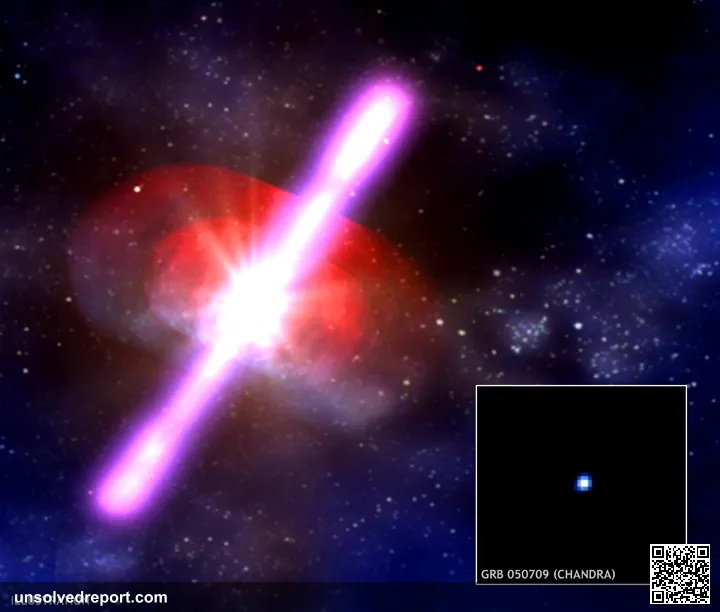
For a few thousandths of a second, a single fast radio burst can dump out as much energy as the Sun pours out in days. Then it's gone. The first one turned up buried in archived data in 2007, and these millisecond flashes come screaming in from billions of light-years away. We catch them regularly now, and for most of them we have no idea what fires them off. A handful repeat on strange, almost rhythmic schedules. Most flash exactly once and are never heard from again. We've traced a few back to dead, magnetized stars. But the full lineup of suspects? Still unidentified. Something out there keeps flashing, and it won't tell us who it is.
5. The Planet Hiding in Our Own Backyard
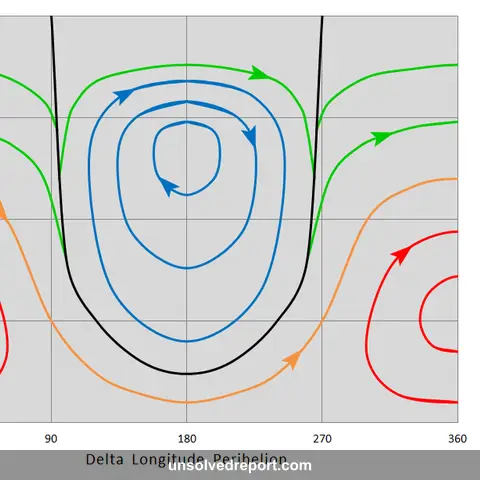
Out at the frozen edge of our solar system, a cluster of distant icy bodies all swing through space tilted and lined up in the exact same odd way, as if something massive were herding them. The leading explanation is jaw-dropping: an unseen ninth planet, maybe five to ten times the mass of Earth, orbiting so far out that one trip around the Sun would take thousands of years. Years of dedicated searching. Telescope after telescope. And still nobody has confirmed it. Think about that. Our own cosmic backyard may be hiding an entire planet, and we have never once laid eyes on it.
6. Where Is Everybody?
The galaxy is ancient. It's enormous. It's packed with Earth-like worlds. So do the simple arithmetic and it should be crawling with civilizations, chattering away across the radio spectrum. We've been listening for decades. And we have heard nothing. Just silence. The physicist Enrico Fermi nailed the whole contradiction over lunch one day with a single question: "Where is everybody?" The math says we should have company. The sky says we are completely alone. One of those two is wrong, and figuring out which may be the most haunting open question science has.
7. The Element That Doesn't Add Up
The Big Bang left behind a precise recipe for the lightest elements, and our theory predicts how much of each should exist with almost spooky accuracy. Hydrogen? Spot on. Helium? Beautiful match. Then you get to lithium. When astronomers measure lithium in the oldest, most pristine stars in existence, they find roughly three times less of one form than the theory flatly demands — the cosmological lithium problem. And this gap has stubbornly refused to close for decades, despite an exhaustive hunt for the leak. A flawless theory. A careful measurement. And the two simply will not shake hands.
8. The Particle With the Punch of a Baseball
Every so often, a single subatomic particle slams into Earth's atmosphere carrying the energy of a hard-thrown baseball, all of it crammed into something smaller than an atom. One famous strike back in 1991 got nicknamed the "Oh-My-God particle" because its energy looked almost physically impossible. And here's the problem: nature has no known machine powerful enough to hurl matter that hard across the cosmos. Worse, the particles' paths get bent and scrambled on the way in, so they arrive with their return address erased. Something out there is a cosmic particle cannon. We cannot find the trigger.
9. We Are Falling Toward Something We Cannot See
Our galaxy, and thousands of others alongside it, is being dragged through space at hundreds of kilometers per second toward one single region of the sky. We can feel the pull clearly, measure it precisely. There's just one catch. That gravitational destination sits behind the thick, dusty plane of the Milky Way, which blocks our view of whatever is doing the dragging. So we know we're falling. We can map the direction. But the thing pulling us, the Great Attractor, stays hidden. We are tumbling toward something enormous, and it's tucked away behind our own home.
10. Why Is There Anything at All?
By rights, you shouldn't exist. The Big Bang should have made equal amounts of matter and antimatter, and the two should have annihilated each other completely, leaving behind a universe of pure light and nothing else. No stars. No planets. No you. Instead, for every billion pairs that wiped each other out, a single particle of ordinary matter survived. Everything you have ever seen is built from those lonely survivors. Why matter won that cosmic coin-flip is one of the deepest unsolved puzzles in all of physics. Your very existence is a riddle our equations cannot solve.
The Mysteries Are the Invitation
Notice what ties these ten together. It isn't ignorance. It's the thrilling edge of knowing, the exact spot where careful measurement sprints ahead of explanation and leaves it gasping. Each one is so well-documented that no serious scientist disputes the observation, and so wide open that a single breakthrough could rewrite the textbooks overnight. The universe handed us a list of riddles with airtight clues and a missing answer key.
If any of these cases pulled at you, you've only scratched the surface. The deeper case files are waiting, where we follow the evidence behind each cosmic mystery, one question at a time.
What These Ten Mysteries Actually Share
Line the ten up side by side and they stop looking like ten unrelated puzzles. They sort into three distinct kinds of unsolved — and knowing which kind a mystery is tells you how it's likely to end.
The missing ingredient (something real is there, we just can't grab it). Dark matter, dark energy, Planet Nine, and the Great Attractor all share the same shape: the gravitational effect is measured cold, but the thing causing it has never been directly observed. Galaxies spin too fast, space accelerates apart, icy bodies line up strangely, our galaxy falls toward one spot — in every case we've mapped the pull with precision and never once seen the puller. These are hunts for an object or substance, and at least one (Planet Nine, the Great Attractor) could in principle be resolved the day a sharp enough instrument points the right way.
The theory-versus-measurement standoff. The Hubble tension, the lithium problem, and matter-antimatter asymmetry are different: nothing is hiding. We can see everything. The trouble is that two things we trust — a careful measurement and a well-tested theory — flatly disagree. The lithium gap and the Hubble gap have both widened as data improved, which is the opposite of a measurement error quietly resolving itself. These won't be solved by finding an object; they'll be solved by breaking something in the standard model.
The unidentified source. Fast radio bursts and the "Oh-My-God"-class ultra-high-energy particles are cosmic events whose engines are unknown. We catch the flash or the impact, but the return address is either erased (particle paths get bent on the way in) or one-time-only (most FRBs never repeat). Progress here comes from catching more of them — and FRBs are already the furthest along, with a handful traced back to magnetized dead stars.
And the two outliers — the Fermi paradox and "why is there anything at all" — aren't waiting on a telescope at all. Their data is a silence and an imbalance that are already fully in hand. What's missing is a framework, not an observation.
Read that way, one pattern jumps out: the roundup's own framing — "the observation is rock-solid, but the answer is wide open" — is true for all ten, but the reason the answer stays open is different each time. Some await a discovery (an object). Some await a revolution (a broken theory). Some await a haul of new events. Sorting them this way is also a rough ranking of which fall first: the missing-object cases are the ones a single well-aimed instrument could crack overnight, while the framework cases (Fermi, matter's survival) may outlast every telescope on this list.
Sources & further reading
Planet Nine: The Massive World Nobody Can Find
Dozens of icy worlds past Neptune all lean the same eerie way, as if something massive and unseen is pulling the strings. Is Planet Nine actually real?
Methuselah Star: The Star Older Than the Universe It Lives In
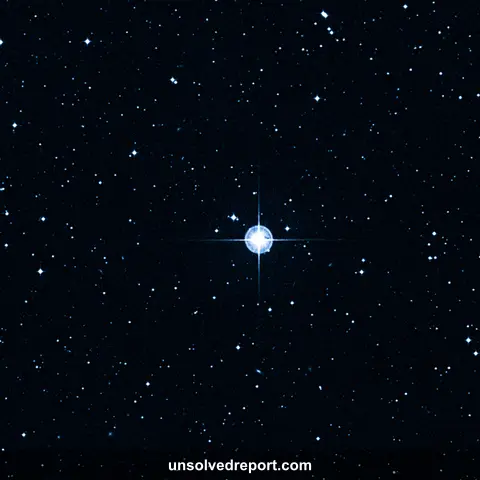
The Methuselah star, HD 140283, was clocked at 14.5 billion years old — older than the 13.8-billion-year-old universe holding it. How can that be true?
Coronal Heating Problem: The Sun Breaks Its Own Rules of Heat
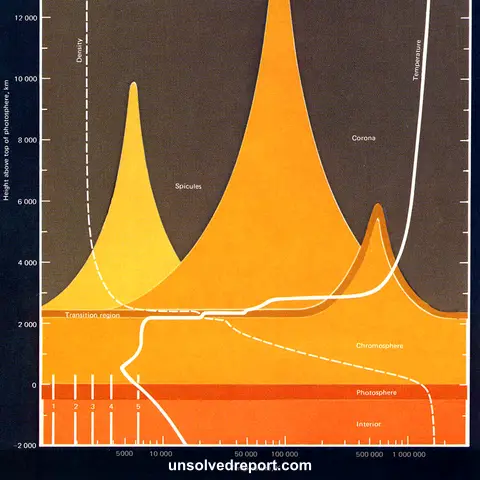
The Sun's surface is 10,000°F. Its corona hits 2 million. Walk away from a fire, get colder — unless it's the Sun. Scientists still can't fully explain why.